
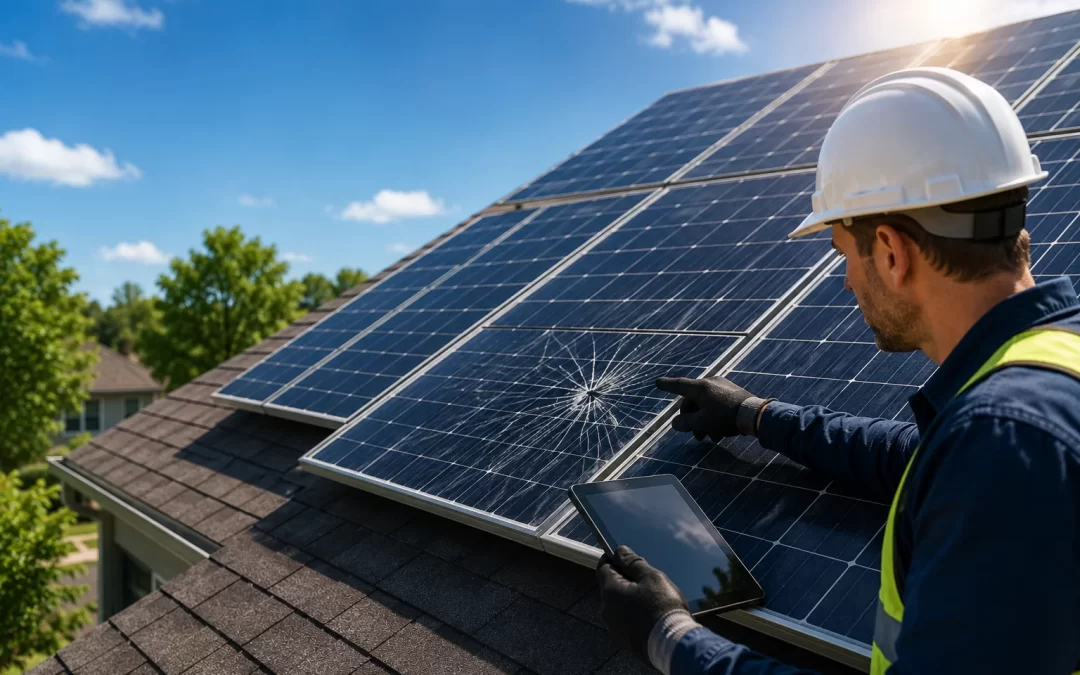
Most solar panel damage can be spotted early if you know what to look for: visible cracks in the glass, hot spots or burn marks, loose wiring, broken mounting hardware, or a sudden drop in energy production. The easiest way to catch problems is to combine a quick visual check from the ground with regular monitoring of your system’s output. Many issues are covered by warranties if you act quickly, but hidden damage on the roof or inside the wiring may still require a professional inspection. If you ever see exposed wires, scorch marks, or smell burning, shut the system down and call a licensed installer immediately.
Solar panels are designed to be low-maintenance, but they’re not indestructible. Hail, wind, debris, animals, and even manufacturing defects can all cause damage that slowly eats into your savings. This guide is for homeowners who either already have solar or are considering it and want to understand the real-world risks and how to manage them. The goal is simple: help you spot solar panel damage early, avoid safety issues, and protect the investment on your roof.
Table of Contents
- What “Solar Panel Damage” Really Means
- Common Signs of Solar Panel Damage You Can See
- Hidden Damage: Performance Changes and Electrical Clues
- Numbers, Costs, and How Damage Affects Your Solar Payback
- What Causes Solar Panel Damage?
- When Solar Damage Is Minor vs. When It’s a Big Problem
- Step-by-Step: How to Check Your System Safely
- When to Call a Professional (and What to Ask)
- Frequently Asked Questions
- Key Takeaways
- What to Do Before Getting Quotes or Repairs
What “Solar Panel Damage” Really Means
Physical vs. performance damage
When people talk about “solar panel damage,” they usually mean one of two things:
- Physical damage – visible issues like cracked glass, broken frames, loose wiring, burn marks, or bent mounting rails.
- Performance damage – the system still looks fine, but it produces less power than it should because of internal cell cracks, water intrusion, or electrical problems.
Both types matter. Physical damage is easier to spot, but performance damage can quietly reduce your savings for years if you’re not watching your production numbers.
How much damage is “normal” over time?
- Most modern panels lose about 0.5% of output per year (sometimes less), which is considered normal degradation.
- Manufacturers typically guarantee at least 80–85% of original output after 25 years under a performance warranty.
- If your system’s production drops much faster than this, it may be a sign of damage or another problem.
Why catching damage early matters
- Solar systems are a major investment: a typical home system costs $28,000–$32,000 before incentives and $19,600–$22,400 after the 30% federal tax credit.
- Damage that goes unnoticed can:
- Shorten the life of your panels and inverter
- Reduce your annual savings (often $1,300–$1,500 per year for a typical system)
- Void parts of your warranty if you delay repairs
The good news: most homeowners can spot early warning signs with simple, safe checks from the ground and by monitoring their system’s performance.
Common Signs of Solar Panel Damage You Can See
1. Cracked or shattered glass
The top layer of a solar panel is tempered glass. Damage can look like:
- Hairline cracks that look like spiderwebs or fine lines
- Larger shattered areas, often from hail or falling branches
- Glass that looks “frosted” or uneven in one section
Even small cracks can let moisture in, which may lead to corrosion and hot spots over time. If you see any cracking, avoid touching the panel and call a professional.
2. Discoloration, burn marks, or “hot spots”
Look for:
- Brown, yellow, or dark spots on the panel surface
- Areas that look “scorched” or melted near junction boxes or connectors
- Uneven dark patches that don’t match normal shading patterns
These can indicate overheating, poor electrical connections, or internal cell damage. They’re not just cosmetic; they can be a safety risk if ignored.
3. Loose, sagging, or corroded frames and mounts
From the ground or a safe vantage point, check whether:
- Panels look crooked, sagging, or lifted at one corner
- Mounting rails appear bent or twisted
- You can see rust or corrosion on metal parts
Loose mounting hardware can lead to roof leaks, wind damage, or panels pulling away from the roof in storms.
4. Visible wiring issues
Without climbing on the roof, look for:
- Cables hanging loosely instead of being neatly secured
- Exposed copper or damaged insulation on wires
- Chewed or frayed cables (often from squirrels or birds)
Exposed or damaged wiring is a safety hazard. Do not touch it; shut the system down if you can do so safely and call a licensed solar or electrical contractor.
5. Water or moisture issues
Signs of moisture-related damage include:
- Fogging or condensation inside the panel glass
- Streaks or water trails inside the panel
- Corrosion around junction boxes or connectors
Panels are sealed, so any moisture inside usually means a failed seal or crack. Over time, this can corrode internal components and reduce output.
Hidden Damage: Performance Changes and Electrical Clues
Why performance monitoring is critical
Not all solar panel damage is visible from the ground. Internal microcracks, wiring faults, or inverter issues often show up first as a change in performance. Regularly checking your system’s output is one of the best ways to catch problems early.
If you’re not already tracking your production, a good starting point is to review how to monitor your solar system’s performance and set a simple monthly check-in routine.
Key performance red flags
- Sudden drop in daily or monthly production compared to:
- The same month last year (adjusted for weather)
<liYour installer’s original production estimate
Normal variation vs. real damage
Some variation is normal:
- Cloudy days, smoke, or haze can reduce output by 10–50% temporarily.
- Seasonal changes in sun angle and daylight hours can change production by 30–50% between winter and summer in many US locations.
- Light dust or pollen may reduce output by a few percent until the next rain.
But you should investigate if you see:
- A consistent drop of 10–20% or more compared to previous years for the same month.
- One section of your array producing much less than the rest.
- Production that never reaches expected peaks on clear, sunny days.
If your system is producing less than you expected and you’re not sure why, our guide on why solar systems produce less than expected walks through common causes beyond just panel damage.
Inverter and electrical warning signs
Many “panel problems” actually trace back to the inverter or wiring. Watch for:
- Warning lights or error codes on the inverter display
- Inverter that frequently restarts or shuts down midday
- Unusual humming, buzzing, or clicking sounds
These can indicate electrical issues that may affect one or more panels. For more detail, see our guide on solar inverter problems and how to diagnose them.
Numbers, Costs, and How Damage Affects Your Solar Payback
Typical system costs and why damage matters financially
For a typical US home, a residential solar system usually looks like this:
- System size: 6–10 kW (kilowatts), often 15–25 panels
- Cost per watt: about $2.50–$3.50 installed, depending on your state and equipment
- Total cost: roughly $28,000–$32,000 before incentives
- After 30% federal tax credit: about $19,600–$22,400 (consult a tax professional to confirm your eligibility)
- Average annual bill savings: around $1,300–$1,500, depending on your utility rates and usage
- Typical payback period: about 7–9 years nationally
- Panel lifespan: performance warranty for 25–30 years, with many panels lasting 30–35 years or more
Damage that reduces your system’s output by 10–20% can easily cost you hundreds of dollars per year in lost savings and may extend your payback period by several years if not addressed.
How different types of damage affect your bottom line
- Single cracked panel in a string system: Can drag down the performance of the entire string, potentially reducing output by 5–15% until repaired.
- Microcracks or hot spots in multiple panels: May cause gradual performance loss that adds up to thousands of dollars over the system’s life.
- Loose mounts or roof leaks: Can lead to costly roof repairs on top of solar work if not caught early.
- Inverter or wiring issues: Can shut down part or all of your system, eliminating savings until fixed.
Repair vs. replacement: rough cost ranges
Actual costs vary widely by location and installer, but as a rough guide:
- Panel replacement (single panel): Often $300–$700 including labor, sometimes covered by warranty.
- Minor wiring repairs: Typically a few hundred dollars, depending on access and complexity.
- Inverter replacement: Can range from $1,000–$3,000+ depending on type and size.
- Mounting hardware fixes: Often bundled into a service call, but roof repairs can add significantly if there’s water damage.
Many of these costs may be reduced or covered if your equipment and workmanship warranties are still active. For a deeper look at what’s typically covered, see our guide to solar panel warranty claims.
What affects how much damage will cost you?
- Age of your system: Newer systems are more likely to be fully covered by warranties; older systems may not be.
- Type of equipment: Microinverters and optimizers can localize the impact of a damaged panel, while traditional string inverters may see bigger output losses from a single bad panel.
- Local labor rates: Service calls and roof work cost more in some regions than others.
- Your utility rates: Higher electricity prices mean each lost kilowatt-hour costs you more.
What Causes Solar Panel Damage?
Weather and environmental factors
Common weather-related causes include:
- Hail: Large hailstones can crack glass, especially in severe storms.
- High winds: Can loosen mounting hardware or cause debris to strike panels.
- Snow and ice: Heavy snow loads can stress mounting systems; ice can expand small cracks.
- Extreme heat: Can accelerate wear on electrical components and seals over many years.
Panels are tested for harsh conditions, but no system is completely immune. For more on how weather affects performance (even without damage), see our guide on how weather affects solar panel output.
Animals and pests
- Squirrels and rodents: Known to chew on wiring and insulation under and around panels.
- Birds: Nesting under panels can trap debris and moisture, and droppings can cause hot spots if they cover cells.
- Insects: Less common, but some may nest in junction boxes or conduit openings.
Critter guards or mesh can help prevent many of these issues, especially in areas with heavy wildlife activity.
Installation and workmanship issues
Some damage starts on day one if the installation isn’t done correctly:
- Over-tightened clamps that stress panel frames
- Poorly secured wiring that rubs against sharp edges
- Incorrect roof penetrations that lead to leaks
- Inadequate spacing for ventilation, causing overheating
These issues may not show up immediately but can lead to premature wear or damage over time. This is one reason choosing a reputable installer with strong workmanship warranties is so important.
Aging and normal wear
Even with perfect installation and no major storms, systems age:
- Seals and gaskets can dry out and crack over decades.
- UV exposure slowly degrades plastics and some coatings.
- Normal thermal expansion and contraction can create microcracks in cells.
This is expected and usually accounted for in performance warranties, but it can still contribute to damage if combined with other stressors.
When Solar Damage Is Minor vs. When It’s a Big Problem
When it’s usually minor (but still worth watching)
These situations often don’t require emergency action, but you should monitor them and mention them at your next service visit:
- Light surface scratches that don’t penetrate the glass
- Small, stable areas of discoloration that haven’t changed over time
- Minor frame scuffs or cosmetic blemishes from installation
- Occasional, brief inverter resets that self-correct and don’t affect daily totals much
Even “minor” issues can become bigger over time, so it’s smart to document them with photos and dates.
When it’s a serious problem and you should act quickly
Take prompt action if you notice:
- Cracked or shattered glass on any panel
- Burn marks, melted plastic, or a burning smell near panels, wiring, or the inverter
- Exposed wiring, especially with visible copper
- Panels that appear loose, lifted, or at risk of coming off the roof
- Sudden, large drops in production that don’t match weather conditions
In these cases, it’s wise to shut down the system if you can do so safely (using the main AC disconnect or inverter switch) and call a licensed solar or electrical professional.
When solar might not be the right choice anymore
There are rare situations where extensive damage or aging may mean it’s not worth repairing or expanding your existing system:
- Your system is very old (20+ years), out of warranty, and multiple components are failing.
- Roof repairs or replacement would require removing and reinstalling a heavily damaged array.
- Your utility rates or policies have changed so much that the financial benefit is much lower than when you installed.
In these cases, it may make more sense to evaluate a new system design, possibly with higher-efficiency panels or a different layout. Our broader guide on whether solar is worth it can help you think through the numbers for your current situation.
Step-by-Step: How to Check Your System Safely
Safety first
Solar systems involve high voltage and rooftop work. As a homeowner, you should:
- Stay off the roof unless you are trained and have proper safety gear.
- Never open junction boxes, inverters, or electrical panels yourself.
- Do not touch damaged panels or exposed wires.
Your role is to observe from safe locations and monitor performance; leave hands-on work to professionals.
Monthly visual check (5–10 minutes)
From the ground or a safe window, look for:
- Cracks, discoloration, or unusual reflections on panel surfaces
- Panels that look misaligned, sagging, or lifted
- Loose or hanging wires under the array
- Debris buildup (leaves, branches, heavy bird droppings)
Also glance at your inverter or monitoring app to confirm the system is on and producing power during sunny hours.
Seasonal performance review
Every 3–6 months, compare your system’s production to:
- The same period last year
- Your installer’s original estimate (if you have it)
- Your utility bills (are they higher than expected?)
If you see unexplained drops, investigate further. Our guide on monitoring solar performance can help you set up simple tracking.
After major storms or events
After hail, high winds, heavy snow, or a nearby lightning strike:
- Do a careful visual check from the ground for cracks, broken mounts, or debris.
- Check your monitoring app or inverter for error messages or unusual drops in output.
- If you suspect damage, contact your installer or a local solar service company for an inspection.
Cleaning vs. damage
Sometimes what looks like damage is just dirt, pollen, or bird droppings. Cleaning can restore lost output, but it must be done safely and correctly. For most homeowners, occasional rain is enough, but in dusty or pollen-heavy areas, you may need periodic cleaning. See our guide on how to clean solar panels and how often you actually need to before attempting any cleaning yourself.
When to Call a Professional (and What to Ask)
When you should get a professional inspection
Consider calling a licensed solar installer or service company when:
- You see any visible damage (cracks, burn marks, loose panels, exposed wires).
- Your system’s production has dropped significantly without an obvious cause.
- Your inverter shows persistent error codes or shuts down frequently.
- You’re planning roof work that may affect your solar array.
Information to gather before you call
Having these details ready will help the technician diagnose faster and may save you a service visit:
- System age, size (kW), and installer name (if known)
- Panel and inverter brands and model numbers (from your paperwork or labels)
- Photos of any visible damage from the ground
- Recent production data from your monitoring app or inverter screen
- Dates of any recent storms, roof work, or changes to your electrical system
Questions to ask the installer or service company
- Is this issue likely covered by my equipment or workmanship warranty?
- Will you handle any warranty claims with the manufacturer, or do I need to?
- What are the risks of waiting vs. fixing it now?
- Can you provide a written estimate and explain what’s included?
- Will the repair affect my existing warranties in any way?
Getting multiple quotes
For anything beyond a simple warranty service call, it often makes sense to get more than one quote, especially if:
- The repair estimate is more than a few hundred dollars.
- You’re out of warranty and paying entirely out of pocket.
- One company recommends major work (like partial system replacement) and you want a second opinion.
Multiple quotes help you compare pricing, scope of work, and the professionalism of different providers before you commit.
Frequently Asked Questions
How can I tell if my solar panels are damaged without going on the roof?
You can usually spot major issues from the ground by looking for cracked or shattered glass, panels that look crooked or loose, hanging wires, or obvious burn marks. Combine this with checking your monitoring app or inverter for sudden drops in production or error messages. If you see any of these signs, call a professional for a closer inspection.
Will a cracked solar panel still work?
A cracked panel often still produces some power, but its output is usually reduced and the crack can let in moisture that causes further damage over time. In string systems, one cracked panel can drag down the performance of the entire string. It’s best to have a cracked panel evaluated and replaced if needed, especially if it’s under warranty.
Does hail damage solar panels often?
Most solar panels are tested to withstand hail up to about 1 inch in diameter at high speeds, so light to moderate hail usually isn’t a problem. However, very large hail or extreme storms can crack glass or damage frames. After a hailstorm, it’s smart to visually inspect your array from the ground and check your system’s production for any unusual drops.
Can dirty solar panels look like they’re damaged?
Yes, heavy dirt, pollen, or bird droppings can make panels look dull or patchy and can reduce output, sometimes significantly. If the surface looks uniformly dirty and there are no cracks or burn marks, cleaning may restore performance. If you’re unsure whether it’s dirt or damage, start with a safe cleaning plan or have a professional take a look.
Is solar panel damage covered by warranty?
Many types of defects and some performance issues are covered by manufacturer warranties, and installation-related problems may be covered by a workmanship warranty. However, damage from storms, animals, or accidents may fall under your homeowner’s insurance instead. Always review your warranty documents and talk to your installer or insurer to understand what’s covered in your situation.
How often should I have my solar system professionally inspected?
For most homeowners, a professional inspection every 3–5 years is reasonable, or sooner if you notice performance drops or visible issues. Some installers include periodic checkups in their service packages. Regular monitoring and quick visual checks in between inspections help catch problems early.
Key Takeaways
- Solar panel damage shows up as visible issues (cracks, burn marks, loose mounts, exposed wires) and hidden performance drops, so you need both visual checks and monitoring.
- A typical home system costs around $28,000–$32,000 before incentives and saves about $1,300–$1,500 per year, so unnoticed damage can quietly erode your payback period.
- Weather, animals, installation quality, and normal aging all affect how likely your system is to suffer damage and how severe it will be.
- Act quickly on serious signs like cracked glass, burn marks, exposed wiring, or sudden large production drops, and involve a licensed professional.
- Your next steps are to set up simple monitoring, do safe visual checks, and get professional quotes or inspections if you suspect any issues.
What to Do Before Getting Quotes or Repairs
Solar is a long-term investment, and spotting damage early is one of the best ways to protect your savings and your roof. If you think something might be wrong with your system—or you’re planning a new installation and want it done right—it’s worth getting personalized, no-obligation quotes from qualified installers.
Gather your basic information (roof type, electric bills, system age if you already have solar) and then request customized solar quotes so you can compare options, understand potential repair or upgrade costs, and decide on the best path forward for your home.