Solar Incentives & Tax Credits: How to Maximize What You Get
The federal government will pay for 30% of your solar system — and most homeowners don’t realize how much more is available on top of that. This guide explains every major incentive, who qualifies, and how to make sure you claim every dollar.
The short answer
Direct answer
The federal Investment Tax Credit (ITC) lets you deduct 30% of your solar system cost from your federal taxes. On a $28,000 system that’s $8,400 back. The credit runs through 2032 at 30%, then steps down. Most homeowners also qualify for additional state rebates, utility incentives, and net metering credits on top of the federal credit.
Incentives are the single biggest lever you have on the cost of going solar. A homeowner who claims all available incentives can cut their net system cost by 40–60% compared to the sticker price. This guide walks through each one so you don’t leave money on the table.
Federal Investment Tax Credit (ITC) explained
The ITC is not a rebate — it’s a dollar-for-dollar reduction in the federal income taxes you owe. If you owe $10,000 in federal taxes and claim an $8,400 ITC, you pay $1,600 instead. If your credit exceeds what you owe in one year, the remainder rolls over to the following tax year.
The credit applies to the full installed cost of the system including panels, inverters, batteries, wiring, labor, and permitting fees. It does not apply to leased systems — you must own the system to claim it.
Federal ITC — 30% through 2032
Saves $6,000–$12,000 on a typical system
Available to any homeowner who owns (not leases) their solar system and has federal tax liability. Covers panels, inverters, batteries, installation labor, and permitting fees.
Federal ITC steps down after 2032
Credit drops to 26% in 2033, 22% in 2034
Installing before the end of 2032 locks in the full 30% rate. There’s no need to rush, but waiting until 2033 or later does cost you money.
Battery storage also qualifies
Same 30% credit applies to battery systems
As of 2023, standalone battery storage systems qualify for the 30% ITC even if not paired with new solar panels. A $10,000 battery saves you $3,000 in taxes.
Tax credit estimator
Estimate your federal tax credit
Federal ITC
$8,400
tax credit
Net system cost
$19,600
after ITC
Total you save
$8,400
vs. sticker price
Federal ITC only. State rebates and utility incentives can reduce your cost further.
This is an estimate for planning purposes only. Consult a tax professional to confirm your eligibility and exact credit amount.
Other incentives to know about
Beyond the federal ITC, most homeowners qualify for at least one or two additional incentives that can meaningfully reduce the final cost.
State tax credits
Varies — up to 25% in some states
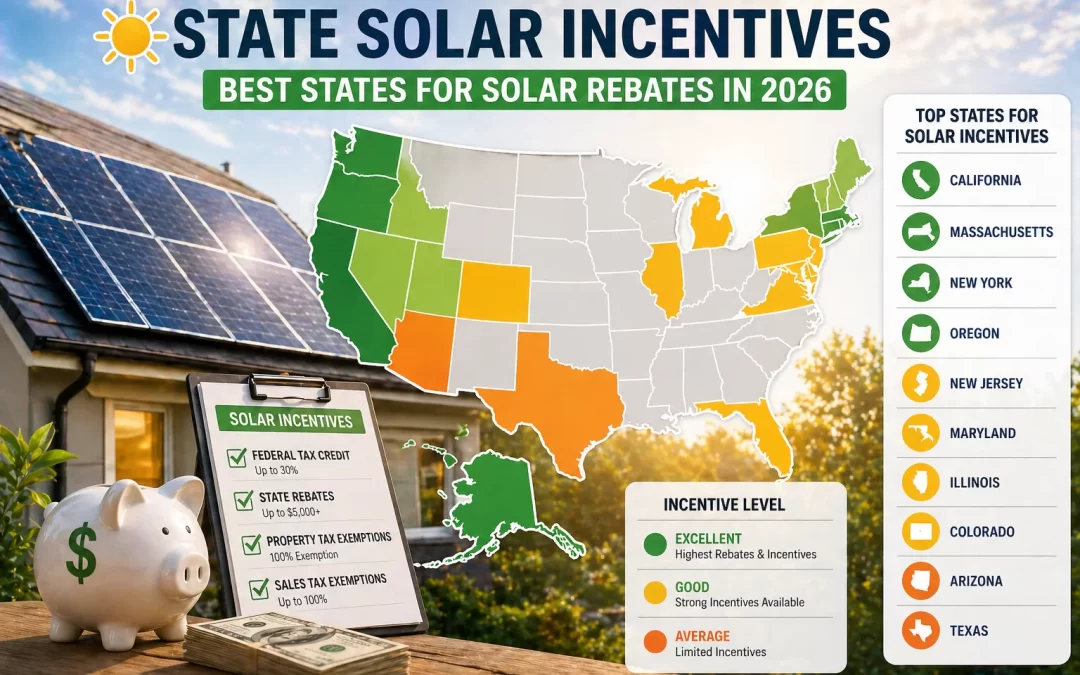
Many states offer their own solar tax credit on top of the federal one. New York offers 25% (up to $5,000), South Carolina offers 25%, and Massachusetts offers 15%. Check your state energy office website for current rates.
Utility rebates
$500–$2,500 cash back in many areas
Many utility companies offer upfront rebates for installing solar. These are paid directly to you or your installer and don’t affect your federal tax credit. Check your utility’s website — these programs open and close throughout the year.
Net metering credits
Ongoing savings on every bill
Net metering lets you earn bill credits for excess energy your panels send back to the grid. In states with full retail net metering (NJ, MA, IL), credits equal what you’d pay for electricity. In others, credits are paid at a lower wholesale rate.
Solar Renewable Energy Credits (SRECs)
$50–$400 per credit in active markets
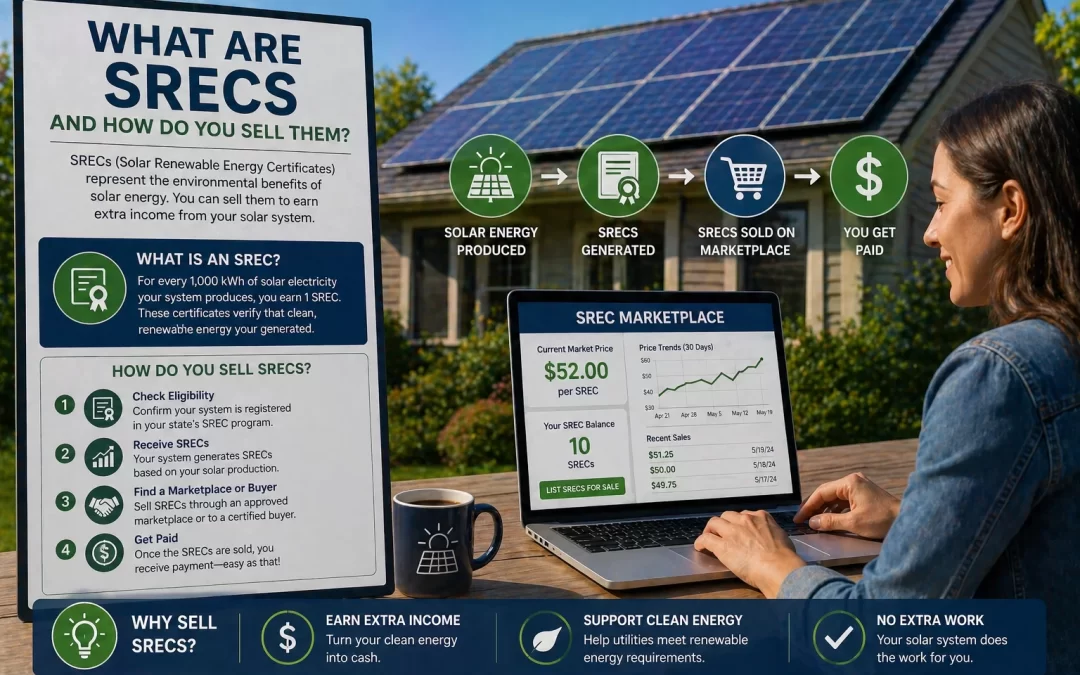
In states with SREC markets (NJ, MA, PA, OH, MD), you earn one SREC for every 1,000 kWh your system produces. These can be sold to utilities for cash — adding hundreds or thousands of dollars per year in passive income.
Common questions
Do I have to pay back the solar tax credit?
No. The ITC is a non-refundable tax credit, not a loan. You reduce the taxes you owe — you never pay it back. The only caveat is that if you sell the home within 5 years, the IRS may recapture a portion of the credit.
What if I don’t owe enough in taxes to use the full credit?
The unused portion carries forward to the following tax year. You can carry it forward for as many years as needed until the credit is fully used, as long as the ITC program is still active.
Can I claim the ITC if I finance my solar system?
Yes — as long as you own the system. It doesn’t matter whether you paid cash or took out a solar loan. What matters is ownership. If you lease or use a PPA, the installer owns the system and claims the credit, not you.
Does the ITC apply to solar on a second home or rental property?
Yes for a second home you use personally. For a rental property, a different commercial credit applies. Talk to a tax professional if your situation is anything other than a primary or secondary personal residence.
Is the solar tax credit going away?
Not until after 2034. The Inflation Reduction Act locked in the 30% rate through 2032, after which it steps down to 26% in 2033 and 22% in 2034. There’s no scheduled expiration after that, but future legislation could change it.
Ready to find out if solar makes sense for your home?
Answer a few quick questions about your home and energy use. We'll connect you with certified local installers who can give you an honest, no-obligation quote.
See what solar costs for my home ›
Takes 2 minutes · Free · No spam

Does Solar Increase Property Taxes? State Exemptions, Assessment Rules & What Homeowners Should Know

Federal Solar Tax Credit in 2026: Eligibility, Deadlines, and How to Claim a Qualifying 2025 Installation

Solar Panel and Battery Storage Incentives: How to Maximize Available Tax Credits and Savings

Solar Grants: Free Money for Solar That Isn’t a Tax Credit

How to Claim Solar Incentives If You Have No Tax Liability

Can You Claim the Solar Tax Credit More Than Once?

How the Inflation Reduction Act Changed Solar Incentives
Does the Solar Tax Credit Apply to Battery Storage?
State Solar Incentives: Best States for Solar Rebates in 2026