
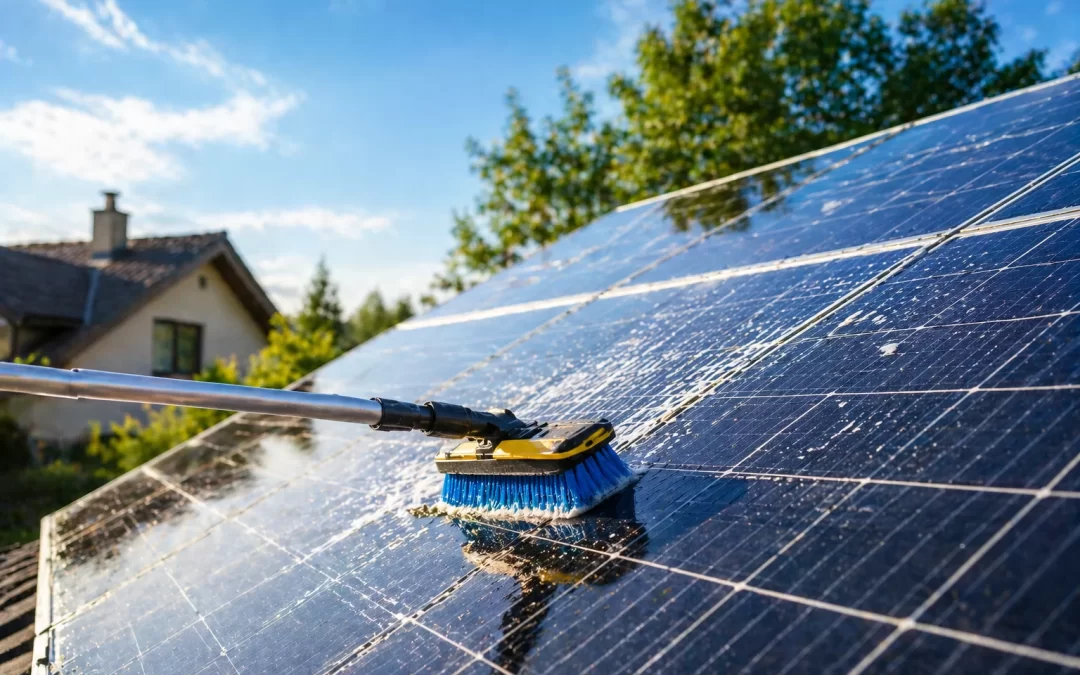
Most home solar panels only need a light cleaning once or twice a year, mainly to remove dust, pollen, and bird droppings. In many areas, normal rainfall does most of the work, so you may only need to clean panels when you notice a drop in production or see obvious buildup. Use a soft brush or sponge, mild soap, and a garden hose — never a pressure washer — and clean in the early morning or evening when panels are cool. In very dusty, coastal, or polluted areas, you may need professional cleanings more often, but over-cleaning rarely improves output enough to be worth the risk or effort.
Keeping solar panels clean is part of getting the savings you expect from your system, but most homeowners are surprised by how little hands-on work is actually required. This guide explains how to clean solar panels safely, how often you really need to do it, and when it makes sense to call a professional instead. If you’re already seeing lower-than-expected production, we’ll also cover how to tell whether dirt is the problem or if something else is going on.
Table of Contents
- Why Cleaning Solar Panels Matters (and When It Doesn’t)
- How Often Should You Clean Solar Panels?
- How to Clean Solar Panels Safely (Step-by-Step)
- What NOT to Do When Cleaning Solar Panels
- How Dirt Affects Solar Panel Performance (With Real Numbers)
- Climate and Location: How Your Area Changes Cleaning Needs
- DIY Cleaning vs. Professional Cleaning
- Key Solar Numbers: Costs, Savings, and How Cleaning Fits In
- If Cleaning Doesn’t Fix Low Production
- What to Do Next: Deciding If and When to Clean
- Frequently Asked Questions
- Summary: Key Takeaways
- Get Personalized Solar Advice and Quotes
Why Cleaning Solar Panels Matters (and When It Doesn’t)
Solar panels work best when sunlight can reach the cells without obstruction. Anything that blocks light — dust, pollen, leaves, bird droppings, or soot — can reduce how much electricity your system produces.
However, the impact of dirt is often smaller than homeowners expect, especially in areas with regular rain. The key is understanding when cleaning will meaningfully improve performance and when it’s just extra work and risk.
How dirt affects solar panels in simple terms
Think of your solar panels like a car windshield:
- A light layer of dust usually doesn’t stop you from seeing (or your panels from producing) much.
- Heavy grime, sticky pollen, or bird droppings can block a noticeable amount of light.
- Rain acts like a basic car wash, but it doesn’t always remove baked-on or sticky debris.
Most modern solar panels are made with glass that has a smooth, sometimes anti-reflective coating that helps dirt slide off more easily, especially on sloped roofs.
Real-world impact: what studies and field data show
- Light dust in moderate climates often causes only about 1–3% loss in production.
- Heavier soiling in dry, dusty, or polluted areas can cause 5–10% loss, and in extreme cases (near deserts or industrial zones) 15–25% if never cleaned.
- After a good rain, many systems see production bounce back close to normal unless there are sticky deposits or shaded areas where dirt collects.
Because most residential systems are designed with some performance margin, a few percent loss from dust usually doesn’t break the economics of solar — but it can matter if you’re trying to maximize every kilowatt-hour.
When cleaning works in your favor
Cleaning is usually worth it when:
- You can clearly see bird droppings, leaves, or heavy grime on panels.
- Your monitoring app shows a noticeable, sustained drop in production that lines up with a long dry, dusty period.
- You live near a busy road, construction site, farm, or industrial area with lots of airborne dust or soot.
- Your panels are installed at a very low tilt (or flat), so rain doesn’t rinse them well.
When cleaning may not be worth the effort
- You get regular rain and only see a light, even layer of dust.
- Your production numbers look normal for the season and weather.
- The panels are high and hard to reach, making DIY cleaning risky.
- The cost of hiring a professional cleaner is higher than the value of the extra energy you’d gain.
In many cases, simple visual checks and monitoring your system’s output are enough to decide whether cleaning is actually needed.
How Often Should You Clean Solar Panels?
There is no one-size-fits-all schedule, but most U.S. homeowners fall into a “light maintenance” category.
Typical cleaning frequency by situation
- Most suburban homes with regular rain: Visual check 1–2 times per year; clean only if you see buildup or a performance drop.
- Dry, dusty, or high-pollen areas: Plan for a basic cleaning 1–2 times per year, plus after major dust or pollen events.
- Coastal homes (salt spray): Light rinse or cleaning 2–4 times per year to reduce salt buildup and corrosion risk.
- Near farms, highways, or industrial areas: 2–4 cleanings per year may be justified, depending on how dirty panels get.
- Flat or very low-slope roofs: More frequent checks and cleaning, since water and dirt can pool and dry on the glass.
Use performance, not the calendar, as your main guide
Instead of cleaning on a strict schedule, use these triggers:
- You notice a 5–10% or greater drop in production compared with similar sunny days or the same month last year.
- You see obvious dirt, bird droppings, or shading from debris when you look at the array from the ground or a safe vantage point.
- Your installer or monitoring system flags potential soiling issues.
If you’re not already tracking your system’s output, it’s worth learning how. A good place to start is understanding how to monitor your solar system’s performance so you can spot issues early.
Seasonal considerations
- Spring: Pollen can create a sticky film; a post-pollen-season rinse can help.
- Summer: Dust and bird droppings can bake onto hot glass; clean in the cooler hours if needed.
- Fall: Leaves and debris can collect around panel edges and mounting hardware.
- Winter: Snow usually slides off on its own; in many cases, it’s safer to wait than to try to clear snow from a roof.
How to Clean Solar Panels Safely (Step-by-Step)
Cleaning solar panels is similar to washing windows — with extra attention to safety and avoiding damage to the glass and wiring.
Safety first: when NOT to climb on the roof
- If your roof is steep, slippery, or more than one story, avoid climbing up yourself.
- Never step directly on solar panels; they are not designed to bear foot traffic.
- Avoid cleaning during wet, icy, or very windy conditions.
- If you’re uncomfortable with heights or don’t have proper safety gear, hire a professional.
Tools and materials you’ll need
- Soft-bristle brush or sponge on a telescoping pole
- Bucket of lukewarm water
- Mild, non-abrasive soap (a small amount of dish soap is usually fine)
- Standard garden hose with a gentle spray nozzle
- Soft squeegee (optional, helpful for ground-mounted systems)
- Non-slip shoes and, for roof work, appropriate safety harness and ladder
Step-by-step cleaning process
- Turn off the system if recommended by your installer. Check your system manual; some manufacturers recommend shutting down before maintenance.
- Choose the right time of day. Early morning or late evening is best, when panels are cool. Spraying cold water on hot glass can cause thermal stress and increase the risk of micro-cracks.
- Rinse off loose dirt. Use a garden hose with a gentle spray to rinse the panels from top to bottom. Avoid high-pressure settings.
- Gently scrub problem areas. Dip your soft brush or sponge in soapy water and lightly scrub any stubborn spots like bird droppings or sticky pollen. Do not use abrasive pads or harsh chemicals.
- Rinse thoroughly. Rinse again with clean water to remove all soap residue, which can leave streaks and attract more dirt.
- Let them air dry. On roof-mounted systems, air drying is usually fine. For ground mounts, you can use a soft squeegee to reduce water spots.
- Restore power if you turned the system off. Follow your inverter or system manual’s startup sequence.
Special case: ground-mounted or carport systems
If your panels are ground-mounted or on a low carport, cleaning is much easier and safer:
- You can reach them with a short pole or even by hand.
- You can use a squeegee to reduce water spots.
- You may choose to clean slightly more often because the risk and effort are lower.
What NOT to Do When Cleaning Solar Panels
Avoiding damage is more important than getting panels perfectly spotless. Some cleaning methods can void warranties or shorten panel life.
Common mistakes to avoid
- Do not use a pressure washer. High-pressure water can damage seals, wiring, and even the glass surface.
- Do not use abrasive pads or brushes. Steel wool, scouring pads, or stiff brushes can scratch the glass and reduce performance.
- Do not use harsh chemicals or solvents. Bleach, ammonia, and strong cleaners can damage panel coatings and mounting hardware.
- Do not spray very cold water on very hot panels. Rapid temperature changes can stress the glass.
- Do not walk on panels. This can cause micro-cracks that may not show up immediately but reduce long-term performance.
Warranty considerations
Most solar panels come with 25–30 year performance warranties and 10–25 year product warranties. Using improper cleaning methods can give manufacturers a reason to deny a claim if damage occurs.
If you ever suspect damage or need to file a claim, it helps to know how solar panel warranty claims work and what’s covered.
How Dirt Affects Solar Panel Performance (With Real Numbers)
Understanding the numbers helps you decide whether cleaning is worth your time or the cost of a professional service.
Typical production losses from soiling
- Light dust and pollen (with regular rain): About 1–3% loss in output.
- Moderate soiling in dry climates: Around 4–8% loss over several months without rain.
- Heavy soiling (desert, industrial, or agricultural areas): 10–25% loss if panels are not cleaned for long periods.
These are general ranges; actual impact depends on your specific location, roof tilt, and how your system is designed.
What that means in dollars
For a typical U.S. home solar system:
- Average system size: 6–10 kW (about 15–25 panels)
- Average annual savings: $1,300–$1,500 on electricity bills
- Panel lifespan: 25–30 years performance warranty; 30–35 years typical life
If light dust causes a 3% loss on a system saving $1,400 per year, that’s about $42 per year in “lost” value. In many cases, that’s less than the cost of a professional cleaning, especially if rain will restore most of the performance anyway.
When cleaning has the biggest payoff
- Your system is large (10 kW+), so each percentage point of performance is worth more.
- You pay high electricity rates, so every kilowatt-hour is more valuable.
- Your panels are heavily soiled and not getting natural rinsing from rain.
- You can clean safely yourself with minimal cost.
Climate and Location: How Your Area Changes Cleaning Needs
Where you live has a big impact on how often you should clean solar panels and how much it matters.
Rainy or moderate climates
- Regular rain does a decent job of rinsing panels.
- Most homeowners only need to clean occasionally, if at all.
- Pollen seasons may still justify a quick rinse once a year.
Dry, dusty, or desert climates
- Dust storms and long dry periods can cause significant buildup.
- Rain is infrequent and may not be enough to wash panels clean.
- Cleaning 2–4 times per year can be reasonable, especially for larger systems.
Coastal areas
- Salt spray can leave a film on panels and accelerate corrosion of metal parts.
- More frequent light rinsing (every few months) can help maintain performance and longevity.
Urban and industrial areas
- Air pollution, soot, and fine particles can stick to panels.
- Rain may not fully remove oily or sticky residues.
- Periodic cleaning can help, especially if you notice visible film or streaking.
DIY Cleaning vs. Professional Cleaning
Deciding whether to clean panels yourself or hire a professional comes down to safety, access, and cost versus benefit.
When DIY cleaning makes sense
- Your panels are on a single-story roof with a gentle slope, or ground-mounted.
- You have safe access with a sturdy ladder and basic safety gear.
- You’re comfortable working at height and following safety precautions.
- You only need light cleaning — no major repairs or inspections.
When to hire a professional
- Steep, high, or complex roofs where falls are a real risk.
- You see signs of damage, loose wiring, or mounting issues.
- You want a full inspection along with cleaning.
- Your warranty or installer recommends professional maintenance.
Typical costs and what’s included
Professional solar panel cleaning services in the U.S. often charge:
- A flat fee per visit (commonly $150–$400 for a typical residential system), or
- A per-panel rate (often $10–$25 per panel, depending on access and location).
Services may include visual inspection of panels, wiring, and mounting hardware, which can be valuable for catching issues early. Always confirm what’s included and whether the company is insured and experienced with solar systems.
Key Solar Numbers: Costs, Savings, and How Cleaning Fits In
Cleaning is just one small part of the overall economics of going solar. It helps to see how it fits into the bigger picture.
Typical residential solar system numbers (U.S. averages)
- System cost: $28,000–$32,000 before incentives for a typical home system.
- Cost after 30% federal tax credit (ITC): About $19,600–$22,400, if you’re eligible. Always confirm details with a tax professional.
- Cost per watt: Roughly $2.50–$3.50 installed.
- Average annual savings: Around $1,300–$1,500 on electricity bills.
- Payback period: About 7–9 years on average, depending on your rates and incentives.
- Panel lifespan: 25–30 years performance warranty; many systems keep producing for 30–35 years.
Where cleaning fits into long-term value
- Over 25–30 years, even a few percent improvement in average output can add up, especially in high-cost electricity markets.
- However, cleaning too often or using risky methods can cause damage that costs more than the extra energy is worth.
- For most homeowners, a “light touch” approach — occasional cleaning when needed, plus regular monitoring — strikes the best balance.
If you’re still evaluating whether solar makes sense for your home overall, our honest solar worth-it guide and solar cost and savings guide walk through the key financial variables in more detail.
If Cleaning Doesn’t Fix Low Production
Sometimes, dirty panels are not the main reason your system is underperforming. If you’ve cleaned safely and still see low output, it’s time to look deeper.
Other common causes of low production
- Seasonal changes: Shorter winter days and lower sun angles naturally reduce output.
- New shading: Tree growth, new buildings, or other obstructions can cast shade on panels.
- Inverter issues: The inverter (which converts DC to AC power) is a common failure point.
- Wiring or connection problems: Loose or corroded connections can reduce performance or cause safety issues.
- Equipment degradation or failure: Panels slowly lose efficiency over time, and occasional failures can happen.
How to diagnose next steps
- Check your monitoring app or portal for error messages or unusual patterns.
- Compare current production to past months or the same month last year, adjusting for weather.
- Look for obvious shading or physical damage from the ground.
- If you suspect an equipment issue, contact your installer or a qualified solar technician.
For a deeper dive into diagnosing issues, see our guide on why your solar system might be producing less than expected and our article on solar inverter problems and how to diagnose them.
What to Do Next: Deciding If and When to Clean
To decide your next step, focus on three things: safety, visible dirt, and performance data.
Is now the right time to clean your solar panels?
Cleaning is likely worth doing soon if:
- You can safely access the panels or hire a reputable professional.
- You see clear buildup (bird droppings, heavy dust, pollen film, or leaves).
- Your monitoring shows a noticeable, sustained drop in production not explained by weather or season.
It may be better to wait or skip cleaning if:
- Your roof is steep or high and you don’t have proper safety gear.
- You only see a light dust layer and production looks normal.
- Rain is forecast soon and may naturally rinse the panels.
Information to gather before calling a pro
- Your system size (in kW) and age.
- Roof type, pitch, and number of stories.
- Any known issues (loose wiring, broken tiles, visible damage).
- Recent production data (last few months) and any error messages from your monitoring system.
Questions to ask a cleaning or solar service company
- Are you experienced specifically with solar panel cleaning and maintenance?
- Are you licensed and insured for roof work in my state?
- What cleaning methods and products do you use?
- Do you perform a visual inspection of wiring, mounting, and inverters as part of the service?
- How do you price the job (per panel, per visit, or flat rate)?
When getting multiple quotes makes sense
- If you’re considering an ongoing maintenance plan versus one-time cleanings.
- If your system is large or complex, and pricing varies widely.
- If you’re also thinking about adding batteries, expanding your system, or upgrading equipment.
Frequently Asked Questions
Do I really need to clean my solar panels?
Many homeowners never need to clean their panels beyond what rain already does, especially in moderate climates. You should consider cleaning if you see obvious buildup or a noticeable drop in production that isn’t explained by weather or season.
Can I use a pressure washer to clean solar panels?
No, you should not use a pressure washer on solar panels. High-pressure water can damage seals, wiring, and the glass surface, potentially voiding your warranty and causing long-term performance issues.
How often should I clean solar panels in a dusty or desert area?
In very dusty or desert areas, many homeowners find that cleaning 2–4 times per year keeps performance closer to expected levels. The best approach is to monitor your system’s output and clean when you see a sustained drop or heavy visible soiling.
Is it safe to walk on solar panels while cleaning them?
You should never walk on solar panels. They are not designed to support foot traffic, and doing so can cause micro-cracks or other damage that may not be visible right away but can reduce performance and shorten panel life.
Will cleaning my solar panels void the warranty?
Cleaning itself will not void your warranty if you use gentle methods like soft brushes, mild soap, and low-pressure water. However, using harsh chemicals, abrasive tools, or pressure washers can cause damage that manufacturers may not cover, so always follow the care guidelines in your panel documentation.
Should I turn off my solar system before cleaning the panels?
Many manufacturers recommend shutting down the system before maintenance, but procedures vary by equipment. Check your inverter and system manual for specific instructions, and if you’re unsure, contact your installer or a qualified solar technician.
Summary: Key Takeaways
- Most homeowners only need to clean solar panels occasionally — often once or twice a year at most, and sometimes not at all beyond what rain provides.
- Light dust usually causes only a small (1–3%) performance loss, while heavy soiling in dusty or coastal areas can reduce output by 10–25% if never addressed.
- Safety comes first: avoid roof work if it’s steep or high, and never use pressure washers, harsh chemicals, or abrasive tools on panels.
- Monitoring your system’s production is the best way to know when cleaning is actually needed and when other issues may be causing low output.
- If you’re unsure about cleaning, or your system still underperforms after cleaning, it’s wise to consult your installer or a qualified solar professional.
Get Personalized Solar Advice and Quotes
Every home, roof, and climate is different, and the best maintenance plan for your solar panels depends on your specific situation. Getting personalized quotes from reputable installers can help you understand not just installation costs, but also what long-term care — including cleaning and monitoring — will look like for your system.
If you’re ready to see what solar could look like for your home, you can compare options and get tailored estimates at /get-my-quote/ with no pressure and no obligation.