
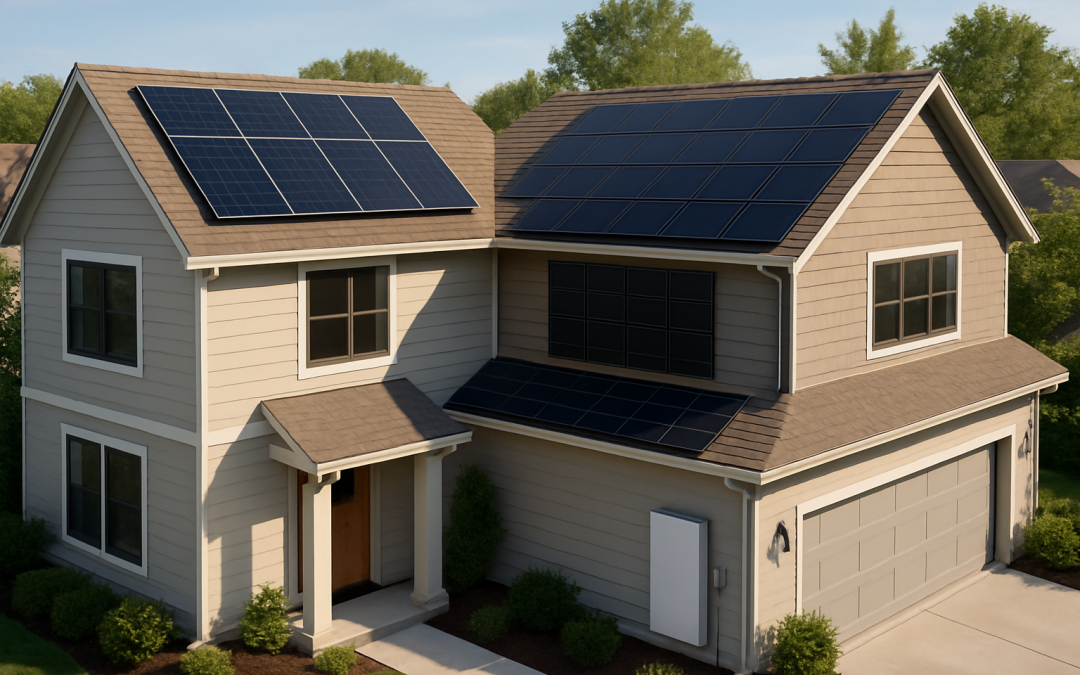
SunPower vs. Tesla Solar Panels: Pricing, Efficiency, and Installation Compared
SunPower solar panels are generally more efficient and more expensive than Tesla solar panels, while Tesla usually offers lower upfront pricing and a more streamlined online buying experience. For most homeowners, SunPower is the better fit if you want maximum performance and long-term reliability, and Tesla is more attractive if you’re focused on price and a simple, tech-driven process. Actual costs and savings depend heavily on your roof, electricity rates, and local incentives. In some areas, the installer you choose will matter more than whether you pick SunPower or Tesla equipment.
This guide compares SunPower vs. Tesla solar panels in plain language so you can decide which (if either) fits your home and budget. It’s written for U.S. homeowners at any stage of research, from “Is solar worth it?” to “Which quote should I sign?” We’ll walk through pricing, efficiency, warranties, installation experience, and when each brand makes the most sense.
Table of Contents
- SunPower vs. Tesla Solar Panels: Quick Overview
- Pricing: SunPower vs. Tesla Solar Costs
- Panel Efficiency and Performance
- Equipment, Inverters, and Batteries
- Installation Experience and Service
- Key Numbers: Costs, Savings, and Payback
- When SunPower Is the Better Choice
- When Tesla Is the Better Choice
- How to Decide Between SunPower and Tesla (Step-by-Step)
- Frequently Asked Questions
- Summary: Key Takeaways
SunPower vs. Tesla Solar Panels: Quick Overview
What this comparison really comes down to
For most homeowners, SunPower vs. Tesla is a trade-off between:
- Higher efficiency and premium build (SunPower) vs. lower price and simple buying process (Tesla).
- Long, very strong warranties from a dedicated solar company (SunPower) vs. solid but more “mass-market” coverage from a tech/EV brand (Tesla).
- Local, vetted dealers (SunPower) vs. a centralized, mostly online experience (Tesla).
Brand snapshots (as of 2026)
- SunPower
- Known for: Some of the highest-efficiency residential panels on the market.
- Typical panel efficiency: ~21%–23%+ on flagship lines.
- Business model: Panels sold and installed through a network of certified local dealers.
- Positioning: Premium performance, premium price.
- Tesla
- Known for: Aggressive pricing, online ordering, and integration with Powerwall batteries.
- Typical panel efficiency: ~19%–21% (varies by model and supplier).
- Business model: Direct-to-consumer with Tesla crews and some third-party installers.
- Positioning: Streamlined, tech-forward, value-focused.
When this comparison matters most
This SunPower vs. Tesla comparison matters most if:
- You have a smaller or shaded roof and need high output per square foot.
- You care about brand reputation, warranty strength, and long-term reliability.
- You’re trying to decide whether to pay more for premium panels or keep costs down.
In some cases, neither SunPower nor Tesla is the best fit. A reputable local installer using other Tier 1 panels can sometimes offer better value, especially if service quality is higher.
Pricing: SunPower vs. Tesla Solar Costs
Typical cost ranges
Nationally, residential solar systems (any brand) usually fall around:
- Total system cost (before incentives): $28,000–$32,000 for a typical 8–10 kW system.
- Cost per watt: $2.50–$3.50 installed.
- After 30% federal tax credit (ITC): $19,600–$22,400 (if you qualify; consult a tax professional).
Compared to that baseline, here’s how SunPower and Tesla usually stack up in 2026 (actual quotes vary by state and installer):
- SunPower (premium pricing)
- Typical cost per watt: ~$3.25–$4.25+.
- Example 8 kW system: $26,000–$34,000+ before incentives.
- After 30% ITC (if eligible): ~$18,200–$23,800+.
- Tesla (value-focused pricing)
- Typical cost per watt: ~$2.25–$3.00 (often below local averages).
- Example 8 kW system: $18,000–$24,000 before incentives.
- After 30% ITC (if eligible): ~$12,600–$16,800.
These are ballpark ranges; your roof, location, and installer can push you outside them.
What affects SunPower vs. Tesla pricing
Your actual quote will depend on:
- System size (kW): Bigger systems cost more overall but less per watt.
- Roof complexity: Steep roofs, multiple levels, or obstacles (chimneys, skylights) add labor cost.
- Local labor rates: California and Northeast markets tend to be more expensive than many Midwest or Southern states.
- Equipment mix: Adding batteries (like Tesla Powerwall or SunPower SunVault), EV chargers, or critter guards increases cost.
- Incentives and rebates: State and utility rebates can significantly reduce net cost, but they vary widely.
When SunPower’s higher price can still make sense
- You have limited roof space and need maximum production per panel.
- Your local electricity rates are very high, so every extra kWh produced has strong financial value.
- You plan to stay in your home for 15–20+ years and care about long-term performance and warranty strength.
When Tesla’s lower price is more attractive
- You have plenty of roof space and don’t need ultra-high-efficiency panels.
- Your main goal is to lower your electric bill with the lowest upfront cost.
- You’re comfortable with a more standardized, online-first buying process.
What to do next about pricing
Before you decide, it’s smart to compare at least two or three quotes side by side. Make sure each quote clearly lists:
- Total system size (kW) and number of panels.
- Cost per watt and total price before incentives.
- Estimated annual production (kWh) and savings.
- Warranty terms for panels, inverters, and workmanship.
For a deeper dive into how system size and design affect cost, see Solar Power Systems Explained: Types, Costs, Components, and How They Work for Homeowners.
Panel Efficiency and Performance
What “efficiency” means in simple terms
Panel efficiency is the percentage of sunlight a panel can turn into electricity. Higher efficiency means:
- More power from the same roof area.
- Fewer panels needed for the same system size.
- Potentially better performance in limited-space or partially shaded conditions.
SunPower vs. Tesla efficiency numbers
- SunPower
- Flagship residential panels (e.g., M-Series, A-Series) often reach ~21%–23%+ efficiency.
- Some of the highest-efficiency mass-market panels available as of 2026.
- Tesla
- Standard panels typically fall in the ~19%–21% efficiency range.
- Still considered high-efficiency, but usually a step below SunPower’s top models.
Real-world impact on your roof
On a typical home, the efficiency difference might look like this:
- Example: You need about 8 kW of solar.
- With ~23% SunPower panels, you might need ~18–20 panels.
- With ~20% Tesla panels, you might need ~20–24 panels.
If your roof is small or has limited “good” sun-facing areas, SunPower’s higher efficiency can be a big advantage. If you have plenty of space, the difference may not matter much.
Degradation and long-term performance
All panels slowly lose output over time. The key questions are: how fast, and what does the warranty promise?
- SunPower
- Often guarantees ~92%+ of original output at year 25 on premium lines.
- Degradation rates can be as low as ~0.25% per year on some models.
- Tesla
- Typically guarantees around ~80%–85% of original output at year 25 (varies by model and supplier).
- Degradation closer to ~0.5% per year is common.
Over 25 years, that difference can add up to more total energy produced from SunPower panels, especially in high-sun states.
When high efficiency works in your favor
- You have a small or complex roof and need to maximize every square foot.
- You’re in a high-cost electricity market (California, Northeast, Hawaii, etc.), where extra production is worth more.
- You plan to stay in your home long enough to benefit from 25+ years of output.
When you may not need top-tier efficiency
- You have lots of open roof space with good sun exposure.
- Your local electricity rates are moderate or low, so the value of extra production is smaller.
- You’re more focused on shorter payback and lower upfront cost than squeezing out every kWh.
Equipment, Inverters, and Batteries
Panel technology and appearance
- SunPower
- Uses high-efficiency monocrystalline cells, often with a sleek, all-black look.
- Known for premium build quality and aesthetics.
- Tesla
- Uses black monocrystalline panels sourced from Tier 1 manufacturers.
- Also offers the separate Tesla Solar Roof (solar shingles), which is a different product with very different pricing and installation requirements.
If you’re curious about how Tesla’s Solar Roof compares to traditional panels, see Solar Roof Shingles Explained.
Inverters: how DC becomes usable AC power
Solar panels produce DC power; your home uses AC. Inverters handle the conversion. The two main types are:
- String inverters: One central unit for many panels.
- Microinverters: Small inverters attached to each panel.
SunPower and Tesla both use modern inverter solutions, but the details can differ by installer and system design. To understand the pros and cons, see Microinverters vs. String Inverters: Which Is Right for You?.
Batteries and backup power
- SunPower
- Offers the SunVault battery system for backup and time-of-use savings.
- Often sold as a bundled package with SunPower panels through local dealers.
- Tesla
- Offers the well-known Tesla Powerwall battery.
- Strong integration with the Tesla app and EV ecosystem.
Adding batteries can significantly increase system cost but also provide backup power and more control over when you use grid electricity. For a deeper look at whether storage makes sense, see Do I Need a Solar Battery? Honest Pros and Cons.
When equipment differences matter most
- You want whole-home backup or specific circuits backed up during outages.
- You live in an area with time-of-use rates or frequent grid outages.
- You already own a Tesla vehicle and want everything in one app (Tesla) or prefer a dedicated solar brand ecosystem (SunPower).
Installation Experience and Service
How SunPower installations work
- SunPower sells through a network of certified local dealers.
- Your experience can vary based on the specific dealer’s quality, communication, and crew.
- Many SunPower dealers are long-established solar companies with strong local reputations.
How Tesla installations work
- Tesla uses a mix of in-house crews and third-party installers, depending on your location.
- Most of the process is handled online through the Tesla website and app.
- Pricing is more standardized, but scheduling and communication can feel less personal.
Warranties and service
Both brands offer long warranties, but the details differ.
- SunPower
- Often offers a 25-year “Complete Confidence” warranty covering panels, inverters, and workmanship (check your specific quote).
- Strong track record as a long-time solar specialist.
- Tesla
- Typically offers a 25-year performance warranty on panels and a 10–12 year product warranty on inverters and Powerwall (verify in your contract).
- Service is handled through Tesla support and the app; experiences can vary by region.
When installation differences work in your favor
- If you value local, face-to-face support and a relationship with a nearby company, SunPower’s dealer model can be a plus.
- If you prefer a streamlined, app-based experience and standardized pricing, Tesla may feel more comfortable.
Potential downsides to be aware of
- SunPower
- Quality can vary between dealers; you need to vet the local company carefully.
- Premium pricing may not always translate into proportionally higher savings.
- Tesla
- Some homeowners report longer wait times for installation or service in busy markets.
- Less flexibility for custom or unusual roof situations compared to a local boutique installer.
Key Numbers: Costs, Savings, and Payback
National averages to keep in mind
Regardless of brand, these are typical U.S. residential solar benchmarks as of 2026:
- Average system size: 6–10 kW (about 15–25 panels).
- Average system cost: $28,000–$32,000 before incentives.
- Average cost per watt: $2.50–$3.50 installed.
- Federal solar tax credit (ITC): 30% of eligible costs through 2032 (consult a tax professional for your situation).
- Average annual bill savings: $1,300–$1,500.
- Typical payback period: 7–9 years nationally (shorter in high-cost electricity states, longer where power is cheap).
- Panel performance warranty: 25–30 years.
- Typical panel lifespan: 30–35 years or more.
How SunPower vs. Tesla can change these numbers
- Upfront cost
- SunPower: Often above the national average cost per watt.
- Tesla: Often at or below the national average cost per watt.
- Annual savings
- SunPower: Can be slightly higher if your system produces more kWh due to higher efficiency and lower degradation.
- Tesla: Savings can still be strong, especially if your system is larger or your roof has plenty of space.
- Payback period
- SunPower: Payback might be similar or slightly longer if the premium price isn’t fully offset by extra production.
- Tesla: Lower upfront cost can mean a shorter payback, especially in moderate-sun or lower-rate areas.
What affects your personal payback the most
- Your electric rate: Higher rates = faster payback.
- How much sun your roof gets: South-facing, unshaded roofs perform best.
- System size and design: Right-sizing matters; too small or too large can both hurt ROI.
- Local incentives: State and utility rebates, net metering policies, and property tax rules all matter.
- Whether you add batteries: Batteries add resilience but usually lengthen payback time.
If you want to understand the full financial picture, including incentives, see our solar cost and savings guide and solar incentives and tax credits overview. Always confirm tax details with a qualified tax professional.
When SunPower Is the Better Choice
Situations where SunPower shines
- Limited roof space: You have a small or partially shaded roof and need maximum output per panel.
- High electricity costs: You live in a state with expensive power (e.g., CA, NY, MA, HI), so extra efficiency pays off.
- Long-term home plans: You expect to stay in your home for 15–20+ years and care about long-term performance.
- Premium aesthetics and brand: You value a sleek look and a top-tier solar brand with a long track record.
- Strong local dealer: There’s a highly rated SunPower dealer in your area with excellent reviews.
When SunPower may not be worth the premium
- You have plenty of roof space and don’t need ultra-high efficiency.
- Your local electricity rates are relatively low, so extra production doesn’t add much financial value.
- The SunPower quote is significantly higher than other Tier 1 panel quotes with similar warranties.
- You’re planning to move in 5–7 years and may not fully benefit from the long-term performance advantage.
When Tesla Is the Better Choice
Situations where Tesla makes more sense
- Budget-focused: You want a reputable brand with lower upfront cost and solid performance.
- Plenty of roof space: You can install slightly more panels instead of paying for ultra-high efficiency.
- Tesla ecosystem: You already own a Tesla vehicle or Powerwall and want everything in one app.
- Comfortable with online process: You like a standardized, tech-driven buying experience.
When Tesla might not be ideal
- You want a highly customized system design or have a very complex roof.
- You prefer local, in-person service and a long-term relationship with a nearby installer.
- Your area has mixed reviews for Tesla’s installation or service responsiveness.
- You’re considering Tesla Solar Roof but don’t actually need a full roof replacement (traditional panels are usually more cost-effective).
How to Decide Between SunPower and Tesla (Step-by-Step)
Step 1: Confirm whether solar makes sense for your home
Before choosing a brand, make sure solar itself is a good fit. Key questions:
- Is your roof in good condition (no major replacement needed soon)?
- Does your roof get at least 4–5 hours of direct sun per day on average?
- Are your electric bills high enough that solar savings matter?
If you’re unsure, our honest guide Is Solar Worth It? walks through the main factors.
Step 2: Gather basic information about your home
- Last 12 months of electric bills (kWh usage and total cost).
- Roof age, material (asphalt, tile, metal), and any shading issues.
- Whether you plan to add an EV, hot tub, or other big loads soon.
Step 3: Get at least two or three quotes
Ideally, compare:
- One quote featuring SunPower panels.
- One quote featuring Tesla panels (or Tesla Solar Roof if you truly need a new roof).
- One quote from a reputable local installer using other Tier 1 panels.
Step 4: Compare the quotes apples-to-apples
For each quote, look at:
- System size (kW) and number of panels.
- Total price and cost per watt.
- Estimated annual production (kWh) and first-year bill savings.
- Warranties: panel, inverter, workmanship, and performance guarantees.
- Timeline: permitting, installation, and activation estimates.
Step 5: Ask these key questions to each installer
- “How did you size my system, and what usage did you assume?”
- “What happens if my system underperforms your estimate?”
- “Who handles warranty claims and service calls, and how long do they typically take?”
- “What are my options if I need to replace my roof in the future?”
- “How will changes in net metering or utility rates affect my savings?”
Step 6: Decide based on value, not just brand
In the end, choose the option that offers the best combination of:
- Reasonable price for the system size and quality.
- Strong, clear warranties and a trustworthy installer.
- System design that fits your roof and energy goals.
Sometimes that will be SunPower, sometimes Tesla, and sometimes a different Tier 1 brand installed by a great local company.
Frequently Asked Questions
Are SunPower solar panels better than Tesla panels?
SunPower panels are generally more efficient and have stronger long-term performance warranties than Tesla’s standard panels, which can be important if you have limited roof space or very high electricity rates. Tesla panels are still high quality but are usually positioned as a more affordable, value-focused option. “Better” depends on whether you prioritize maximum performance or lower upfront cost.
Are SunPower solar panels worth the extra cost?
SunPower panels can be worth the premium if you have a small or shaded roof, plan to stay in your home for decades, and live in an area with high electricity prices. In those cases, higher efficiency and slower degradation can translate into more lifetime savings. If you have plenty of roof space and moderate power costs, the extra price may not pay off as clearly.
Is Tesla the cheapest way to get solar panels?
Tesla often offers very competitive pricing, but it’s not always the absolute cheapest option in every market. Some local installers using other Tier 1 panels can match or beat Tesla’s price, especially during promotions or in lower-cost regions. Getting multiple quotes is the only reliable way to see who is truly cheapest for your home.
Which has a better warranty, SunPower or Tesla?
SunPower typically offers one of the strongest all-in-one warranties in the industry, often covering panels, inverters, and workmanship for 25 years with high performance guarantees. Tesla also offers long panel performance warranties and solid coverage on inverters and Powerwall, but the exact terms can be somewhat less comprehensive than SunPower’s premium package. Always compare the written warranty documents in your specific quotes.
Does choosing SunPower or Tesla change my solar tax credit?
No, the 30% federal solar tax credit (ITC) applies to eligible residential solar systems regardless of whether you choose SunPower, Tesla, or another brand, as long as you meet IRS requirements. The brand doesn’t affect the percentage, but your total system cost does, so the dollar amount of your credit will differ. Always confirm your eligibility and how to claim the credit with a qualified tax professional.
Should I get a battery with SunPower or Tesla panels?
A battery can be valuable if you have frequent outages, time-of-use rates, or want backup power for peace of mind, regardless of panel brand. SunPower pairs with SunVault and Tesla pairs with Powerwall, and both can work well; the decision should be based on your outage risk, budget, and utility rate structure. Because batteries add significant cost, it’s wise to evaluate them separately from the panel brand choice.
Summary: Key Takeaways
- SunPower vs. Tesla solar panels is mainly a choice between premium efficiency and warranties (SunPower) and lower upfront cost and a streamlined process (Tesla).
- Expect typical system costs of $28,000–$32,000 before incentives and a 7–9 year payback on average, with SunPower often above and Tesla often at or below those benchmarks.
- SunPower’s higher efficiency matters most if you have limited roof space or very high electricity rates; Tesla’s value pricing shines when you have plenty of roof area and a tight budget.
- Your installer’s quality, system design, and local incentives often affect your results more than the brand name alone.
- The best next step is to get multiple quotes, compare cost per watt, production estimates, and warranties side by side, and choose the option that offers the best long-term value for your specific home.
Every home is different, and the right answer for your neighbor may not be right for you. The most reliable way to decide between SunPower, Tesla, or another top brand is to see real numbers for your roof, your utility rates, and your goals. When you’re ready, you can get personalized, no-obligation quotes tailored to your home at bestsolaradvice.com/get-my-quote/ so you can move forward with confidence.