
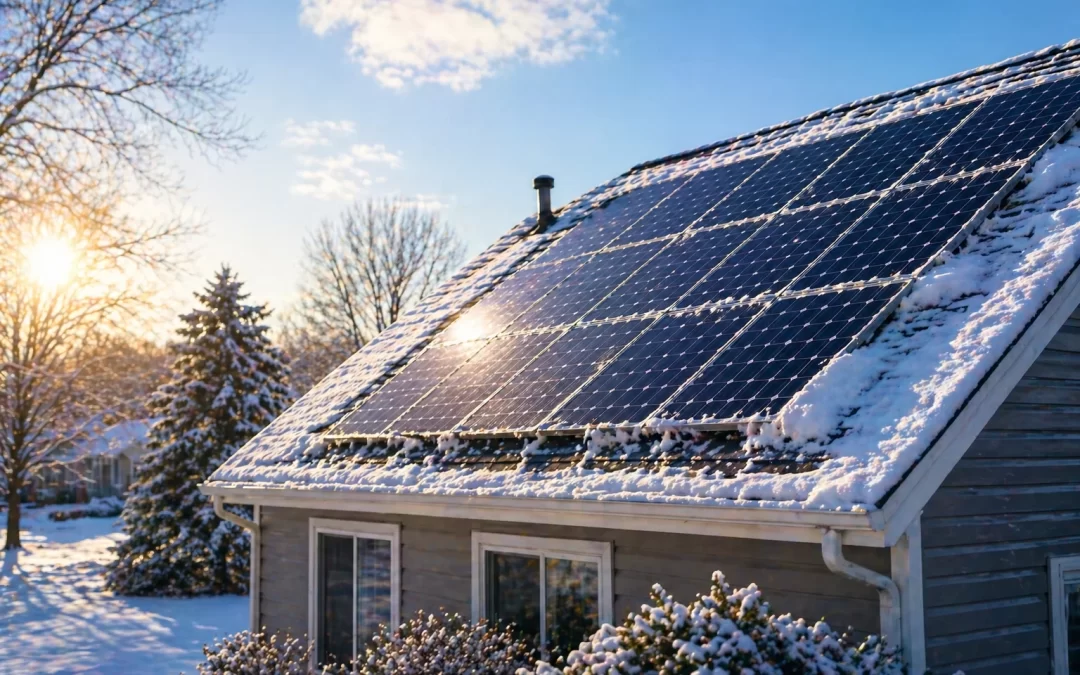
Yes, solar panels do work in winter, even in cold, snowy climates. In fact, cold temperatures can slightly improve panel efficiency, but shorter days, lower sun angles, and snow cover usually reduce total energy production compared to summer. Most well-designed systems in the U.S. still generate a meaningful share of their annual power in winter, but you should expect lower output and higher grid usage during the coldest, darkest months.
Winter is when many homeowners start wondering if solar panels are worth it when the days are short, the air is cold, and snow is in the forecast. This guide explains how solar panels perform in winter conditions, what you can realistically expect, and how to get the most from your system when the sun is low. If you’re considering solar for your home, understanding winter performance will help you size your system correctly and avoid surprises on your winter electric bills.
Table of Contents
- How Solar Panels Work in Winter: The Simple Version
- Do Solar Panels Work Better or Worse in Cold Weather?
- What Happens When Snow Covers Solar Panels?
- Short Days and Low Sun Angle: The Real Winter Limiter
- Winter Solar Performance by Region in the U.S.
- Key Numbers: Costs, Savings, and Winter’s Impact
- When Winter Conditions Actually Help Solar
- When Winter Conditions Hurt Solar (and What to Watch For)
- Winter Maintenance Tips for Solar Homeowners
- Decision Guide: Should Winter Stop You From Going Solar?
- Frequently Asked Questions
- Summary: Key Takeaways About Solar Panels in Winter
- What to Do Next
How Solar Panels Work in Winter: The Simple Version
Solar panels don’t need heat to work — they need light. In winter, your panels convert sunlight into electricity the same way they do in July, just with fewer total hours of usable sun and sometimes snow in the way.
Key concept in plain language
Here’s what really matters for winter solar performance:
- Sunlight hours: Fewer daylight hours mean fewer hours to make power.
- Sun angle: The sun is lower in the sky, so panels receive light at a less direct angle.
- Weather: More clouds, storms, and snow can block or scatter sunlight.
- Temperature: Cold air actually helps panels work a bit more efficiently.
As long as some light reaches the panels, they will produce electricity — even on cold, partly cloudy, or hazy winter days.
Do Solar Panels Work Better or Worse in Cold Weather?
Cold temperatures themselves are not a problem for solar panels. In fact, most modern panels are tested to operate in temperatures as low as -40°F. Performance is more about light than temperature.
Why cold can improve efficiency
- Solar panels are rated at 77°F (25°C) in lab conditions.
- As panels get hotter than that, their output drops slightly — typically around 0.3% to 0.5% per °C above 25°C (manufacturer “temperature coefficient”).
- In cold weather, panels stay cooler, so they lose less efficiency to heat.
This means that on a clear, sunny winter day, a panel can be slightly more efficient than on a very hot summer day — but the total energy produced is still usually lower because the day is shorter and the sun is lower.
What actually reduces winter production
- Shorter days: In many northern states, winter days can be 4–5 hours shorter than summer days.
- Lower sun angle: Light hits the panels at a slant, reducing intensity.
- More clouds and storms: Fewer clear-sky days in many regions.
- Snow cover: Even a thin layer of snow can block most light.
So while each ray of sun is used efficiently in cold weather, there are simply fewer rays to work with.
What Happens When Snow Covers Solar Panels?
Snow is one of the biggest winter-specific issues for solar panels, especially in northern and mountain states. The good news: snow usually affects production for days, not months, and panels are designed to handle it.
How snow affects production
- Light blockage: A full layer of snow can block almost all sunlight, dropping output close to zero until it slides off or melts.
- Partial coverage: Even partial snow coverage on a string of panels can reduce output from that whole string, depending on wiring and optimizers.
- Reflection: Once panels are clear, snow on the ground can reflect extra light onto them, slightly boosting output on bright days.
In many climates, snow only fully covers panels for a few days at a time. Over a full year, the total energy lost to snow is often in the range of 0–10% for moderate-snow areas and 10–20% in heavy-snow regions, depending on roof pitch and local weather.
How panels shed snow
Most rooftop systems are installed at an angle, which helps snow slide off:
- On steeper roofs (30–45°), snow often slides off within a day or two of sun and slightly warmer temperatures.
- On low-slope roofs, snow can linger longer and impact production more.
- Dark panel surfaces absorb heat from the sun and can slowly melt snow even in sub-freezing air temperatures.
In many cases, the safest and most practical approach is simply to wait for the sun to clear the panels rather than trying to remove snow yourself.
Should you clear snow off your panels?
Safety comes first. For most homeowners:
- Do not climb on a snowy or icy roof to clear panels.
- Roof rakes or long, soft-bristled tools can sometimes be used from the ground on low roofs, but you risk damaging panels if you’re not careful.
- In many areas, the energy you’d gain by clearing snow a day or two earlier is small compared to the safety risk.
If snow cover is frequent and long-lasting where you live, discuss panel tilt, layout, and snow load ratings with your installer during the design phase.
Short Days and Low Sun Angle: The Real Winter Limiter
Even in places with little snow, winter solar production drops because of basic astronomy: the sun is lower and the days are shorter.
How much does winter reduce solar output?
The exact drop depends on your latitude and local climate, but as a rough guide for a well-designed system:
- In much of the U.S., a typical system might produce 50–70% less energy in December than in June.
- Over the whole year, winter months (December–February) might account for only 15–25% of annual production, while summer months (June–August) can account for 35–45%.
- Spring and fall often provide a good balance of cooler temperatures and decent sun angles.
Installers use local “solar irradiance” data (average sun energy per square meter) to size your system so that your annual production meets your goals, knowing winter will be lower and summer higher.
What this means for your winter electric bill
- You’ll likely buy more electricity from the grid in winter than in summer.
- If your state has net metering or bill credits, your summer surplus can help offset winter usage.
- If you use electric heat or heat pumps, your winter consumption may be higher just as your solar production is lower.
This seasonal mismatch doesn’t mean solar “doesn’t work” in winter — it just means you should look at savings over a full year, not month by month.
Winter Solar Performance by Region in the U.S.
Where you live has a big impact on how much winter affects your solar panels. The same 7 kW system will behave very differently in Arizona than in upstate New York.
Northern and snowy states
States like Minnesota, Wisconsin, Michigan, New York, Vermont, and Maine typically see:
- Short winter days and low sun angles.
- Frequent snow events and cloud cover.
- More pronounced winter production dips.
However, these states also often have strong incentives and higher electricity rates, which can still make solar attractive over the year. System design (tilt, orientation, snow load ratings) is especially important here.
Mid-Atlantic and Midwest
States like Pennsylvania, Ohio, Illinois, and Missouri see:
- Moderate snow and cloud cover.
- Noticeable but manageable winter production drops.
- Good spring and fall production that helps balance the year.
In these regions, winter performance is a factor, but not usually a deal-breaker if the system is sized correctly.
South and Southwest
States like Arizona, New Mexico, Texas, and much of California experience:
- Mild winters with relatively high sun angles.
- Little to no snow in most populated areas.
- Smaller seasonal swings in production compared to northern states.
Here, winter solar production is often quite strong, and the main seasonal challenge may be summer heat rather than winter cold.
Pacific Northwest
Washington and Oregon often have:
- Long, cloudy, and rainy winters.
- Limited snow at lower elevations but frequent overcast skies.
- Lower winter production mainly due to clouds, not temperature.
Systems in these areas are designed with realistic expectations about winter output and may rely more on net metering and summer production to balance the year.
Key Numbers: Costs, Savings, and Winter’s Impact
Winter performance is only one part of the solar equation. To decide if solar makes sense for your home, it helps to look at the big-picture numbers and how winter fits in.
Typical system size and cost
- Average system size: Most U.S. homes install about 15–25 panels, often in the 6–10 kW range, depending on roof size and energy use.
- Cost per watt: A typical residential system costs around $2.50–$3.50 per watt before incentives.
- Total system cost: That works out to roughly $28,000–$32,000 before incentives for a typical system.
- Federal tax credit: The 30% federal Investment Tax Credit (ITC) is available through 2032, potentially reducing that to about $19,600–$22,400 after the credit, if you qualify. Always confirm details with a tax professional.
Local incentives, utility rebates, and your specific roof and electrical situation can move these numbers up or down.
Typical savings and payback — including winter
- Average annual savings: Many homeowners see around $1,300–$1,500 per year in electric bill savings, depending on rates and system size.
- Payback period: A common national average is about 7–9 years to “break even,” with panels lasting much longer than that.
- Panel lifespan: Most panels come with a 25–30 year performance warranty and can often keep producing for 30–35 years or more.
Winter’s lower production is already baked into these averages — they’re based on full-year performance, not just summer. Your actual results will depend on your location, roof orientation, shading, and electricity rates.
If you want a deeper dive into how costs and savings work over time, our solar cost and savings guide breaks down the main variables in plain language.
When Winter Conditions Actually Help Solar
Winter isn’t all bad news for solar. In some ways, it can actually help your system perform better on a per-hour basis.
Cold, clear days
On bright, cold days with clear skies and no snow on the panels:
- Panels run cooler and closer to their ideal efficiency.
- Air is often clearer and less hazy than in humid summer months.
- Reflected light from snow on the ground can slightly boost output.
These days can produce surprisingly strong power for the number of daylight hours available.
Lower household usage (in some homes)
Not every home uses more energy in winter. In homes that:
- Use gas or oil for heating, and
- Have high summer air-conditioning loads
Winter electric usage may actually be lower than summer. In those cases, even reduced winter solar production can cover a large share of your winter electric needs.
When Winter Conditions Hurt Solar (and What to Watch For)
There are also situations where winter can significantly reduce the benefits you see from your solar panels. Being aware of these helps you set realistic expectations and design your system wisely.
Heavy, persistent snow cover
If you live in an area where:
- Snow frequently accumulates on roofs and
- Temperatures stay below freezing for long stretches
your panels may be covered for days or even weeks at a time. This can noticeably reduce your winter production and may mean:
- You rely more on the grid in winter.
- Your annual production is a bit lower than a simple “sun hours” estimate might suggest.
- Panel tilt and layout become more important to help snow slide off.
Discuss snow patterns with your installer so they can factor this into their design and production estimates.
Shading from trees or nearby buildings
In winter, the sun is lower in the sky, which can cause:
- Longer shadows from trees, chimneys, and neighboring buildings.
- Shading in the morning and late afternoon that wasn’t an issue in summer.
Good installers will model winter shading during the design process. If you already have solar and notice bigger-than-expected winter drops, shading could be part of the reason. Our guide on why solar systems produce less than expected walks through how to diagnose issues like this.
High winter electric usage
Homes that use electric resistance heat or heat pumps in cold climates can see very high winter electric bills. At the same time, solar production is at its lowest. This can mean:
- Your system may not cover as high a percentage of your winter usage as it does in summer.
- You may want to size your system based on annual usage, not just peak winter needs, to avoid oversizing.
- Weatherization and efficiency upgrades (insulation, air sealing) can be just as important as solar.
In some very cold, high-usage homes, it may not be practical or cost-effective to size solar to cover 100% of winter usage; a balanced, annual approach is usually better.
Winter Maintenance Tips for Solar Homeowners
Solar systems are generally low-maintenance, but winter is a good time to pay a bit of extra attention to performance and safety.
Monitoring performance
Use your monitoring app or inverter display to:
- Compare winter production to your installer’s estimates.
- Watch for sudden drops that might indicate snow cover, shading, or equipment issues.
- Track how quickly production rebounds after storms.
If you’re not sure how to interpret your data, our guide on monitoring your solar system’s performance explains what to look for and when to call your installer.
Cleaning and snow removal
- In most climates, rain and melting snow keep panels reasonably clean.
- Do not use metal tools, shovels, or harsh chemicals on panels — they can scratch glass and void warranties.
- If you must clean or clear panels, use soft tools and stay off the roof if it’s snowy or icy.
For general cleaning best practices, see our guide on how to clean solar panels and how often you actually need to.
When to call a professional
Contact your installer or a qualified solar technician if you notice:
- One string or section of panels consistently underperforming.
- Inverter error messages or frequent shutdowns.
- Physical damage from ice, falling branches, or heavy snow.
Most systems and components carry warranties, and professional help is the safest way to protect your investment.
Decision Guide: Should Winter Stop You From Going Solar?
For most U.S. homeowners, winter should be a planning factor — not a deal-breaker — when deciding whether to install solar panels.
When solar still makes strong sense despite winter
Solar is often a good fit if:
- Your roof has decent sun exposure (south, southeast, or southwest is ideal).
- Your electric rates are moderate to high (often $0.15/kWh or more).
- You plan to stay in your home for at least 7–10 years.
- You’re comfortable with the idea that winter bills may be higher than summer, but annual savings are still strong.
To see how these factors play out for your home, our honest guide on whether solar is worth it walks through the main decision points.
When winter might be a bigger concern
Winter should be weighed more carefully if:
- You live in an area with very heavy, persistent snow cover.
- Your roof is heavily shaded in winter by trees or nearby buildings.
- Your winter electric usage is extremely high and you expect solar to cover nearly all of it.
- Your roof orientation or structure limits where panels can be placed.
In these cases, solar can still work, but expectations and system design need to be realistic. Multiple quotes can help you see how different installers handle these challenges.
What to have ready before getting quotes
To get accurate proposals that account for winter performance, gather:
- 12 months of electric bills (kWh usage, not just dollar amounts).
- Basic information about your roof: age, material (asphalt, metal, etc.), and any known issues.
- Photos of your roof from the ground and, if possible, from the attic (to show structure).
- Any plans to add electric vehicles, heat pumps, or other major loads in the next few years.
Installers use this information to model your annual production, including winter dips, and to size your system appropriately.
Questions to ask installers about winter performance
- “How much less will my system produce in December compared to June?”
- “How did you factor snow and winter shading into your production estimate?”
- “What panel tilt and layout are you recommending, and why?”
- “What warranties cover damage from snow and ice?”
- “Can I see a month-by-month production estimate, not just annual totals?”
Getting multiple quotes is especially helpful in winter-prone areas, because you can compare how different companies model and explain seasonal performance.
Frequently Asked Questions
Do solar panels work in winter when it snows?
Yes, solar panels work in winter, but heavy snow that fully covers the panels can temporarily stop production until it slides off or melts. Over a full year, snow-related losses in most U.S. locations are usually in the 0–20% range, depending on climate, roof pitch, and how long snow tends to stick.
Do solar panels work better in cold weather?
Panels are slightly more efficient in cold weather because they lose less performance to heat, so each hour of sun can be a bit more productive. However, shorter days, lower sun angles, and more clouds usually mean total winter production is still lower than in summer.
Should I clear snow off my solar panels?
In most cases, it’s safer to let the sun and gravity clear snow from your panels rather than climbing on a snowy roof. If you do clear snow, only work from the ground with a soft, non-metal tool and avoid anything that could scratch the glass or damage wiring.
How much less power do solar panels produce in winter?
Many systems produce 50–70% less energy in December than in June, depending on location and weather. Over the whole year, winter months might contribute only 15–25% of your total solar production, with spring and summer making up the majority.
Will solar panels still save me money if winters are long where I live?
They often can, because savings are based on annual production, not just winter. Even in northern states with long winters, higher electricity rates and good summer production can lead to payback periods in the 7–9 year range, but your exact results depend on your roof, shading, rates, and incentives.
Can solar panels be damaged by snow and ice?
Quality panels are designed and tested to handle significant snow loads and freezing temperatures. Damage is more likely from extreme events, falling branches, or improper snow removal, so it’s important to use a reputable installer and follow their guidance on winter care.
Summary: Key Takeaways About Solar Panels in Winter
- Solar panels do work in winter, but shorter days, lower sun angles, and snow usually mean lower production than in summer.
- Cold temperatures can improve panel efficiency, but they don’t fully offset reduced sunlight and weather impacts.
- Most U.S. systems still deliver strong annual savings of about $1,300–$1,500, with typical payback periods of 7–9 years, even when winter dips are factored in.
- Your location, roof tilt, shading, and local snow patterns have the biggest impact on how winter affects your system.
- The best next step is to get personalized quotes that include month-by-month production estimates so you know what to expect in both winter and summer.
What to Do Next
Winter doesn’t have to be a reason to avoid solar — it’s simply a factor to plan around. The most reliable way to understand how solar panels will perform on your home, in your climate, is to get a few customized quotes that model your actual roof and usage.
When you’re ready, you can compare multiple offers and see projected winter and summer production for your specific home at /get-my-quote/. Taking this step now can help you lock in incentives and start planning for lower electric bills year-round.