
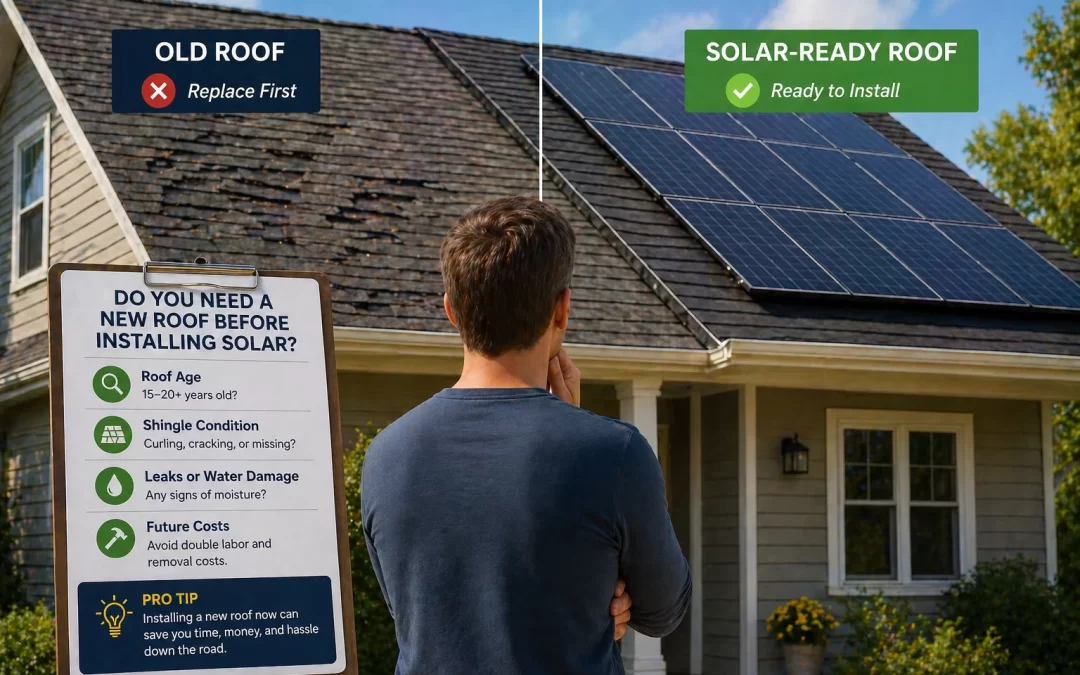
Most homeowners do not automatically need a new roof before installing solar panels, but your roof must be in good condition with enough remaining life to match your solar system (typically 25–30 years). If your roof is older than about 15–20 years, has leaks, sagging, or damaged shingles, it’s usually smarter to replace or repair it before going solar. Installing solar on a failing roof can cost you more later because you’ll have to pay to remove and reinstall the panels for a roof replacement. A professional roof and solar assessment is the safest way to know for sure what your home needs.
Deciding whether you need a new roof before installing solar is one of the most important early choices in your solar journey. This guide is written for U.S. homeowners who want clear, practical advice before signing a contract. We’ll walk through how to evaluate your roof, what it costs if you wait too long, and how to time roof work and solar installation so you don’t waste money.
Table of Contents
- Do You Need a New Roof Before Installing Solar? The Short Version
- How to Tell If Your Roof Is Ready for Solar
- Roof Age and Material: How Long Should It Last Under Solar?
- Key Numbers: Roof, Solar Costs, and Long-Term Savings
- When You Should Replace the Roof Before Solar
- When You Probably Don’t Need a New Roof Yet
- Timing Roof Work and Solar Installation Together
- Questions to Ask Roofers and Solar Installers
- Decision Guide: What to Do Next
- Frequently Asked Questions
- Summary: Roof and Solar in 5 Key Points
Do You Need a New Roof Before Installing Solar? The Short Version
You don’t always need a new roof before installing solar, but you do need a roof that:
- Is structurally sound (no sagging, soft spots, or major leaks)
- Has enough remaining life to last most of your solar system’s life (ideally 20+ years)
- Can safely support the weight and mounting hardware of solar panels
- Meets local building codes and your utility’s interconnection requirements
Solar panels are designed to last 25–30 years or more. If your roof is near the end of its life, putting solar on it now usually means you’ll pay twice for labor later: once to install the panels, and again to remove and reinstall them when the roof is replaced.
How to Tell If Your Roof Is Ready for Solar
Simple checks you can do yourself
Before calling anyone, you can do a basic roof health check from the ground and inside your attic:
- From the ground (or a safe ladder view):
- Look for missing, curled, cracked, or broken shingles or tiles
- Check for dark patches, moss, or algae that may indicate moisture problems
- Look for sagging areas or dips in the roof line
- Check flashing around chimneys, vents, and skylights for obvious gaps
- Inside the attic:
- Look for water stains, damp insulation, or mold
- Check for daylight coming through the roof boards where it shouldn’t
- Notice any musty smells that could signal long-term moisture
If you see multiple problem signs, it’s a strong hint that roof work should be addressed before solar.
What a professional roof inspection will tell you
A licensed roofer or structural engineer can give you a more precise answer. They will typically:
- Estimate remaining roof life based on age, material, and wear
- Check the roof deck and framing for structural issues
- Identify any code issues or past improper repairs
- Flag areas that may not hold solar racking safely
Many reputable solar installers will also do a roof assessment as part of their site visit. For borderline cases, it’s worth getting both a roofer’s and an installer’s opinion.
Red flags that usually mean “fix or replace before solar”
- Roof is leaking now or has leaked recently
- Noticeable sagging or soft spots when walked on
- Shingles are brittle, curling, or losing a lot of granules
- Multiple layers of old roofing (common on older homes)
- Roof is already past its typical lifespan for the material
Roof Age and Material: How Long Should It Last Under Solar?
Typical roof lifespans by material
Here are common U.S. residential roof types and their typical lifespans under normal conditions:
- Asphalt shingles (3-tab): 15–20 years
- Architectural asphalt shingles: 20–30 years
- Metal (standing seam, steel, aluminum): 40–70 years
- Clay or concrete tile: 40–50+ years (tiles), 25–30 years (underlayment)
- Wood shake/shingle: 20–30 years (often not ideal for solar without modifications)
- Flat roofs (TPO, EPDM, modified bitumen): 20–30 years
Solar panels typically come with a 25–30 year performance warranty, and many systems last 30–35 years or more. Ideally, your roof should have at least 20 years of life left when you install solar, so you’re not forced into a mid-life roof replacement.
How solar panels affect roof life
When installed correctly, solar panels can actually help protect the roof surface they cover by:
- Shielding shingles from direct UV exposure
- Reducing temperature swings on the roof surface
- Blocking some rain, hail, and debris
However, this protective effect only helps if the roof is already in good condition. Solar will not “fix” an aging or failing roof.
Age guidelines: when to think about replacement
These are general rules of thumb for asphalt shingle roofs (the most common in the U.S.):
- 0–10 years old: Usually safe for solar with no roof work needed, assuming no damage.
- 10–15 years old: Case-by-case. A professional inspection is important; minor repairs may be enough.
- 15–20+ years old: Strongly consider replacement or major repairs before solar, especially in harsh climates.
For longer-lasting roofs like metal or tile, you may be fine installing solar even at 15–20 years old, but the underlayment on tile roofs often needs attention sooner than the tiles themselves.
Key Numbers: Roof, Solar Costs, and Long-Term Savings
Typical solar system costs in the U.S.
As of 2026, a typical residential solar system in the U.S. costs:
- Total system cost: about $28,000–$32,000 before incentives
- After 30% federal tax credit (ITC): about $19,600–$22,400 (if you qualify)
- Cost per watt: roughly $2.50–$3.50, depending on equipment and location
- Average system size: 6–10 kW, or about 15–25 panels for a typical home
- Average annual bill savings: around $1,300–$1,500, with a 7–9 year national average payback period
Your actual numbers depend on your state, utility rates, roof orientation, shading, and equipment choices. For a deeper dive into costs and savings, see the site’s solar cost and savings guide.
What it costs to replace a roof (with and without solar)
Roof replacement costs vary widely by material, roof complexity, and region, but typical ranges are:
- Asphalt shingle roof: about $8,000–$18,000 for an average single-family home
- Metal roof: about $15,000–$35,000+
- Tile roof (including underlayment): about $20,000–$40,000+
- Flat roof: about $8,000–$20,000
These are broad ranges; local quotes will be more precise. The key is how roof timing interacts with solar.
The hidden cost of replacing a roof after solar is installed
If you install solar on an older roof and then need a new roof later, you’ll usually pay to:
- Remove the solar panels and racking
- Store or protect the equipment during roof work
- Reinstall and rewire the system
Removal and reinstallation can cost roughly $1,500–$6,000+, depending on system size and complexity. That’s on top of the roof replacement cost itself. Avoiding this double labor is a major reason to address roof issues before going solar.
How roof condition affects solar payback
If you replace the roof and install solar at the same time, your upfront cost is higher, but you:
- Avoid paying twice for solar labor later
- Reduce the risk of leaks around mounting points
- Align the roof and solar lifespans, so you’re not forced into an early roof job
Solar still often pays for itself in 7–9 years on average, but adding a roof replacement may extend your overall payback period. Whether that’s worth it depends on how close your roof is to failing and how high your electric rates are. For a broader view of whether solar makes sense for your home, the site’s solar worth-it guide is a helpful resource.
When You Should Replace the Roof Before Solar
Situations where a new roof first is usually the smart move
It’s generally wise to replace or significantly repair your roof before installing solar if:
- Your roof is near or past its expected lifespan. For example, a 18–22-year-old asphalt shingle roof in a hot or storm-prone area.
- You already have leaks or water damage. Solar mounting hardware will not fix underlying moisture problems.
- The roof structure is questionable. Sagging, soft spots, or known framing issues need to be addressed first.
- You have multiple layers of roofing. Many building codes and installers prefer or require stripping down to the deck before solar.
- You plan to stay in the home long-term. Aligning a new roof and new solar system can give you 20–30 years of low-maintenance operation.
Climate and location factors
In harsher climates, roofs age faster, which makes pre-solar roof work more important:
- Hot, sunny states (AZ, NV, TX, FL): UV and heat can shorten shingle life; a 15-year-old roof here may be more worn than a 20-year-old roof in a mild climate.
- Snow and ice regions (Upper Midwest, Northeast, Rockies): Freeze-thaw cycles and ice dams stress roofing materials and flashing.
- High wind or hurricane zones (coastal areas, Southeast): Roofs must be in top shape to handle both storms and the added wind load on solar panels.
Local building codes and wind/snow load requirements may also influence whether your existing roof is acceptable for solar.
Financially, when replacing first makes sense
Replacing the roof before solar usually makes financial sense when:
- The roof would likely need replacement within the next 5–8 years anyway
- Your utility rates are high, so solar savings will still be strong even with added roof cost
- You want to avoid the disruption and extra labor cost of panel removal later
While a new roof is not a “solar incentive,” some homeowners find that bundling both projects together simplifies financing and planning. For any tax or financing questions, it’s best to speak with a qualified tax professional or financial advisor.
When You Probably Don’t Need a New Roof Yet
Signs your roof is likely fine for solar
You may not need a new roof before installing solar if:
- The roof is relatively new (0–10 years) and in good visible condition
- A roofer or inspector estimates 15–20+ years of remaining life
- There are no leaks, soft spots, or structural concerns
- The roof has only one layer of shingles or material
- Your local climate is mild and the roof shows minimal wear
When waiting can work in your favor
Keeping your existing roof and moving ahead with solar can be a good choice when:
- You want to start saving on electric bills as soon as possible
- Your roof is in solid condition with plenty of life left
- You’re comfortable that a future roof replacement (20+ years out) may involve panel removal and reinstallation
- You might move before the roof reaches end-of-life, so you won’t personally face that future cost
Risks of waiting too long
If you decide not to replace the roof now, be realistic about the risks:
- You may have to pay $1,500–$6,000+ later for solar removal and reinstallation
- Roof leaks that develop under the array can be harder to diagnose and repair
- Some warranties (roof and solar) may have conditions related to roof condition and maintenance
These risks don’t mean you must replace a healthy roof; they just highlight why an honest assessment up front is so important.
Timing Roof Work and Solar Installation Together
Best practice: coordinate roof and solar as one project
When a roof replacement is needed, the smoothest approach is to:
- Get a roof inspection and replacement quote
- Get solar quotes that assume a new roof
- Schedule roof replacement first, then solar installation shortly after
Some solar companies partner with roofers and can coordinate the schedule for you. Others will work with your chosen roofer as long as the roof meets their requirements.
Who installs what?
- Roofer: Removes old roofing, repairs deck and structure, installs new roofing material, ensures flashing and waterproofing are correct.
- Solar installer: Installs mounting hardware, racking, panels, wiring, and electrical components; seals penetrations according to manufacturer specs.
Clear communication between the roofer and solar installer helps avoid finger-pointing later if any issues arise.
How this affects your solar timeline
Adding a roof project will extend your overall timeline by a few weeks to a couple of months, depending on contractor availability and permitting. For a sense of the full solar process, including permits and utility approval, the site’s guide on how long solar installation takes is a useful reference.
Questions to Ask Roofers and Solar Installers
Questions for a roofer
- How many years of life do you estimate my current roof has left?
- Are there any structural issues that would affect solar installation?
- If I replace the roof now, are there specific materials or underlayments you recommend for homes with solar?
- Do you have experience working on roofs that will have solar panels installed?
- What warranties do you offer on workmanship and materials?
Questions for a solar installer
- Will you inspect my roof and provide an honest assessment of whether it needs work before solar?
- Have you installed solar on my roof type (asphalt, tile, metal, flat) before?
- How do you flash and seal roof penetrations to prevent leaks?
- If my roof needs replacement in the future, what do you charge for panel removal and reinstallation?
- Do you coordinate with roofers, or should I hire one separately?
- What roof condition or age would make you recommend replacement before installing solar?
Why multiple quotes matter
Different companies may give you different opinions about whether your roof is “good enough.” Getting at least 2–3 quotes from both roofers and solar installers helps you:
- Spot outliers (overly optimistic or overly cautious recommendations)
- Compare warranties and workmanship guarantees
- Understand how each company handles roof-related risks
When you’re ready to compare installers, the site’s guide on how to choose a solar installer can help you know what to look for and avoid.
Decision Guide: What to Do Next
Step 1: Estimate your roof’s remaining life
Start with these questions:
- What year was the roof last replaced?
- What material is it (asphalt, metal, tile, flat, wood)?
- Have you noticed any leaks, missing shingles, or sagging?
- Do you live in a harsh climate (extreme heat, heavy snow, high winds)?
If your answers suggest the roof is older or showing wear, move to a professional inspection.
Step 2: Get a professional roof inspection
Ask a licensed roofer to:
- Provide a written estimate of remaining roof life
- Identify any repairs needed before solar
- Quote a full replacement if they think it’s likely within 5–10 years
Step 3: Get solar quotes that factor in your roof situation
When you request solar quotes, be upfront about your roof’s age and any inspection findings. Ask each installer to:
- Confirm whether they’re comfortable installing on your current roof
- Explain any roof-related conditions in their warranty
- Provide a rough cost for future panel removal/reinstallation if the roof is replaced later
Step 4: Decide which path fits you best
Based on your roof condition and quotes, you’ll likely land in one of these scenarios:
- Roof is in great shape: Proceed with solar now; no roof work needed.
- Roof is borderline but not failing: Weigh the cost of replacing now vs. the risk and cost of replacing later with solar on the roof.
- Roof is clearly near end-of-life: Plan to replace the roof first, then install solar soon after.
There’s no one-size-fits-all answer, but a clear understanding of your roof’s condition and the long-term costs will help you make a confident decision.
Frequently Asked Questions
Can solar panels be installed on an old roof?
Solar panels can technically be installed on an older roof, but it’s often not recommended if the roof is near the end of its life or has existing issues. Doing so may force you to pay for panel removal and reinstallation when the roof needs replacement, which can add thousands of dollars to your long-term costs.
How old is too old for a roof to add solar panels?
For asphalt shingle roofs, once you’re in the 15–20+ year range, it’s usually considered “borderline” or “too old” without a professional inspection. If a roofer estimates less than 10 years of life left, replacing the roof before solar is generally the safer and more cost-effective choice.
Do solar panels damage your roof?
When installed correctly by a qualified installer, solar panels should not damage your roof and can even protect the areas they cover from sun and weather. Most problems arise from poor installation, inadequate flashing, or installing on a roof that was already in bad condition.
Can I replace my roof after solar panels are installed?
Yes, you can replace your roof after solar is installed, but the panels must be removed and reinstalled, which adds cost and time. Many homeowners choose to replace an aging roof before going solar to avoid this extra labor and disruption later.
Will my roof warranty be affected by solar panels?
Some roof warranties may be affected if penetrations are made by non-approved contractors or if installation doesn’t follow manufacturer guidelines. It’s important to review your roof warranty and choose a solar installer who understands and works within those requirements.
Can I get solar on a flat or metal roof?
Yes, both flat and metal roofs can work very well with solar when the right mounting systems are used. Your installer should have specific experience with your roof type and follow local building codes for wind and snow loads.
Summary: Roof and Solar in 5 Key Points
- You don’t always need a new roof before installing solar, but your roof must be structurally sound with enough remaining life to match most of your solar system’s 25–30 year lifespan.
- Replacing a failing roof after solar is installed can add $1,500–$6,000+ in removal and reinstallation costs on top of the roof job.
- Most U.S. solar systems cost about $28,000–$32,000 before incentives and pay back in 7–9 years on average, so roof timing can affect your overall financial picture.
- Professional inspections from both a roofer and a solar installer are the best way to decide whether to repair, replace, or keep your current roof.
- Your next step is to get a clear picture of your roof’s condition and then compare solar quotes that honestly address roof age, structure, and long-term costs.
If you’re ready to see what solar would look like on your home with your specific roof, getting personalized quotes is the most reliable next step. Compare recommendations from multiple installers so you can decide whether to repair, replace, or keep your roof as-is before going solar. You can start that process anytime at /get-my-quote/, with no obligation and a focus on what’s genuinely best for your home.