
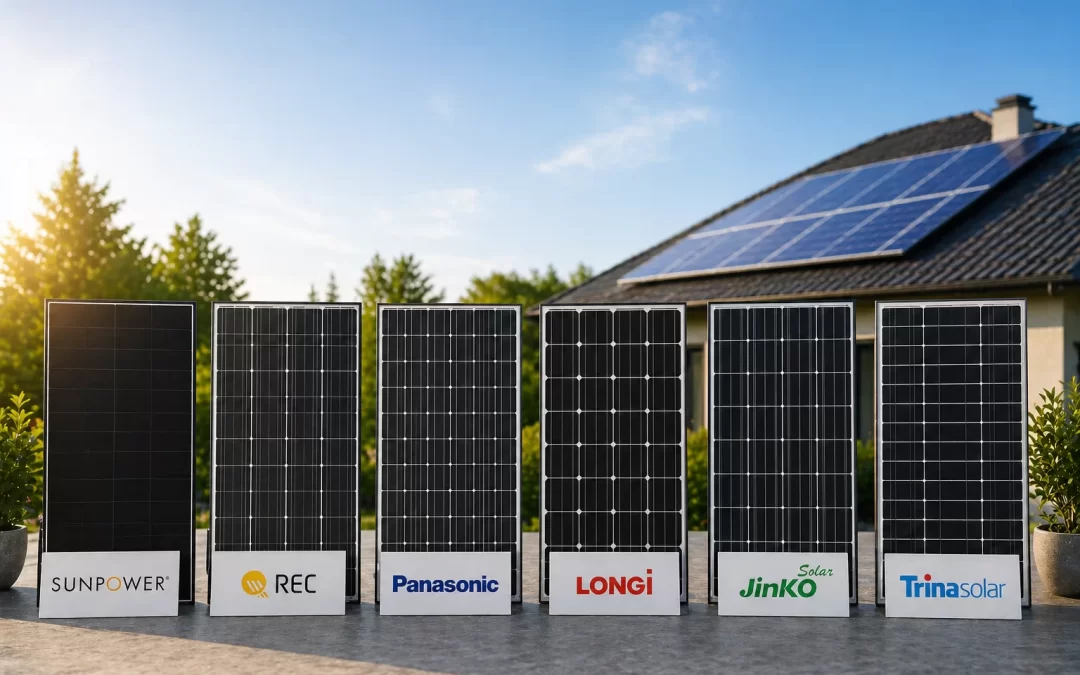
The best solar panels of 2026 for most U.S. homeowners are high-efficiency monocrystalline panels from proven brands like SunPower/Maxeon, REC, Qcells, Canadian Solar, and JinkoSolar, paired with a reputable local installer. These brands offer strong efficiency (around 20–23%), solid 25-year warranties, and good long-term performance at different price points. Expect a typical home system to cost about $28,000–$32,000 before incentives and $19,600–$22,400 after the 30% federal tax credit, with a 7–9 year average payback. The “best” panels for you depend on your roof space, budget, and local installer options—premium panels aren’t always worth the extra cost if you have plenty of roof area.
This guide to the best solar panels of 2026 is written for U.S. homeowners who want clear, no-nonsense advice before signing a solar contract. We’ll compare top brands, explain what really matters (and what doesn’t), and show you how to match the right panels to your roof and budget. By the end, you’ll know which brands to prioritize, when to pay for premium, and how to talk confidently with installers.
Table of Contents
- How We Chose the Best Solar Panels of 2026
- Best Solar Panel Brands of 2026 (Quick Comparison)
- Top Solar Panel Brands Explained
- Real Numbers: Cost, Savings, and Payback
- How to Choose the Best Solar Panels for Your Home
- When Premium Panels Are (and Aren’t) Worth It
- Location & Roof Factors That Change the “Best” Panel
- What to Ask Installers About Panels in 2026
- Decision Guide: What to Do Next
- Frequently Asked Questions
- Summary & Key Takeaways
How We Chose the Best Solar Panels of 2026
“Best” solar panels doesn’t just mean the highest efficiency or the fanciest brand name. For homeowners, the best panels are the ones that give you reliable, long-term savings at a fair price, installed by a company that will actually pick up the phone if something goes wrong.
Key criteria we used
We focused on factors that matter in real-world home installations:
- Efficiency: How much sunlight the panel turns into electricity (most top panels are 20–23% efficient).
- Degradation rate: How quickly the panel loses output over time (lower is better).
- Warranty strength: Length and clarity of product and performance warranties (25 years is now the standard for top brands).
- Real-world reliability: Track record in the field, not just lab numbers.
- Availability and installer support: How easy it is to get these panels through reputable local installers.
- Value: Cost per watt compared to performance and warranty.
Why installer quality matters as much as panel brand
Even the best solar panels can underperform if they’re installed poorly. Wiring, roof attachments, inverter choice, and system design all affect your savings. In many cases, choosing a strong local installer with “very good” panels beats choosing a weak installer with “top-tier” panels.
Best Solar Panel Brands of 2026 (Quick Comparison)
Here’s a homeowner-friendly overview of the best solar panels of 2026 and where each brand tends to fit.
Top solar panel brands at a glance
| Brand | Best For | Typical Efficiency (2026) | Warranty | Relative Cost |
|---|---|---|---|---|
| SunPower / Maxeon | Maximum efficiency & limited roof space | Up to ~22.8% | 25-year product & performance | $$$$ (premium) |
| REC | High performance & reliability | ~21–22% | 25-year product & performance (often extended via REC-certified installers) | $$$ |
| Qcells | Best overall value & U.S. manufacturing options | ~20–21.5% | 25-year product & performance on many lines | $$ |
| Canadian Solar | Budget-friendly with solid performance | ~20–21% | 12–25-year product, 25-year performance (varies by model) | $$ |
| JinkoSolar | Cost-effective, widely available | ~20–21.5% | 12–25-year product, 25–30-year performance (model-dependent) | $–$$ |
| JA Solar, Trina, LONGi | Good value from Tier 1 manufacturers | ~20–21.5% | 12–25-year product, 25-year performance | $–$$ |
All of these brands are considered “Tier 1” manufacturers in the industry, meaning they have strong bankability and large-scale production. The right choice for you depends on your roof, budget, and how long you plan to stay in your home.
Top Solar Panel Brands Explained
This section breaks down the best solar panels of 2026 in more detail so you can see where each brand shines—and where it might not be worth the extra money.
SunPower / Maxeon: Best premium solar panels
SunPower (now using Maxeon-branded panels in many markets) is widely considered the gold standard for residential solar panels.
- Efficiency: Among the highest on the market, often 21–22.8%.
- Degradation: Very low; many panels guarantee around 88–92% output after 25 years.
- Warranty: 25-year product and performance warranty, often including workmanship when installed by authorized partners.
- Ideal for: Small or shaded roofs where you need maximum power from limited space, or homeowners who prioritize top-tier performance and brand reputation.
Downside: SunPower/Maxeon systems usually cost more per watt than other brands. If you have a large, sunny roof, you may not see enough extra savings to justify the premium price.
REC: Best balance of performance and reliability
REC is a Norwegian-founded manufacturer known for high-quality, high-efficiency panels with strong warranties.
- Efficiency: Typically 21–22% on their higher-end lines.
- Degradation: Low; many REC panels guarantee around 86–92% output after 25 years.
- Warranty: 25-year product and performance warranty, often extended or enhanced when installed by REC-certified installers.
- Ideal for: Homeowners who want near-premium performance and reliability without paying the very top price tier.
Downside: Slightly more expensive than mid-range brands; availability can vary by region and installer network.
Qcells: Best overall value for most homeowners
Qcells (Hanwha Qcells) has become one of the most popular choices in U.S. residential solar because it balances cost, performance, and strong backing.
- Efficiency: Around 20–21.5% on common residential models.
- Degradation: Competitive; many panels guarantee around 86–90% output after 25 years.
- Warranty: Increasingly 25-year product and performance on newer lines.
- Ideal for: Homeowners who want solid performance, good warranties, and a reasonable price—especially where Qcells panels are made or assembled in the U.S.
Downside: Not quite as efficient as SunPower/Maxeon or top REC models, which can matter on very small roofs.
Canadian Solar: Strong performance at a competitive price
Canadian Solar is a large global manufacturer offering a wide range of panel lines, often at attractive prices.
- Efficiency: Typically 20–21% for residential modules.
- Degradation: Standard for Tier 1; many panels guarantee around 83–86% output after 25 years.
- Warranty: Product warranties range from 12–25 years depending on the specific model; performance warranties are usually 25 years.
- Ideal for: Budget-conscious homeowners who still want panels from a major, established manufacturer.
Downside: Warranty terms and quality can vary more between product lines, so it’s important to know exactly which model you’re being quoted.
JinkoSolar: Widely available, cost-effective panels
JinkoSolar is one of the world’s largest panel manufacturers and is commonly used in both residential and utility-scale projects.
- Efficiency: Around 20–21.5% for many residential modules.
- Degradation: Competitive; some lines offer improved long-term performance guarantees.
- Warranty: Product warranties typically 12–25 years; performance warranties 25–30 years depending on the series.
- Ideal for: Homeowners looking for cost-effective, Tier 1 panels where price is a major factor.
Downside: Like Canadian Solar, the exact warranty and performance depend heavily on the specific model; not all lines are equal.
Other solid Tier 1 brands: JA Solar, Trina, LONGi
JA Solar, Trina Solar, and LONGi are also large, reputable manufacturers frequently used in residential systems.
- Efficiency: Typically 20–21.5% for modern residential panels.
- Warranty: Often 12–25-year product and 25-year performance warranties.
- Ideal for: Homeowners who prioritize cost and availability, especially in markets where these brands are common.
Downside: Less brand recognition with homeowners; quality is generally strong, but again, check the exact model and warranty terms.
Real Numbers: Cost, Savings, and Payback
Regardless of which brand you choose, the big questions are: how much will it cost, how much will you save, and how long until it pays for itself?
Typical system cost in 2026
- Average system size: 6–10 kW for a typical U.S. home (about 15–25 panels).
- Average cost per watt: $2.50–$3.50 per watt before incentives, depending on your location, equipment, and installer.
- Total system cost: About $28,000–$32,000 before incentives for a typical home system.
- After 30% federal tax credit (ITC): Around $19,600–$22,400, assuming you’re eligible and can use the full credit.
The 30% federal Investment Tax Credit is currently available through 2032, but tax rules can change and your personal eligibility depends on your situation. Always confirm details with a tax professional and review our solar incentives and tax credits guide for an overview.
Average savings and payback
- Average annual bill savings: Roughly $1,300–$1,500 per year for a typical system, depending on your utility rates and usage.
- Average payback period: 7–9 years nationally, assuming you own the system and can use the tax credit.
- Panel lifespan: 25–30 years performance warranty; 30–35 years typical usable life.
Over 25–30 years, many homeowners see tens of thousands of dollars in net savings, especially in high-electricity-cost states like California, New York, Massachusetts, and Hawaii. In low-cost electricity states, the payback can be longer.
What affects your numbers the most
Your actual costs and savings will vary based on:
- Location and utility rates: Higher electricity prices and strong sun (like in California, Arizona, or Texas) improve your payback.
- Roof orientation and shading: South-facing, unshaded roofs perform best; heavy shade can significantly reduce output.
- System size: Larger systems cost more but can offset more of your bill, up to your annual usage.
- Equipment choices: Premium panels and microinverters cost more but can boost production, especially on complex roofs.
- Incentives: State, local, and utility incentives can shorten payback; these vary widely.
For a deeper dive into how these numbers work together, see our solar cost and savings guide.
How to Choose the Best Solar Panels for Your Home
The best solar panels of 2026 for your neighbor might not be the best for you. Here’s how to match panels to your specific situation.
Step 1: Understand your roof and energy use
- Roof size and shape: Small or cut-up roofs benefit more from high-efficiency panels like SunPower/Maxeon or REC.
- Roof orientation: South-facing is ideal; east/west can still work well with good design.
- Shading: Trees, chimneys, and nearby buildings can reduce output and may influence panel and inverter choices.
- Electricity usage: Look at 12 months of bills to see your average monthly kWh usage.
If you want a rough idea of how many panels you might need, our guide on how many solar panels you need walks through the math in simple terms.
Step 2: Decide where you fall on the “premium vs. value” spectrum
Ask yourself:
- Is my roof space limited or heavily shaded?
- Do I plan to stay in this home for 10+ years?
- Is maximizing long-term performance more important than minimizing upfront cost?
If you answered “yes” to most of these, premium panels may make sense. If you have plenty of roof space and are more price-sensitive, high-quality value brands like Qcells, Canadian Solar, or JinkoSolar are often the better choice.
Step 3: Look at the whole system, not just the panel brand
Panels are only one part of your solar system. You’ll also have inverters, racking, wiring, and possibly a battery.
- Inverters: Microinverters and string inverters each have pros and cons; see our guide on microinverters vs. string inverters to understand which might fit your roof.
- Batteries: Not required, but useful for backup power and certain utility rate plans; our solar battery pros and cons guide can help you decide.
- Racking and mounting: Quality hardware and proper installation protect your roof and system over decades.
A slightly less “famous” panel brand with a great inverter, solid racking, and a careful installer is often a better long-term choice than a premium panel on a poorly designed system.
When Premium Panels Are (and Aren’t) Worth It
Premium solar panels are part of the “best solar panels of 2026,” but they’re not the best financial choice for every homeowner.
When premium panels work in your favor
- Limited roof space: You need to squeeze as much power as possible from a small or partially shaded roof.
- High electricity rates: In areas with very high utility prices, extra production can pay off faster.
- Long-term home plans: You expect to stay in your home for 15–25+ years and want maximum lifetime output.
- Strict aesthetic preferences: Some premium panels offer sleek, all-black designs that blend better with certain roofs.
When premium panels may not be worth the extra cost
- Plenty of roof space: If you can fit enough mid-range panels to cover your usage, the extra efficiency may not change your bill much.
- Tight budget: Paying more per watt can stretch your payback period, especially in lower-cost electricity states.
- Shorter time horizon: If you might move in 5–7 years, you may not fully realize the extra long-term benefits.
- Weak installer: A great panel with a poor installer is a bad combination; prioritize installer quality first.
In many cases, the “best” solar panels for 2026 are high-quality, mid-priced options from brands like Qcells, REC (non-flagship lines), Canadian Solar, or JinkoSolar, installed by a reputable local company.
Location & Roof Factors That Change the “Best” Panel
Your state, climate, and roof conditions can change which solar panels are truly best for you.
State and utility considerations
- High-rate states (CA, HI, NY, MA, NJ): Extra efficiency from premium panels can pay off faster because each kWh you produce is worth more.
- Low-rate states (parts of the Midwest, South): Value-oriented panels often make more sense; payback is slower overall.
- Net metering rules: In states where excess solar power is credited at a lower rate, system sizing and panel choice become more strategic.
Climate and weather
- Hot climates: All panels lose some efficiency in high heat; some brands perform slightly better at high temperatures (look at the temperature coefficient in spec sheets).
- Snowy regions: Panels are tested for snow load, but if you get heavy snow, choose panels and racking rated for higher loads.
- Coastal areas: Look for panels with strong corrosion resistance and consider installers experienced with coastal conditions.
Roof age and condition
- Older roofs: If your roof is near the end of its life, it’s often wise to replace it before or during solar installation.
- Complex roofs: Multiple roof faces, dormers, and obstructions may benefit from higher-efficiency panels and microinverters.
If your roof is heavily shaded or structurally limited, solar may not be the right choice—or you may need a smaller system with realistic expectations. Our honest guide on whether solar is worth it can help you evaluate borderline situations.
What to Ask Installers About Panels in 2026
When you start getting quotes, you’ll likely see different panel brands and models. Here’s how to compare them without getting overwhelmed.
Key questions to ask about solar panels
- Which panel brand and exact model are you quoting, and why did you choose it?
- What is the panel’s efficiency and temperature coefficient (how much performance it loses in heat)?
- What are the product and performance warranty terms (years and guaranteed output at year 25)?
- Who handles warranty claims if something goes wrong—you or the manufacturer?
- Are you certified or preferred by this panel manufacturer (which can sometimes extend warranties)?
Red flags to watch for
- Installers who refuse to specify the exact panel model.
- Very short product warranties (less than 12 years) on new installations.
- Quotes that push one brand without explaining why it’s right for your roof and budget.
- Pressure to sign “today only” deals without time to compare.
Getting at least two or three quotes with different panel options can help you see whether a premium brand is truly adding value or just padding the price.
Decision Guide: What to Do Next
Choosing the best solar panels of 2026 is easier when you break it into clear steps.
Is now the right time to act?
It’s usually a good time to move forward if:
- Your roof is in good condition and gets decent sun.
- Your electricity bills are consistently $100+/month.
- You plan to stay in your home for at least 7–10 years.
- You can take advantage of the 30% federal tax credit (confirm with a tax professional).
You may want to wait or reconsider if your roof needs replacement soon, your home is heavily shaded, or you expect to move in a few years and local buyers don’t value solar.
Information to gather before getting quotes
- 12 months of electric bills (or at least your average monthly kWh usage).
- Basic roof details: age, material (asphalt shingle, tile, metal), and any known issues.
- Photos of your roof and main electrical panel (some installers request these upfront).
- Your goals: maximum savings, backup power, lowest upfront cost, or fastest payback.
Why multiple quotes matter
Panel brands, inverter types, and system sizes can vary a lot between installers. Getting multiple quotes helps you:
- See how different brands (SunPower/Maxeon vs. Qcells vs. Canadian Solar, etc.) change price and production.
- Compare warranties and workmanship guarantees.
- Spot outliers—both overpriced and suspiciously cheap offers.
Once you have quotes, use them to compare not just the panel brand, but the full package: equipment, design, warranty, and installer reputation.
Frequently Asked Questions
What are the best solar panels for home use in 2026?
For most U.S. homes in 2026, the best solar panels are high-efficiency monocrystalline modules from reputable brands like SunPower/Maxeon, REC, Qcells, Canadian Solar, and JinkoSolar. The right choice depends on your roof size, shading, budget, and how long you plan to stay in your home, so it’s smart to compare a premium option with a strong mid-range option in your quotes.
Are premium solar panels like SunPower worth the extra cost?
Premium panels like SunPower/Maxeon can be worth it if your roof space is limited, your electricity rates are high, or you plan to stay in your home for decades and want maximum long-term output. If you have plenty of roof space and are more focused on payback time than absolute performance, high-quality mid-priced panels from brands like Qcells or REC often provide better value.
How many solar panels do I need for a typical house?
Most U.S. homes need about 15–25 panels, depending on your energy use, panel wattage, and roof conditions. That usually translates to a 6–10 kW system, but the exact number should be based on your past 12 months of electricity usage and a site-specific design from an installer.
How long do solar panels last?
Modern solar panels typically come with 25–30 year performance warranties and often keep producing useful power for 30–35 years or more. They slowly lose output over time, but many top brands guarantee around 84–92% of their original output at year 25, depending on the model.
What is a good efficiency for solar panels in 2026?
In 2026, a good residential solar panel efficiency is around 20–22%, with premium models reaching up to about 22.8%. Higher efficiency matters most when roof space is limited; if you have plenty of space, slightly lower-efficiency panels can still cover your needs at a lower cost.
How much do the best solar panels cost?
For a typical home system using high-quality panels, expect a total installed cost of about $28,000–$32,000 before incentives, or roughly $19,600–$22,400 after the 30% federal tax credit if you’re eligible. Premium brands may push you toward the higher end of that range, while value-focused Tier 1 brands can bring costs closer to the lower end.
Summary & Key Takeaways
- The best solar panels of 2026 for most homeowners are high-efficiency monocrystalline modules from reputable brands like SunPower/Maxeon, REC, Qcells, Canadian Solar, and JinkoSolar, paired with a quality installer.
- Expect a typical home system to cost around $28,000–$32,000 before incentives and $19,600–$22,400 after the 30% federal tax credit, with a 7–9 year average payback and 25–30 year performance warranties.
- Your roof size, shading, electricity rates, and how long you’ll stay in your home matter more than chasing the absolute highest efficiency panel.
- Premium panels are most worthwhile on small or shaded roofs and in high-rate states; value-oriented Tier 1 panels often deliver the best return where roof space is ample.
- The smartest next step is to gather your electric bills, get multiple quotes with different panel options, and compare the full package—equipment, design, warranties, and installer reputation.
Solar is a long-term investment, and the “best” solar panels of 2026 are the ones that fit your roof, budget, and goals—not just the most expensive brand name. To see real numbers for your home and compare panel options side by side, get personalized quotes from vetted installers through our site at /get-my-quote/. A few minutes now can clarify your options and help you choose panels you’ll be happy with for decades.