
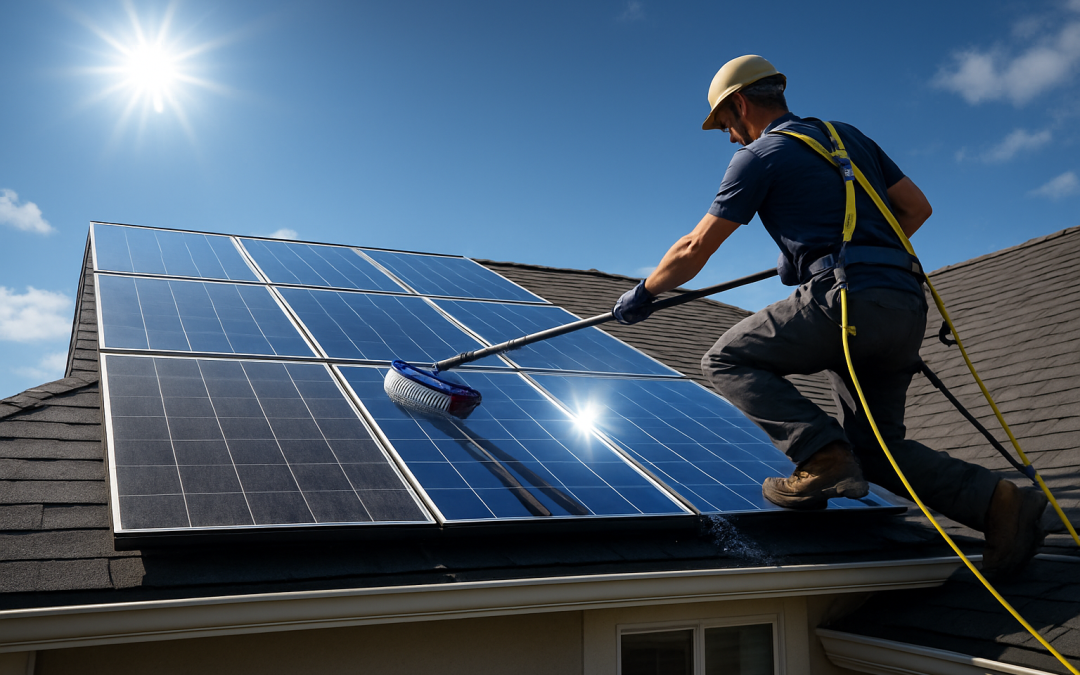
Solar panel cleaning service is a professional maintenance option where trained technicians safely wash and inspect your panels to remove dirt, pollen, bird droppings, and other buildup that can reduce energy production. Most homeowners pay about $150–$400 per visit for a typical residential system, and in dusty or high-pollen areas, clean panels can recover 5–15% or more in lost output. Professional cleaning is especially helpful if your roof is steep, high, or hard to access, or if you’re seeing a drop in production you can’t explain. It’s not always necessary in rainy climates, and over-cleaning can waste money, so the right schedule depends on your location and how dirty your panels actually get.
This guide explains how solar panel cleaning services work, what they cost, how much they can improve efficiency, and when they’re worth it for a US homeowner. If you already have solar—or you’re thinking about it and want to understand real-world maintenance—this article is for you. By the end, you’ll know when to clean, when to hire a pro, and what to ask before you book a service.
Table of Contents
- What Is a Solar Panel Cleaning Service?
- Does Cleaning Solar Panels Really Improve Efficiency?
- How Much Does Professional Solar Panel Cleaning Cost?
- How Often Should You Schedule Solar Panel Cleaning?
- DIY Cleaning vs Professional Service
- Key Solar Numbers and How Cleaning Fits In
- When Solar Panel Cleaning Service Is (and Isn’t) Worth It
- How to Choose a Solar Panel Cleaning Company
- What to Do Next: Deciding If You Should Schedule Cleaning
- Frequently Asked Questions
- Summary: Key Takeaways
What Is a Solar Panel Cleaning Service?
Simple definition
A solar panel cleaning service is a professional visit where technicians:
- Access your roof or ground-mounted array safely
- Rinse and gently scrub panels with purified or deionized water and soft brushes
- Avoid harsh chemicals or high-pressure washers that can damage panels
- Often perform a basic visual inspection for damage, loose wiring, or shading issues
The goal is to remove anything that blocks sunlight from reaching the solar cells, so your system can produce as close to its rated output as possible.
What’s typically included
Every company is different, but a standard residential solar cleaning visit usually includes:
- Site safety setup: ladders, harnesses, and fall protection on steep roofs
- Dry debris removal: leaves, branches, and loose dirt swept or blown off
- Wet cleaning: low-pressure water and soft, non-abrasive brushes or pads
- Spot treatment: extra attention to bird droppings, sap, or stuck-on grime
- Quick visual check: obvious cracks, hot spots, broken glass, or loose conduit
- Basic report: some companies provide before/after photos or a short summary
What’s usually not included
Most basic cleaning services do not include:
- Electrical testing or troubleshooting
- Inverter or wiring repairs
- Warranty claim handling
- Tree trimming or structural roof work
If a cleaner spots damage, you’ll typically be referred back to your installer or a solar repair specialist. For more on handling issues like cracked glass or failing panels, see the guide on what to do if a solar panel breaks or stops working.
Does Cleaning Solar Panels Really Improve Efficiency?
How dirt affects production
Anything that blocks light—dust, pollen, ash, bird droppings, pollution—reduces how much energy your panels can produce. This is called “soiling loss.” The impact varies a lot by location and environment:
- Light dust and pollen: often 2–5% loss in many suburban areas
- Heavy dust, agriculture, or construction zones: 5–15% loss is common
- Bird droppings or shaded patches: can locally block 20–100% of a panel section
Real-world efficiency gains from cleaning
Studies and field data show a wide range of benefits from cleaning:
- In mild climates with regular rain, cleaning may only recover 2–5% of lost output.
- In dusty, arid, or high-pollen areas, cleaning can restore 5–15% or more.
- After extreme events (wildfire ash, dust storms), cleaning can recover 20%+ in some cases.
For a typical 6–8 kW home system, a 5–10% gain can mean hundreds of kilowatt-hours per year. Whether that’s worth paying for a service depends on your local electricity rates and how dirty your panels get between rains.
How to tell if dirt is hurting your system
Signs that cleaning might help:
- Your production has dropped compared to the same month last year, but your utility rates and weather are similar.
- You can see a visible film of dust or many bird droppings on the panels.
- You live near a busy road, farm, industrial area, or construction site.
- You’ve had recent wildfires or heavy pollen season.
Monitoring your system is the best way to spot changes. If you have an online monitoring portal, compare your current output to past months or years with similar weather. For a deeper walkthrough, see how to monitor your solar system’s performance.
Limitations and caveats
Cleaning won’t fix:
- Shading from trees or new buildings
- Electrical issues, inverter failures, or wiring problems
- Panel degradation over time (normal aging)
If your production is down significantly and panels look reasonably clean, start with system diagnostics rather than scheduling cleaning. The guide on why your solar system is producing less than expected can help you narrow down the cause.
How Much Does Professional Solar Panel Cleaning Cost?
Typical price ranges in the US
For a standard residential system, most homeowners can expect:
- Per visit: about $150–$400 for 15–25 panels
- Per panel pricing: roughly $8–$20 per panel, often with a minimum service fee
- Annual maintenance packages: $200–$600 for 1–2 cleanings per year, sometimes bundled with inspections
Prices vary by region, roof type, access difficulty, and whether the company specializes in solar or general window/roof cleaning.
What affects the cost
Key factors that change your cleaning quote:
- System size: More panels = more time and water. A 30-panel system will cost more than a 12-panel system.
- Roof pitch and height: Steep, multi-story roofs require more safety gear and labor.
- Access: Easy ladder access is cheaper than complex roof layouts or panels over patios and carports.
- Location: Labor costs are higher in major metro areas and coastal cities.
- Level of soiling: Very dirty panels or stuck-on debris take longer to clean.
- Extras: Detailed inspections, drone photos, or bundled gutter cleaning can add to the price.
One-time cleaning vs maintenance plans
Some companies offer:
- One-time cleaning: Good if you just had a major dust or ash event, or you’re testing whether cleaning helps.
- Biannual or annual plans: Better if you’re in a consistently dusty or high-pollen area and want predictable maintenance.
Before committing to a plan, ask for production data or at least a clear explanation of why they recommend that frequency for your area.
Is cleaning ever covered by warranties or insurance?
Panel and inverter warranties almost never cover routine cleaning—it’s considered normal maintenance. Some installers include one free cleaning in the first year, or offer discounted maintenance plans. If cleaning reveals damage that may be a manufacturing defect, you may need to file a warranty claim; see the guide on solar panel warranty claims for what’s typically covered.
How Often Should You Schedule Solar Panel Cleaning?
General rule of thumb
For most US homeowners, a good starting point is:
- Every 12–24 months in moderate climates with regular rain and light dust
- Every 6–12 months in dusty, dry, or high-pollen regions
- As needed after wildfires, dust storms, or visible heavy soiling
However, there’s no one-size-fits-all schedule. The right frequency depends on your roof, your climate, and your tolerance for small efficiency losses.
Climate and location considerations
How your area affects cleaning needs:
- Rainy regions (Pacific Northwest, parts of the Northeast): Rain often does a decent job of rinsing panels, though it won’t remove sticky grime or droppings. Cleaning every 1–2 years is often enough.
- Dry, dusty areas (Southwest, parts of California, Texas): Dust and sand accumulate quickly. Annual or twice-yearly cleaning can make a noticeable difference.
- Agricultural or industrial zones: Pollen, fertilizer dust, and pollution can build up. Plan on more frequent checks and likely annual cleaning.
- Coastal areas: Salt spray can leave residue that may need periodic removal to protect hardware.
Roof and system design factors
Certain setups stay cleaner than others:
- Steeper roofs: Dirt slides off more easily, especially with rain.
- Low-slope or flat roofs: Water can pool and leave mineral spots; these may need more frequent cleaning.
- Ground mounts: Easier and cheaper to clean, so you might opt for more frequent maintenance.
- Systems under trees: More leaves, sap, and bird activity often mean more cleaning.
How to decide your schedule
A practical approach:
- Monitor your system’s output for a full year.
- Note any visible soiling and compare production before and after heavy rains.
- If you see a consistent 5–10% drop that doesn’t recover with rain, consider a professional cleaning.
- After cleaning, compare production again. If the increase is small, you may not need frequent service.
DIY Cleaning vs Professional Service
DIY cleaning: pros and cons
Some homeowners can safely clean their own panels, especially if they’re on a single-story home with a low-slope roof or ground-mounted system. Potential benefits:
- Save $150–$400 per visit
- Clean on your own schedule
- Opportunity to visually inspect your roof and hardware
However, there are important downsides:
- Safety risks: Falls from roofs and ladders are a serious hazard.
- Damage risk: Using the wrong tools (abrasive brushes, high-pressure washers, harsh chemicals) can scratch glass, damage seals, or void warranties.
- Electrical risk: Panels and wiring are live whenever there’s sunlight, even if the system is “off.”
When professional cleaning is the better choice
Hiring a pro is usually the safer and smarter option if:
- Your roof is steep, high, or complex.
- You’re uncomfortable working at heights.
- You’re not sure what cleaning methods are safe for your specific panels.
- You want a basic inspection at the same time.
Professionals have the right safety gear, know how to avoid damaging panels, and can often spot early signs of problems you might miss.
Basic DIY guidelines if you choose to do it yourself
If you decide to clean your own panels, keep it simple and gentle:
- Work in the early morning or evening when panels are cool.
- Use a soft brush or sponge and a hose with low pressure.
- Avoid abrasive pads, metal tools, and high-pressure washers.
- Use plain water or mild, manufacturer-approved cleaners—no harsh chemicals.
- Never step directly on panels.
For a step-by-step walkthrough, see the guide on how to clean solar panels and how often you actually need to.
Key Solar Numbers and How Cleaning Fits In
Typical system costs and savings
To understand whether cleaning is “worth it,” it helps to know the basic economics of a typical US residential solar system:
- Average system cost: $28,000–$32,000 before incentives
- After 30% federal tax credit (ITC): about $19,600–$22,400 (consult a tax professional for your specific situation)
- Cost per watt: typically $2.50–$3.50
- Average annual savings: around $1,300–$1,500 on electricity bills
- Payback period: roughly 7–9 years on average nationwide
- Panel lifespan: 25–30 years performance warranty, with many systems lasting 30–35 years
- Average number of panels: about 15–25 panels for a typical home
Your actual numbers will vary based on your roof, local utility rates, incentives, and energy use. For a deeper dive into the financial side, see the solar cost and savings guide.
How cleaning affects your long-term savings
Assume a typical system that saves you $1,400 per year. If dirt and grime reduce your output by 5–10%, that’s roughly:
- 5% loss: about $70 per year in “lost” savings
- 10% loss: about $140 per year in “lost” savings
If a professional cleaning costs $200 and restores 10% of your output, it can pay for itself in roughly 1–3 years, depending on your local electricity rates and how quickly panels get dirty again. In very dusty areas, the payback can be faster; in rainy climates with light dust, the benefit may be small.
Cleaning and panel lifespan
Cleaning itself doesn’t extend the electrical lifespan of panels, but:
- Regular visual checks during cleaning can catch physical damage early.
- Removing corrosive materials (like bird droppings) can help protect frames and mounting hardware.
- Keeping panels performing closer to their rated output helps you get more value over their 25–30+ year life.
Over-aggressive cleaning, however, can shorten lifespan if it scratches glass or damages seals—another reason to use gentle methods or hire experienced professionals.
When Solar Panel Cleaning Service Is (and Isn’t) Worth It
When professional cleaning works in your favor
Paying for a solar panel cleaning service usually makes sense if:
- You live in a dusty, dry, or high-pollen area and see visible buildup on panels.
- Your monitoring data shows a noticeable drop in production that doesn’t match weather patterns.
- Your roof is steep or high, making DIY cleaning unsafe.
- You’ve had recent wildfires, dust storms, or heavy construction nearby.
- You want a basic inspection and peace of mind once a year.
When cleaning may not be worth the cost
On the other hand, you may not need frequent professional cleaning if:
- You live in a region with regular, gentle rain that keeps panels mostly clean.
- Your panels look clear from the ground and you don’t see a meaningful drop in production.
- Your system is ground-mounted and easy to rinse safely yourself.
- Your electricity rates are low, so the dollar value of a small efficiency gain is limited.
In these cases, an occasional cleaning every couple of years—or only after major soiling events—may be enough.
Red flags: when cleaning isn’t the main issue
If your system’s output has dropped sharply (20–30% or more) and panels don’t look especially dirty, cleaning is unlikely to solve the problem. Possible causes include:
- Inverter problems
- New shading from trees or nearby buildings
- Tripped breakers or wiring issues
- Equipment failures or defects
In these situations, start with troubleshooting and possibly a service call from a solar technician. The guide on solar inverter problems and how to diagnose them is a good place to begin.
How to Choose a Solar Panel Cleaning Company
What to look for
When comparing cleaning services, focus on:
- Experience with solar: Prefer companies that regularly clean solar panels, not just general window washers.
- Insurance and licensing: They should carry liability insurance and workers’ compensation, and be properly licensed where required.
- Safety practices: Ask about fall protection, roof access methods, and training.
- Cleaning methods: Look for soft brushes, low-pressure water, and no harsh chemicals.
- Reviews and references: Check online reviews and ask for references if you have a large system.
Questions to ask before you book
Good questions to help you compare providers:
- “How many residential solar systems do you clean each year?”
- “What tools and cleaning solutions do you use?”
- “Are you insured for roof work, and can you provide proof?”
- “Do you offer before/after photos or a brief report?”
- “What happens if you notice damage or a safety issue while cleaning?”
- “Do you offer discounts for annual or biannual service plans?”
Red flags to avoid
Be cautious about companies that:
- Use or recommend high-pressure washing on panels
- Can’t explain their safety procedures
- Refuse to provide proof of insurance
- Promise unrealistic efficiency gains (like “50% more power” in normal conditions)
- Pressure you into long-term contracts without clear benefits
What to Do Next: Deciding If You Should Schedule Cleaning
Is now the right time to act?
Consider scheduling a solar panel cleaning service if:
- You can see visible dirt, dust, or droppings on your panels.
- Your production is down compared to previous years with similar weather.
- You’ve recently experienced wildfires, dust storms, or heavy pollen.
- You’re approaching the start of a high-sun season and want to maximize output.
If your panels look clean and your production is on track, you may simply note the last time they were cleaned and plan a check-in in 12–24 months.
Information to gather before getting quotes
To get accurate cleaning quotes, have this information ready:
- Number of panels and approximate system size (in kW, if you know it)
- Roof type (shingle, tile, metal) and number of stories
- Roof pitch (roughly flat, moderate, or steep)
- How long it’s been since the last cleaning
- Any access challenges (limited driveway, panels over a patio, etc.)
Why getting multiple quotes makes sense
Prices and service quality can vary widely, even within the same city. Getting 2–3 quotes helps you:
- Understand the going rate for your area and roof type
- Compare what’s included (basic wash vs wash + inspection + photos)
- Spot outliers that are suspiciously cheap or expensive
When you’re ready, getting personalized quotes based on your roof, system size, and location is the best way to decide whether professional cleaning is a good value for your home.
Frequently Asked Questions
How much does it cost to have solar panels professionally cleaned?
Most US homeowners pay between $150 and $400 per visit to have a typical 15–25 panel system professionally cleaned. Costs vary based on roof height and pitch, access difficulty, local labor rates, and how dirty the panels are.
How often should I have my solar panels cleaned?
In many areas, cleaning every 12–24 months is enough, especially if you get regular rain and light dust. In dusty, dry, or high-pollen regions, annual or even twice-yearly cleaning may be worthwhile, especially if you see visible buildup or a drop in production.
Does cleaning solar panels really make a difference?
Yes, but the size of the benefit depends on how dirty they are and your local conditions. In many suburban areas, cleaning might recover 2–5% of lost output, while in dusty or high-pollen regions it can restore 5–15% or more, especially after long dry periods or wildfires.
Can I clean my solar panels myself?
You can clean your own panels if they’re easy to access and you’re comfortable working safely at height, using gentle tools and low-pressure water. However, for steep or high roofs, or if you’re unsure about proper methods, hiring a professional is safer and reduces the risk of damage.
Will dirty solar panels void my warranty?
Simply having dirty panels does not usually void a warranty, but manufacturers expect basic maintenance and may not cover damage caused by neglect or improper cleaning methods. Always follow your installer’s or manufacturer’s care guidelines and use gentle cleaning techniques or qualified professionals.
Is solar panel cleaning covered by insurance or warranties?
Routine cleaning is considered normal maintenance and is rarely covered by warranties or homeowners insurance. Some installers include a first-year cleaning or offer discounted maintenance plans, so it’s worth checking your installation contract.
Summary: Key Takeaways
- Solar panel cleaning service typically costs $150–$400 per visit and can restore 5–15% or more of lost output in dusty or high-pollen areas.
- Most homeowners benefit from cleaning every 12–24 months, with more frequent service in dry, dusty climates or after wildfires and heavy pollen.
- Professional cleaning is safer for steep or high roofs and helps avoid damage from improper DIY methods.
- Cleaning won’t fix electrical or shading issues, so investigate major production drops before assuming dirt is the problem.
- Getting a few quotes tailored to your roof, system size, and location is the best way to decide if professional cleaning is a good value for your home.
If you’re considering a solar panel cleaning service, the next step is to see what it would cost for your specific home and roof. Getting personalized quotes from vetted providers can help you compare options and decide whether now is the right time to schedule cleaning. When you’re ready, you can start that process at /get-my-quote/ and get offers tailored to your system and location.