
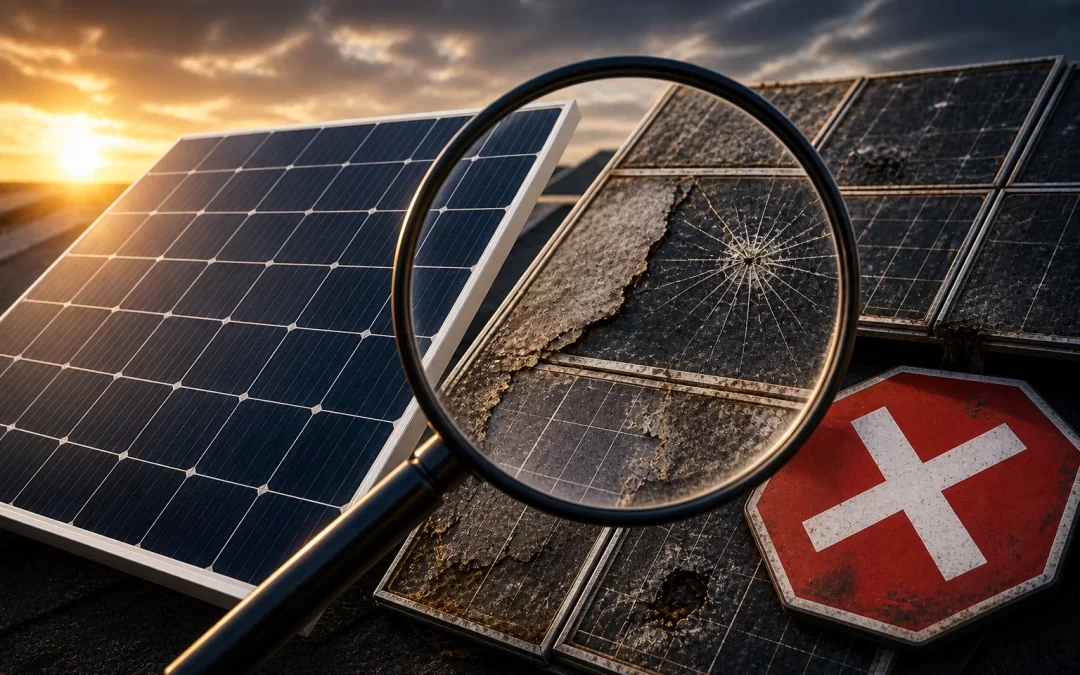
There isn’t a single universal list of “solar panel brands to avoid,” but you should be very cautious of off-brand, ultra-cheap panels with little or no warranty, brands with a history of warranty disputes or sudden bankruptcies, and any equipment your installer can’t clearly explain or support. In 2026, most major Tier 1 manufacturers are reliable; the bigger risk for homeowners is poor installation, mismatched equipment, or panels from small “pop-up” brands that may not be around in 10–20 years. Always check the company’s financial stability, warranty terms, and track record in the U.S. before signing a contract. Even a good brand can be a bad choice if it’s installed by a low-quality contractor or used in the wrong system design.
Choosing solar panels is a long-term decision, and it’s natural to wonder which solar panel brands to avoid. This guide is written for U.S. homeowners who want straightforward, no-hype advice on which brands and situations are risky — and how to choose equipment you can trust for 25+ years. We’ll focus less on “name and shame” lists and more on the warning signs that matter in the real world.
Table of Contents
- What “solar panel brands to avoid” really means
- Red flags that matter more than the brand name
- Types of solar panel brands that are higher risk
- Key numbers: Costs, savings, and why brand choice matters
- Brand vs. installer: Which matters more?
- When panel brand choice really matters (and when it doesn’t)
- How to check if a solar panel brand is trustworthy
- What to do before you sign a solar contract
- Frequently Asked Questions
- Summary: Key takeaways
What “solar panel brands to avoid” really means
It’s less about the logo, more about long-term risk
When homeowners ask which solar panel brands to avoid, they’re usually trying to avoid three things:
- Panels that fail early or underperform
- Warranties that are hard to use or become worthless
- Brands that disappear, leaving you with no support
In 2026, most well-known Tier 1 manufacturers (large, bankable companies with a track record of supplying big projects) produce reliable panels. The bigger danger is choosing a small or unstable brand, or letting an installer pick whatever is cheapest without explaining why.
Why there’s no universal “blacklist” of brands
Solar is a global industry, and brands rise and fall. A company that was risky five years ago may have improved, and a once-strong brand can run into financial trouble. Also, the same brand can offer both high-end and budget product lines with different performance and warranties.
Instead of memorizing a list, it’s more useful to understand:
- What a solid panel warranty looks like
- How to spot a financially stable manufacturer
- Which types of brands are most likely to cause problems later
Key concept: Bankability and staying power
Solar panels are expected to last 25–30 years. That only helps you if the company is still around to honor its warranty. “Bankability” is how lenders and large project developers judge whether a manufacturer is financially strong and likely to survive.
As a homeowner, you don’t need to read financial statements, but you should avoid brands that:
- Have only been in business a few years
- Have no visible presence or support in the U.S.
- Are sold only through one aggressive installer or door-to-door operation
Red flags that matter more than the brand name
1. Weak or confusing warranties
A good solar panel warranty has two parts: a product warranty (covers defects) and a performance warranty (guarantees power output over time). Red flags include:
- Product warranty shorter than 10 years (most quality panels offer 12–25 years)
- Performance warranty that allows more than ~2.5–3% loss in year 1 and more than 0.5–0.7% per year after
- Warranty that requires you to ship panels overseas at your cost
- No clear U.S. contact or process for claims
If the warranty is vague, hard to find, or your installer can’t explain it in plain language, treat that as a warning sign.
2. No U.S. presence or support
Some low-cost brands are manufactured overseas and sold into the U.S. through brokers or one-off importers. That doesn’t automatically make them bad, but it increases risk.
Be cautious if:
- The brand has no U.S. website or support phone number
- You can’t find any U.S.-based warranty documents
- Your installer says, “We handle everything,” but can’t show you the manufacturer’s own warranty
3. Ultra-cheap panels with no track record
If one quote is dramatically cheaper than others and uses a brand you’ve never heard of, ask why. Sometimes it’s a legitimate volume discount; other times it’s because the panels are:
- Older or discontinued models
- “B-grade” or cosmetically flawed panels
- From a small manufacturer with limited quality control
Saving a few thousand dollars up front can cost you much more if your system underperforms or fails early.
4. Mismatched or off-label equipment
Even a decent panel brand can be a problem if it’s mismatched with your inverters or racking, or if the installer uses off-label combinations that aren’t approved by the manufacturers.
Red flags include:
- Panels, inverters, and mounting hardware from brands that don’t list each other as compatible
- Installers who can’t provide datasheets for every major component
- Equipment with labels in another language and no English documentation
5. Installer won’t give you options
If an installer insists on one brand and refuses to quote alternatives, that’s a sign they may be pushing what’s best for their margins, not for you.
Reasonable installers will:
- Offer at least two panel options (for example, “good” and “premium”)
- Explain the pros and cons of each brand
- Show you how the choice affects cost, production, and warranty
Types of solar panel brands that are higher risk
1. “Pop-up” brands with no history
These are brands that appear suddenly, often sold only through one installer or online marketplace. They may be white-labeled panels (generic products rebranded with a new name).
Risks:
- Little or no track record of performance in real homes
- Unclear who actually manufactures the panels
- High chance the brand disappears or changes names within a few years
2. Brands from companies in financial trouble
Solar manufacturing is competitive, and some companies struggle or go bankrupt. When that happens, warranties can become difficult or impossible to use.
Warning signs:
- News of factory closures, layoffs, or restructuring
- Credit rating downgrades or lawsuits related to warranty claims
- Installers quietly moving away from the brand
You don’t need to chase headlines, but if you see repeated negative news about a manufacturer, be cautious about long-term warranties from that brand.
3. Extremely low-efficiency, outdated panels
Most modern residential panels in 2026 have efficiencies in the 19–22% range. Very low-efficiency panels (16–17%) are usually older designs or lower-quality products.
Why this matters:
- You’ll need more roof space to get the same power
- Lower efficiency can indicate older technology and potentially lower durability
- Resale value and future compatibility may be weaker
4. Panels without recognized safety certifications
In the U.S., solar panels should carry certifications like UL 1703 or UL 61730 (or equivalent recognized standards). These indicate the product has passed basic safety and performance tests.
Be wary if:
- The panel label doesn’t show UL or an equivalent mark
- The datasheet looks unprofessional or incomplete
- Your local building department or utility has never heard of the brand
5. Brands only used in high-complaint sales programs
Some brands are mostly sold through high-pressure door-to-door or “free solar” programs that generate many complaints with state attorneys general or the Better Business Bureau.
While the brand itself may not be defective, being tied to problematic sales programs can mean:
- Overstated performance claims
- Confusing or misleading warranty promises
- Difficulty getting service if the sales company disappears
Key numbers: Costs, savings, and why brand choice matters
Typical system costs and where panel brand fits in
For a typical U.S. home in 2026, a residential solar system usually falls in these ranges:
- Average system cost (before incentives): $28,000–$32,000
- Average system cost (after 30% federal tax credit): about $19,600–$22,400
- Cost per watt: $2.50–$3.50 installed
- Average panels needed: 15–25 panels for most homes
The panel brand and model typically account for only 25–35% of the total system cost. The rest is labor, inverters, racking, permitting, and overhead. That means:
- Choosing a solid, well-known brand usually adds only a modest amount to the total price
- Going with the absolute cheapest panels rarely saves as much as homeowners expect
Performance, savings, and payback period
On average, U.S. homeowners see:
- Average annual electric bill savings: $1,300–$1,500
- Typical payback period: 7–9 years nationally
- Panel performance warranty: 25–30 years
- Typical panel lifespan: 30–35 years
A lower-quality brand might degrade faster, meaning your system produces less power each year. Over 25–30 years, even a 5–10% difference in output can add up to thousands of dollars in lost savings.
What affects these numbers the most
Your actual costs and savings depend on:
- Your state and utility rates (higher electricity prices usually mean faster payback)
- Roof size, shading, and orientation
- Local incentives and rebates (on top of the 30% federal tax credit, which runs through 2032)
- Whether you add a battery and what type of inverter you use
- The quality of the installation and system design
Brand choice matters, but it’s one piece of a bigger picture. To understand the full financial picture for your home, it helps to review a detailed quote and, for tax questions, consult a qualified tax professional. Our solar cost and savings guide walks through how these numbers come together.
Brand vs. installer: Which matters more?
Why a great installer with a “good” brand beats a bad installer with a “top” brand
In practice, most long-term solar problems come from installation issues, not the panel brand itself. Common issues include roof leaks, wiring problems, poor system design, and incorrect inverter sizing.
A strong installer will:
- Use reputable brands with solid warranties
- Design a system that matches your roof, usage, and future plans
- Handle permits, inspections, and interconnection correctly
- Be around to service your system if something goes wrong
How to evaluate installers alongside brands
When comparing quotes, look at both the equipment and the company installing it. Ask each installer:
- Which panel brands do you install most often, and why?
- How long have you worked with this brand?
- Who handles warranty claims — you or the manufacturer?
- What is your workmanship warranty, and how long does it last?
For a deeper look at equipment choices beyond just panel brands, our solar panels and equipment guide explains how panels, inverters, and other components work together.
When panel brand choice really matters (and when it doesn’t)
Situations where brand choice matters a lot
Brand and model choice are especially important if:
- You have limited roof space and need high-efficiency panels to meet your energy needs
- You live in a harsh climate (extreme heat, heavy snow, coastal salt air)
- You care about aesthetics (all-black panels, low-profile frames)
- You want the strongest possible long-term warranty and bankable manufacturer
In these cases, it often makes sense to choose a well-known, premium or upper-midrange brand with a long track record.
Situations where brand matters less
Brand may be less critical if:
- You have plenty of roof space and don’t need maximum efficiency
- You’re primarily focused on upfront cost and are comfortable with a solid mid-range brand
- You plan to move in 5–10 years and mainly want to improve resale value and reduce bills in the short-to-medium term
Even then, you should still avoid unknown or unstable brands — but you may not need the absolute top-tier name to get good value.
When solar itself may not be the right choice
In some cases, the bigger question isn’t which brand to avoid, but whether solar makes sense at all. Solar may not be ideal if:
- Your roof is heavily shaded most of the day
- You plan to move very soon and your local market doesn’t value solar strongly
- Your utility rates are unusually low and local incentives are limited
Before worrying about brands, it’s smart to confirm whether solar is a good fit for your home and finances. Our honest guide on whether solar is worth it walks through the key factors.
How to check if a solar panel brand is trustworthy
Step 1: Look up the manufacturer
Search for the brand name plus “solar panels” and find the official manufacturer website. Verify:
- They list the exact model your installer quoted
- They provide datasheets and warranty documents
- They have a U.S. office or support contact
Step 2: Review the warranty details
Download the warranty and check:
- Product warranty length (aim for at least 12 years; 20–25 is better)
- Performance warranty (look for 80–85% output or better at year 25)
- Who pays for shipping, labor, and replacement if there’s a problem
- Whether the warranty is transferable if you sell your home
Step 3: Check track record and reviews
Look for:
- How long the company has been in business (10+ years is reassuring)
- Independent reviews from installers and homeowners
- Any major recalls or widespread defect issues
Remember that even the best brands will have some negative reviews; you’re looking for patterns of serious or repeated problems.
Step 4: Compare with other options
Ask your installer to quote at least one alternative brand so you can compare:
- Efficiency and power rating (watts per panel)
- Warranty terms
- Total system price and estimated production
If you want a starting point for reputable options, our best solar panels of 2026 guide compares top brands and models commonly used in U.S. homes.
What to do before you sign a solar contract
Key questions to ask about panel brands
Before you sign, ask your installer these specific questions:
- Which panel brand and model are you proposing, and why?
- What is the product and performance warranty, in years?
- Who handles warranty claims if something goes wrong?
- Can you show me at least one alternative brand and how it changes cost and production?
Information you should have ready
To get accurate quotes and make a good decision, gather:
- 12 months of electric bills (to understand your usage)
- Basic roof information (age, material, any known issues)
- Your plans for EVs, home additions, or major appliances that could change usage
Knowing roughly how many panels you might need can also help you sanity-check quotes; our guide on how many solar panels you need includes a simple calculator.
Why getting multiple quotes is important
Because there’s no single “do not buy” list of brands, comparing multiple quotes is one of the best protections you have. With at least two or three quotes, you can:
- See which brands are commonly used in your area
- Spot outliers that use unknown or questionable equipment
- Compare how different installers explain and stand behind their chosen brands
If one quote uses a brand you’ve never heard of and others don’t, ask why — and don’t be afraid to walk away if the answers aren’t clear and confident.
Frequently Asked Questions
Is there a definitive list of solar panel brands to avoid?
No, there isn’t a single definitive list because the solar market changes quickly and brands rise and fall over time. Instead of relying on a static blacklist, focus on warning signs like weak warranties, no U.S. support, very low efficiency, and brands your installer can’t clearly explain or support.
Are cheap solar panels always a bad idea?
Not always, but very cheap panels often come from lesser-known brands with weaker warranties or limited track records. If a quote is much cheaper than others, ask which brand and model is being used, review the warranty, and compare it to at least one well-known alternative before deciding.
What is a good solar panel warranty I should look for?
Look for at least 12 years of product warranty (20–25 years is ideal) and a performance warranty that guarantees around 80–85% of original output at year 25. Make sure the warranty clearly explains who pays for shipping and labor and that there is a U.S. contact for support.
Does the installer or the panel brand matter more?
Both matter, but in practice the installer often has a bigger impact on your experience. A reputable installer using solid mid-range brands is usually a safer choice than a questionable installer offering a top-tier brand but cutting corners on design or workmanship.
Can I mix different solar panel brands on my roof?
It’s technically possible, but it’s usually better to keep panels in each string or array the same brand and model to avoid performance mismatches. If you’re expanding an existing system, your installer may recommend compatible newer panels or microinverters to manage differences safely.
How do I know if a solar panel brand will still be around in 20 years?
No one can guarantee that, but you can reduce risk by choosing manufacturers with at least 10 years in business, a strong global presence, and a clear U.S. support structure. Checking industry news, installer feedback, and how often the brand appears in large commercial or utility projects can also indicate stability.
Summary: Key takeaways
- There’s no fixed list of solar panel brands to avoid; focus on red flags like weak warranties, no U.S. support, and ultra-cheap, unknown brands.
- Most quality systems cost $28,000–$32,000 before incentives and $19,600–$22,400 after the 30% federal tax credit, with payback in about 7–9 years for many homes.
- The installer’s quality and system design often matter more than the specific panel logo on your roof.
- Brand choice matters most when roof space is limited, conditions are harsh, or you want the strongest long-term warranty and resale value.
- Your best protection is to get multiple quotes, compare brands and warranties side by side, and ask installers to explain exactly why they recommend each product.
Every home is different, and the “right” solar panel brand for you depends on your roof, budget, and long-term plans. The safest way to avoid risky brands and designs is to compare personalized quotes from vetted installers who clearly explain their equipment choices. When you’re ready, you can review options and request tailored quotes at /get-my-quote/ — with no pressure, just clear information to help you decide.