
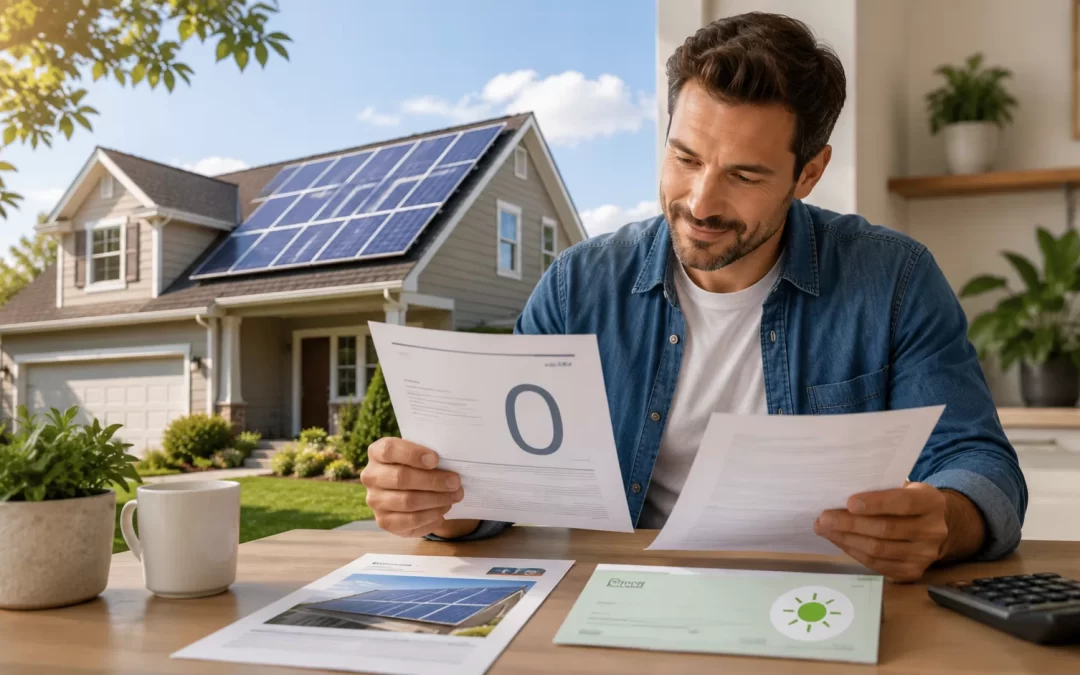
Direct answer: If you have no federal income tax liability, you generally cannot use the 30% federal solar tax credit yourself because it only reduces taxes you actually owe. However, you may still benefit from solar through state and local rebates, performance-based incentives, low-income programs, or by structuring your project so someone else with tax liability (like a third-party owner) claims the credit and passes savings to you. The best option depends on your income, home location, and whether you own or plan to own your solar system. Always confirm your specific situation with a qualified tax professional before making decisions.
Many homeowners are surprised to learn that “no tax liability” changes how solar incentives work. This guide is for U.S. homeowners who pay little or no federal income tax and want to understand whether solar still makes financial sense. We’ll walk through what you can and can’t claim, what alternatives exist, and how to decide your next step.
Table of Contents
- What “No Tax Liability” Really Means for Solar Incentives
- How the Federal Solar Tax Credit Works If You Owe No Tax
- Other Solar Incentives You Can Use Without Tax Liability
- Low-Income and No-Tax-Liability Solar Programs
- Leases, PPAs, and Letting Someone Else Use the Tax Credit
- Real Numbers: Costs, Savings, and Payback Without the ITC
- When Going Solar Still Works With No Tax Liability
- When Solar May Not Be a Good Fit If You Can’t Use Tax Credits
- What to Do Next: Steps Before Getting Quotes
- Frequently Asked Questions
- Key Takeaways
What “No Tax Liability” Really Means for Solar Incentives
“No tax liability” usually means that after deductions and credits, you owe $0 in federal income tax for the year. This is common for retirees with low taxable income, students, some self-employed people, and many low- to moderate-income households.
For solar, this matters because the biggest incentive—the 30% federal solar Investment Tax Credit (ITC)—is a nonrefundable tax credit. That means:
- It can reduce your federal income tax bill down to zero
- It cannot give you a refund beyond what you owe
- If you owe nothing, you generally cannot benefit from it directly
However, “no tax liability” does not automatically mean solar is a bad idea. It just changes which incentives matter most and how you should structure your project.
How the Federal Solar Tax Credit Works If You Owe No Tax
Quick overview of the 30% federal solar tax credit
The federal solar tax credit (ITC) lets eligible homeowners reduce their federal income taxes by 30% of qualified solar costs for systems placed in service through 2032. For a typical system costing $28,000–$32,000 before incentives, the ITC is worth about:
- 30% of $28,000 = $8,400
- 30% of $32,000 = $9,600
That’s a major discount—if you can actually use it.
What happens if you have no tax liability?
If your federal income tax owed is $0 for the year your solar is installed:
- You cannot get a refund from the ITC alone
- The credit will not put cash in your pocket
- You generally cannot “sell” or transfer the credit as a homeowner (rules are different for some commercial projects)
However, the ITC can be carried forward to future years as long as the credit is still in effect and you later have tax liability. For example:
- You install solar in 2026 and owe $0 tax that year
- In 2027 and 2028, your income increases and you owe federal tax
- You may be able to apply your unused ITC to those future tax bills
Whether this helps you depends on your expected income and tax situation over the next several years. This is where a tax professional is essential.
Key limitations to understand
- The ITC is nonrefundable – it can’t create a negative tax bill
- You must have ownership of the system (not a lease or most PPAs) to claim it
- You must have enough tax liability over time to use the credit before it expires or phases down
If you expect to have little or no tax liability for many years, you should assume you may not fully benefit from the federal solar tax credit and plan your solar decision around other incentives and savings.
Other Solar Incentives You Can Use Without Tax Liability
Even if you can’t use the federal ITC, there are several incentives that do not depend on your income tax bill. These can still significantly reduce your cost or improve your payback period.
1. State and local rebates
Many states, utilities, and local governments offer upfront rebates that directly reduce your installation cost. These are often:
- Paid as a check or bill credit after installation
- Based on system size (dollars per watt) or a flat amount
- Available regardless of your federal tax situation
Examples (programs change frequently, so always verify current details):
- Some utilities offer $500–$2,000 rebates for residential solar
- State-level programs may pay $0.20–$0.50 per watt (e.g., $2,000–$5,000 for a 10 kW system)
Our overview of state solar incentives and best states for solar rebates is a good starting point to see what might be available where you live.
2. Net metering and bill credits
Net metering (or similar “net billing” programs) lets you earn credits for excess solar power you send back to the grid. These credits:
- Reduce your electric bill directly
- Are not tied to your income tax liability
- Can be worth close to the full retail rate in some states, or less in others
In states with strong net metering, this can be the single biggest financial benefit of going solar, especially if you can’t use tax credits.
3. SRECs and performance-based incentives
In some states, you can earn Solar Renewable Energy Certificates (SRECs) or similar performance-based incentives for the electricity your system produces. These:
- Are typically paid per kilowatt-hour (kWh) generated
- Can be sold to utilities or other buyers
- Provide income or bill credits regardless of your tax liability (though income may be taxable)
If you live in a state with an SREC market, this can significantly improve your return on investment. You can learn more in our guide on what SRECs are and how to sell them.
4. Property tax exemptions
Many states and localities exempt the added value of solar from property tax. This means:
- Your home value can increase with solar
- Your property tax bill may not go up because of the system
- This benefit is independent of your income tax situation
5. Sales tax exemptions
Some states exempt solar equipment from sales tax, saving you 4–10% of the system cost depending on local tax rates. This is an immediate discount at the time of purchase and does not require tax liability.
Low-Income and No-Tax-Liability Solar Programs
If you have no tax liability because your income is low or fixed, you may qualify for special solar programs designed specifically for low-income households.
Types of low-income solar support
- Upfront grants or rebates that cover a large share of system cost
- Free or deeply discounted solar installations from nonprofits or state programs
- Community solar subscriptions that lower your bill without installing panels on your roof
- Enhanced incentives on top of standard rebates for income-qualified households
Examples of low-income solar programs
Program details vary widely by state and utility, but common patterns include:
- Programs covering 50–100% of installation costs for qualifying homeowners
- Special incentives for households at or below 80% of area median income
- Community solar projects that guarantee bill savings (e.g., 10–20% off your electricity costs)
Because these programs change frequently and have specific eligibility rules, it’s important to check what’s available in your area. Our guide to solar incentives for low-income homeowners walks through common program types and how to find them.
Why these programs matter if you have no tax liability
Low-income solar programs are often designed with the assumption that participants cannot use tax credits. That means:
- They focus on upfront discounts, grants, or guaranteed bill savings
- They may partner with organizations that can use tax credits on your behalf
- They can make solar accessible even when the federal ITC is effectively out of reach
Leases, PPAs, and Letting Someone Else Use the Tax Credit
If you personally can’t use the solar tax credit, one strategy is to let a third party own the system and claim the incentives, then pass some of the savings to you through lower energy costs.
How solar leases and PPAs work
- With a solar lease, you pay a fixed monthly fee to use the system’s power
- With a power purchase agreement (PPA), you pay per kWh of solar electricity you use, usually at a rate below your utility price
- The solar company owns the system, claims the ITC and depreciation, and is responsible for maintenance
Pros if you have no tax liability
- You can still benefit from lower electric bills without needing tax credits
- Little or no upfront cost in many cases
- Maintenance and performance risk is mostly on the solar company
Cons and trade-offs
- You don’t build asset value in a system you own
- Long-term contracts (often 20–25 years) can complicate selling your home
- Total lifetime savings may be lower than owning, especially in strong solar markets
Leases and PPAs can make sense if you can’t use tax credits and don’t want to finance a purchase, but they require careful comparison. Always review contract terms, escalator clauses (annual price increases), and what happens if you move.
Real Numbers: Costs, Savings, and Payback Without the ITC
To understand whether solar still makes sense without tax liability, it helps to look at realistic numbers and how they change when you remove the federal tax credit from the equation.
Typical system costs
For a typical U.S. home, a residential solar system usually falls in these ranges:
- System size: 15–25 panels (about 6–10 kW, depending on panel wattage)
- Cost per watt: $2.50–$3.50 before incentives
- Total system cost: $28,000–$32,000 before incentives (national average)
With the 30% ITC, many homeowners pay roughly $19,600–$22,400 after the credit. If you can’t use the ITC, your net cost will be closer to the full $28,000–$32,000, minus any state or local rebates.
How this affects payback period
Nationally, with the ITC, a typical homeowner might see:
- Average annual savings: $1,300–$1,500 on electric bills
- Payback period: about 7–9 years
Without the federal tax credit, and assuming no other incentives:
- The upfront cost is about 30% higher
- Annual savings are similar (still $1,300–$1,500, depending on your rates and usage)
- Payback period may stretch to roughly 10–13 years, depending on your local electricity prices and system cost
These are broad averages; your actual numbers depend heavily on your location, roof, and utility rates. Our solar cost and savings guide explains how to estimate your own payback more precisely.
Long-term value still matters
Even without the ITC, remember:
- Panels typically have a 25–30 year performance warranty
- Real-world lifespan is often 30–35 years or more
- After payback, most of your solar electricity is effectively “free,” aside from occasional maintenance or inverter replacement
So while the payback period may be longer without tax credits, you can still get 15–20+ years of reduced electric bills after you’ve recovered your costs, especially in high-rate states.
When Going Solar Still Works With No Tax Liability
Solar can still be a smart move even if you can’t use the federal tax credit, but certain conditions make it much more favorable.
Situations where solar often still makes sense
- You have high electric bills (e.g., $150–$250+ per month)
- Your state has strong net metering or good buyback rates for excess solar
- You qualify for state or utility rebates that offset part of the cost
- You plan to stay in your home for 10+ years, giving time to recoup your investment
- You can access low-interest financing or pay cash without straining your budget
Example scenario
Consider a homeowner who:
- Pays $180/month on average for electricity
- Installs a $30,000 system with no federal ITC but gets a $3,000 state rebate
- Net cost: $27,000
- Annual bill savings: about $1,500
Estimated payback: $27,000 ÷ $1,500 ≈ 18 years without utility rate increases. If local rates rise 2–3% per year (common historically), real payback could be closer to 12–15 years. After that, they enjoy mostly free power for another 10–15+ years.
Non-financial reasons some homeowners still go solar
- Reducing carbon footprint and supporting clean energy
- Improving energy independence, especially when paired with batteries
- Increasing home value and marketability
These benefits don’t depend on tax liability, though they’re harder to quantify in dollars.
When Solar May Not Be a Good Fit If You Can’t Use Tax Credits
Being honest about when solar doesn’t make sense is just as important as highlighting the benefits. If you have no tax liability, you should be extra cautious in the following situations.
Red flags and risk factors
- Very low electric bills (e.g., under $75–$100/month)
- Shaded or small roof that limits system size or production
- Weak net metering or low export rates in your state
- High installation costs with few or no state/utility incentives
- Uncertain housing plans (you may move within 5–7 years)
Why these matter more without the ITC
The federal tax credit effectively gives you a 30% “instant discount.” Without it:
- Your break-even point moves several years further out
- Any downside (like poor roof orientation or shading) hurts more
- Overpaying for a system is harder to recover from
If your numbers already look marginal with the ITC, they may not work at all without it. In that case, it may be better to wait, improve your home’s energy efficiency first, or explore community solar instead of rooftop panels.
What to Do Next: Steps Before Getting Quotes
If you have little or no tax liability and are considering solar, a bit of preparation will help you avoid costly mistakes and get realistic quotes.
1. Confirm your tax situation
- Review your last 1–2 years of federal tax returns
- Look at your actual tax liability (not just your refund amount)
- Ask a tax professional whether you’re likely to have tax liability in the next few years
This will clarify whether the federal ITC is truly off the table or just delayed.
2. Research non-tax incentives in your area
- Check state and utility websites for rebates, performance incentives, and net metering rules
- Look for low-income or income-qualified solar programs if applicable
- See whether your state offers property or sales tax exemptions for solar
3. Gather your usage and roof information
- Collect 12 months of electric bills (kWh usage and dollar amounts)
- Note your roof age, material, and any shading issues
- Decide whether you might want battery storage now or later (the ITC can also apply to batteries when used with solar; see our guide on whether the solar tax credit applies to battery storage)
4. Get multiple quotes and ask the right questions
When you talk to installers, be upfront that you have little or no tax liability and may not be able to use the ITC. Ask them to:
- Show you financial projections with and without the federal tax credit
- Explain all available state/utility incentives and how they’re applied
- Break out equipment, labor, and permitting costs clearly
- Provide expected annual production (kWh) and savings based on your actual usage
Comparing at least 2–3 quotes helps you spot inflated prices and unrealistic promises. Our solar installation guide walks through how to evaluate installers and proposals in more detail.
Frequently Asked Questions
Can I claim the solar tax credit if I get a refund but have no tax liability?
A refund doesn’t always mean you had no tax liability. The solar tax credit reduces the tax you owe, not the amount you get back. You need to look at your total tax owed on your return; if that number is zero, you generally can’t benefit from the credit that year, though you may be able to carry it forward to future years if you later owe tax.
What happens to my unused solar tax credit if I still owe no tax in future years?
If you continue to have no federal income tax liability, your unused solar tax credit may simply go unused. The credit can typically be carried forward, but only applied against actual tax owed while the credit is still in effect. If you never owe tax, you may never realize its value, which is why planning with a tax professional is important.
Is it better to lease solar panels if I can’t use the tax credit?
Leasing or signing a PPA can make sense if you can’t use the tax credit and don’t want to finance a purchase, because the solar company can claim the incentives and may pass some savings to you through lower energy rates. However, you give up ownership and long-term upside, so it’s important to compare lifetime costs and savings for both options before deciding.
Are there any solar incentives specifically for retirees with low taxable income?
Many low-income and income-qualified solar programs are open to retirees, especially those on fixed incomes such as Social Security. These programs often provide upfront discounts, grants, or community solar options that don’t depend on tax liability. Availability is highly local, so checking state, utility, and nonprofit offerings in your area is essential.
Does having no tax liability mean solar is a bad investment?
Not necessarily. It means you can’t rely on the federal tax credit to improve your payback, so your decision should be based more heavily on local electricity rates, non-tax incentives, and your long-term plans in the home. In high-rate states with good net metering, solar can still pay off over time even without the ITC.
Can I add batteries and still get incentives if I have no tax liability?
The main incentive for batteries is usually the same 30% federal tax credit, which you can’t use without tax liability. Some states and utilities, however, offer separate rebates or incentives for battery storage that don’t depend on your federal taxes, so it’s worth checking local programs if you’re interested in backup power.
Key Takeaways
- If you have no federal income tax liability, you generally can’t use the 30% federal solar tax credit yourself, though you may carry it forward if you later owe tax.
- Without the ITC, typical system costs of $28,000–$32,000 and annual savings of $1,300–$1,500 often mean longer payback periods, roughly 10–13 years or more depending on your situation.
- Solar still makes sense for many no-tax-liability homeowners with high electric bills, good local incentives, and long-term plans to stay in their homes.
- Your next step should be to confirm your tax situation, research local incentives, and get multiple quotes that clearly show financials with and without the federal tax credit.
<liNon-tax-based incentives—like state and utility rebates, net metering, SRECs, and low-income programs—become much more important to your solar decision.
Because every home, utility, and tax situation is different, the only way to know if solar makes sense for you—especially if you have no tax liability—is to see personalized numbers. Getting a few competitive quotes from vetted installers can show you real costs, incentives, and savings for your roof and utility. When you’re ready, you can compare offers and timelines at /get-my-quote/ with no obligation and use that information to make a confident decision.