
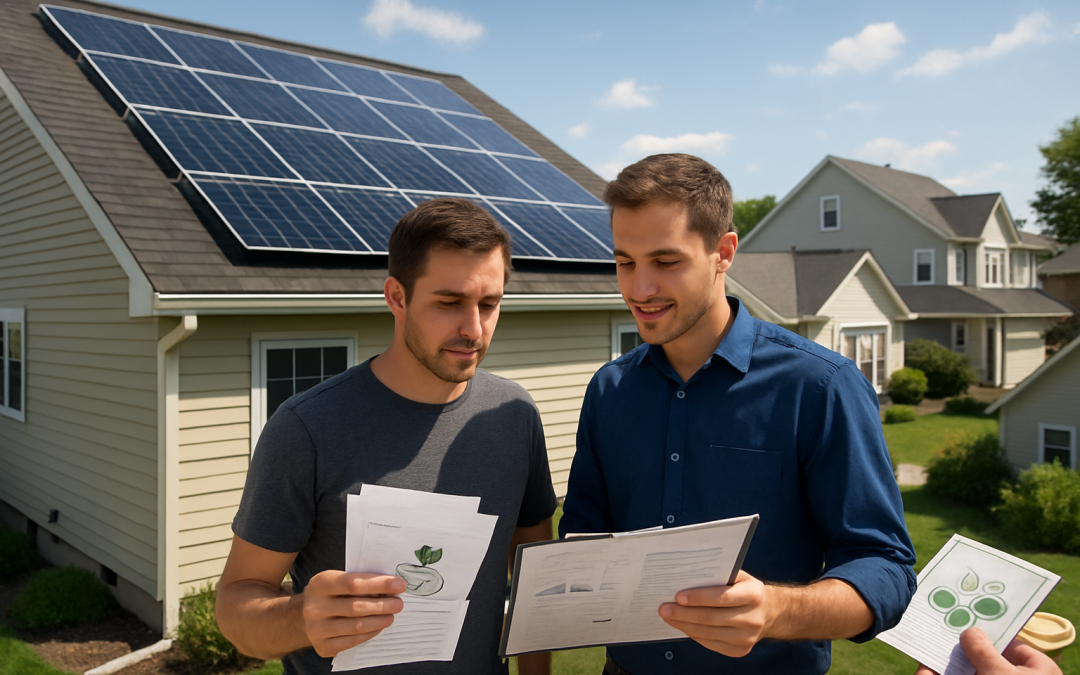
Solar grants are programs that give homeowners free or discounted money to help pay for solar panels, separate from the 30% federal tax credit. These can include state or utility rebates, upfront cash incentives, performance-based payments, and special grants for low-income households. Most grants don’t cover your entire system, but they can easily shave thousands of dollars off the price. Availability is very location-specific, and many programs have income limits, waitlists, or limited funding.
Solar grants that aren’t tax credits can be a powerful way to lower your out-of-pocket cost if you qualify. This guide walks through the main types of “free money” for solar, how they work, who qualifies, and how to find and stack them with the federal solar tax credit.
Table of Contents
- What Are Solar Grants That Aren’t Tax Credits?
- Types of Solar Grants and Incentives That Feel Like Free Money
- Real Numbers: How Much Can Solar Grants Actually Save You?
- State, Local, and Utility Solar Grants
- Solar Grants for Low-Income and Moderate-Income Homeowners
- When Solar Grants Work in Your Favor (and When They Don’t)
- How to Find Solar Grants and Incentives in Your Area
- How to Decide Your Next Step and Talk to Installers
- Frequently Asked Questions
- Key Takeaways
What Are Solar Grants That Aren’t Tax Credits?
When people say “solar grants,” they usually mean any program that gives you money or discounts for going solar that you don’t have to pay back. The federal solar Investment Tax Credit (ITC) is the best-known incentive, but it only helps if you owe enough in federal income tax. Grants and rebates are different: they reduce your cost directly, regardless of your tax bill, as long as you meet the program rules.
For homeowners, non–tax credit solar “grants” typically show up as:
- Upfront rebates from your state or utility
- Performance-based incentives that pay you over time for the energy your system produces
- Special programs for low- and moderate-income households that cover a large share of the cost
- Occasional local or nonprofit grants for specific communities
These programs are usually limited by budget, geography, or income level, so not everyone will qualify. But if you do, they can significantly lower your payback period and upfront cost.
Types of Solar Grants and Incentives That Feel Like Free Money
1. State and Utility Solar Rebates (Upfront Cash Off the Price)
Rebates are one of the most straightforward forms of “free money” for solar. You install a qualifying system, submit paperwork, and receive a check or bill credit.
Common structures include:
- Flat rebates per watt (for example, $0.20–$0.80 per watt)
- Flat rebates per system (for example, $1,000–$3,000 per home)
- Tiered rebates that shrink as more people participate
Examples (program details change often, so always verify current terms):
- Some municipal utilities in Texas and Colorado have offered $0.25–$0.75 per watt, often capped at $2,500–$4,000 per home.
- California has historically offered various rebates through state and utility programs, though many have shifted toward low-income customers.
- New York’s NY-Sun program has provided incentives that can reduce system costs by 10–20% depending on location and income.
2. Performance-Based Incentives (PBIs) and SRECs
Performance-based incentives pay you over time based on how much electricity your solar system produces. They aren’t tax credits, and they can feel like a grant spread over several years.
Two common forms:
- Fixed PBIs: You get a set payment per kilowatt-hour (kWh) produced, often for 10–20 years.
- Solar Renewable Energy Certificates (SRECs): You earn certificates for each megawatt-hour (MWh) your system produces and can sell them in a market.
In strong SREC markets, homeowners can earn hundreds to a few thousand dollars per year, depending on system size and SREC prices. For a deeper dive into how these work and how to sell them, see What Are SRECs and How Do You Sell Them?
3. Low-Income and Community Solar Grants
Some of the most generous “free money” programs are targeted at low- and moderate-income households. These can include:
- Deep discounts on rooftop solar (for example, covering 50–100% of system cost)
- Community solar subscriptions that give bill credits without installing panels on your roof
- Zero-down, low-interest financing combined with grants or rebates
These programs often have income limits (for example, below 80% of area median income) or are limited to certain neighborhoods. If you think you might qualify, our guide to solar incentives for low-income homeowners is a good starting point.
4. Local and Nonprofit Grants
Occasionally, cities, counties, or nonprofits offer true grants for solar, especially in areas with climate or equity goals. These might be:
- One-time grants for specific zip codes or neighborhoods
- Programs for seniors, veterans, or historically disadvantaged communities
- Partnerships between local governments and nonprofits to fund rooftop solar
These programs are usually small and time-limited, so you’ll need to check your city or county website and local news to see what’s currently available.
5. Battery and Resilience Incentives
Some states and utilities offer grants or rebates specifically for battery storage, especially where grid reliability is a concern. While not strictly “solar,” these often pair with solar installations.
Examples include:
- Rebates per kilowatt-hour of battery capacity
- Extra incentives if you enroll your battery in a utility demand-response program
Battery incentives can stack with the federal tax credit for storage in many cases. For details on how the tax credit applies to batteries, see Does the Solar Tax Credit Apply to Battery Storage?
Real Numbers: How Much Can Solar Grants Actually Save You?
To understand the impact of solar grants, it helps to start with typical system costs and savings in the U.S. as of 2026.
Typical Solar System Costs and Savings
- Average system cost (before incentives): $28,000–$32,000 for a typical home
- Cost per watt: $2.50–$3.50, depending on equipment, roof complexity, and market
- Average system size: 15–25 panels, often 6–10 kW
- Federal solar tax credit (ITC): 30% of eligible costs through 2032
- Average annual bill savings: $1,300–$1,500
- Typical payback period: 7–9 years nationally
- Panel lifespan: 25–30 years performance warranty, 30–35 years typical life
These are national averages; your numbers will vary based on your utility rates, sun exposure, roof, and local incentives. For a deeper breakdown of costs and savings, see the solar cost and savings guide.
How Grants Change the Math (Example Scenarios)
Let’s look at a few simplified examples to see how non-tax-credit grants can affect your bottom line. These are illustrative only; actual programs and amounts vary.
Scenario 1: Standard Home with a Utility Rebate
- System cost: $30,000
- Utility rebate: $0.50 per watt on a 7 kW system = $3,500
- Net cost after rebate: $26,500
- Federal 30% tax credit on $26,500: $7,950 (if you have enough tax liability)
- Final net cost: $18,550
Compared to using only the tax credit (which would be $9,000 on $30,000), the rebate saves you an extra $450 in this simplified example, plus it reduces your upfront payment.
Scenario 2: Moderate-Income Homeowner with State Incentive
- System cost: $28,000
- State low/moderate-income incentive: $8,000 upfront grant
- Net cost after grant: $20,000
- Federal 30% tax credit on $20,000: $6,000 (again, assuming tax liability)
- Final net cost: $14,000
Here, the state grant cuts your net cost in half compared to the original price, and the tax credit further reduces what you ultimately pay.
Scenario 3: Low-Income Program Covering Most of the Cost
- System cost: $25,000
- Program grant: 80% of cost covered = $20,000
- Homeowner share: $5,000 (sometimes financed at low interest)
- Federal tax credit: May be reduced or structured differently depending on program design
In some low-income programs, you may pay little or nothing out of pocket, but you might not be able to claim the full tax credit yourself. Program rules vary, so this is where a local installer and a tax professional are important.
What Affects How Much You Get?
The value of solar grants and incentives depends on:
- Your location: Some states and utilities are very generous; others offer almost nothing.
- Your income level: Many of the biggest grants are income-based.
- System size: Per-watt or per-kWh incentives scale with system size, up to program caps.
- Timing: Programs can run out of funding or step down over time.
- Ownership structure: Some incentives only apply if you own the system (not a lease or PPA).
Because of these variables, two neighbors with similar homes can see very different incentive packages. Getting multiple quotes from installers who know your local programs is often the fastest way to see your real numbers.
State, Local, and Utility Solar Grants
Most non-tax-credit solar grants come from states, cities, and utilities. The federal government’s main residential incentive is the 30% ITC, which is a tax credit, not a grant.
States with Strong Solar Incentives
As of 2026, states that are often cited for strong residential solar incentives include:
- California
- New York
- Massachusetts
- New Jersey
- Maryland
- Illinois
- Colorado
- Minnesota
- Oregon
- Some parts of Texas (through municipal utilities)
Programs change frequently, and some are shifting more toward low-income households. For a current overview of where rebates and incentives are strongest, see State Solar Incentives: Best States for Solar Rebates in 2026.
Common Utility and City Programs
Even in states without big statewide programs, individual utilities and cities may offer:
- Upfront rebates for installing solar
- Bonus incentives for pairing solar with batteries
- Extra payments for enrolling in “virtual power plant” or demand-response programs
- Property tax exemptions for the added value of solar
These programs are usually listed on your utility’s website under “renewable energy,” “solar,” or “energy efficiency” sections.
How These Interact with the Federal Tax Credit
In many cases, you can stack state and utility incentives with the 30% federal solar tax credit. However, the order in which incentives are applied can affect how much of your cost is eligible for the tax credit.
For example:
- Some rebates reduce the system cost before calculating the federal credit.
- Other incentives may be treated as taxable income or may not affect the credit amount.
Because tax treatment can be complex and can change, it’s wise to confirm details with a tax professional or accountant. For an overview of how the ITC works and key dates, see Solar Tax Credit 2026: Everything You Need to Know and How to Claim the Solar Tax Credit (ITC) on Your Tax Return.
Solar Grants for Low-Income and Moderate-Income Homeowners
If your household income is below or near your area’s median, you may qualify for some of the most generous solar grants available.
Typical Features of Low-Income Solar Programs
- High incentive levels: Programs may cover 50–100% of system costs.
- Income-based eligibility: Often set at 80% or 120% of area median income (AMI).
- Priority communities: Focus on environmental justice areas or historically underserved neighborhoods.
- Additional protections: Caps on loan interest rates, consumer protections, and long-term performance guarantees.
Examples of Low-Income Solar Support
While specific program names and details change, you may see:
- State-funded low-income solar programs (for example, in California, Colorado, New York, and others)
- Utility-funded programs offering free or heavily discounted solar
- Community solar projects that provide bill credits without rooftop panels
These programs can dramatically reduce or even eliminate your upfront cost, but they often have waitlists and limited annual funding. Our dedicated guide to solar incentives for low-income homeowners covers this in more detail.
When Low-Income Grants Might Not Be the Best Fit
Even if you qualify, a low-income solar program might not be ideal if:
- You’re required to sign a long-term contract that limits your flexibility to sell or refinance your home.
- The program installs smaller systems that don’t cover much of your usage.
- You prefer to own the system outright and capture all long-term savings yourself.
Always read program terms carefully and compare them with quotes from independent installers before deciding.
When Solar Grants Work in Your Favor (and When They Don’t)
Grants and incentives can make solar much more attractive, but they don’t automatically mean solar is the right choice for every home.
When Solar Grants Strongly Work in Your Favor
- You have high electric bills: If you’re paying $150–$250+ per month, grants can speed up your payback period.
- Your roof is sunny and in good condition: Minimal shading and a solid roof maximize the value of any grant.
- You qualify for income-based incentives: These can cut your cost dramatically.
- Your state or utility offers strong rebates or SRECs: These can add thousands in value over time.
- You plan to stay in your home at least 7–10 years: That’s usually enough time to recoup your net investment.
When Grants Don’t Make Solar a Good Fit
- Heavily shaded or small roof: If you can’t fit enough panels or they produce poorly, even free money may not justify the project.
- Very low electric bills: If you only pay $50–$70 per month, your savings may be too small to justify the hassle.
- Short time horizon: If you expect to move in 3–5 years, you may not fully benefit from the savings, even with grants.
- Complex roof or structural issues: Extra costs for roof work can eat up the value of incentives.
- Unfavorable program terms: Some “free solar” offers are actually leases or PPAs with escalators that reduce your long-term benefit.
If you’re unsure whether solar makes sense even with incentives, our honest overview at Is Solar Worth It? walks through the key factors.
How to Find Solar Grants and Incentives in Your Area
Because most non-tax-credit solar grants are local, the best programs for you will depend heavily on your address and utility.
Step 1: Check State and Utility Incentive Databases
Start with:
- Your state energy office website (search “[Your State] solar incentives”)
- Your utility’s website under “renewable energy” or “solar programs”
- Reputable national databases that track state and utility incentives
These sources will usually list:
- Current rebates and grants
- Eligibility rules and income limits
- Application steps and deadlines
Step 2: Talk to Local Installers
Experienced installers often know the incentive landscape better than any website because they work with these programs every day. When you request quotes, ask:
- Which state, utility, and local incentives you qualify for
- How they handle the paperwork (many will file it for you)
- Whether incentives are paid to you or directly to the installer
- How they factor incentives into your quote and payback estimate
Step 3: Verify Tax Implications
Before you sign a contract, it’s wise to:
- Confirm whether any rebates or grants reduce the amount eligible for the federal tax credit
- Ask if any incentives are treated as taxable income
- Review your situation with a tax professional or accountant
Installers can explain how they usually see incentives handled, but they are not a substitute for personalized tax advice.
How to Decide Your Next Step and Talk to Installers
Solar grants that aren’t tax credits can be the difference between “solar is too expensive” and “solar clearly pays off.” The key is to get numbers specific to your home.
Is Now the Right Time to Act?
Consider moving forward with quotes if:
- Your roof is in good shape (no major replacement needed in the next 5–10 years).
- Your electric bills are consistently $100+ per month.
- You live in a state or utility territory with known incentives or high power rates.
- You plan to stay in your home for several years.
If your roof needs major work soon or you’re likely to move within a couple of years, it may be worth addressing those issues first or running the numbers carefully before committing.
Information to Gather Before Getting Quotes
Having a few details ready will help installers give you accurate proposals and incentive estimates:
- 12 months of electric bills (kWh usage and total cost)
- Photos of your roof and main electrical panel (if requested)
- Any known shading issues (trees, nearby buildings)
- Your approximate credit score if you’re considering financing
Questions to Ask Installers About Grants and Incentives
When you speak with installers, ask specific, practical questions:
- “Which state, utility, or local incentives would apply to my project?”
- “How much are those incentives worth in dollars, and how did you calculate that?”
- “Do you handle the paperwork for rebates and grants, or do I?”
- “Are any of these incentives first-come, first-served or likely to run out soon?”
- “How do these incentives interact with the 30% federal tax credit?”
Why Getting Multiple Quotes Matters
Different installers may:
- Know about different local programs
- Estimate incentive values differently
- Offer different equipment and warranties at similar net prices
Getting at least 2–3 quotes helps you compare how each installer handles incentives, financing, and long-term savings. It also gives you a reality check on whether the promised “free money” is realistic.
Frequently Asked Questions
Are there really free solar grants for homeowners, or is it all just the tax credit?
Yes, there are real solar grants and rebates beyond the 30% federal tax credit, but they’re mostly offered at the state, utility, or local level and vary widely by location. Many programs provide partial grants or rebates that reduce your cost by a few thousand dollars, while some low-income programs can cover most or all of the system cost. Availability, income limits, and funding caps mean not every homeowner will qualify.
Can I get solar if I don’t owe enough taxes to use the federal tax credit?
If you don’t owe much in federal income tax, the 30% tax credit may not help you fully, but you may still qualify for state or utility grants, rebates, or low-income programs that reduce your upfront cost directly. Some programs are designed specifically for households with lower tax liability. It’s important to discuss your situation with both an installer and a tax professional.
Do solar grants and rebates reduce how much I can claim for the federal tax credit?
Some rebates and grants do reduce the cost basis used to calculate the federal tax credit, while others may not. The exact treatment depends on how the incentive is structured and current IRS guidance. Because this can affect your total savings, it’s wise to confirm with a tax professional before relying on any specific number.
How much free money for solar can I realistically expect?
For a typical homeowner, non-tax-credit incentives like state and utility rebates might add up to a few hundred to several thousand dollars, depending on your location and system size. Low- and moderate-income programs can be much more generous, sometimes covering 50–100% of system costs. The only way to know your real number is to look at programs in your area and get quotes that include local incentives.
Can I combine multiple solar grants and incentives?
In many cases you can stack incentives, such as a state rebate, a utility rebate, and the 30% federal tax credit, but there are rules about how they interact. Some programs can’t be combined, and others change the amount eligible for the tax credit. Installers can outline typical combinations, but you should confirm final tax treatment with a professional.
Do I need to own my solar system to get grants and rebates?
Most grants, rebates, and tax credits are designed for system owners, not leases or power purchase agreements (PPAs). With leases and PPAs, the installer or financing company usually claims the incentives and may pass some savings to you through lower payments. If you want to capture the full benefit of grants and the tax credit, owning the system is usually the better path.
Key Takeaways
- Solar grants that aren’t tax credits include state and utility rebates, performance-based incentives, and income-based programs that directly reduce your cost.
- A typical solar system costs $28,000–$32,000 before incentives and $19,600–$22,400 after the 30% federal tax credit, with grants and rebates often cutting costs further.
- The value of “free money” for solar depends heavily on your state, utility, income level, system size, and timing.
- Solar works best in your favor when you have solid sun exposure, high electric bills, and access to strong local incentives; it’s less compelling for shaded roofs, very low usage, or short time horizons.
- Your next step is to check local programs and get multiple quotes that clearly show how grants, rebates, and the tax credit apply to your specific home.
If you’re ready to see how much non–tax credit solar money you might qualify for, the most practical next step is to get personalized quotes from vetted installers. Comparing a few proposals side by side will show you the real incentives available at your address and whether solar makes financial sense for your home. Start your no-pressure quote process at /get-my-quote/ and use this guide as a checklist when you review your options.