
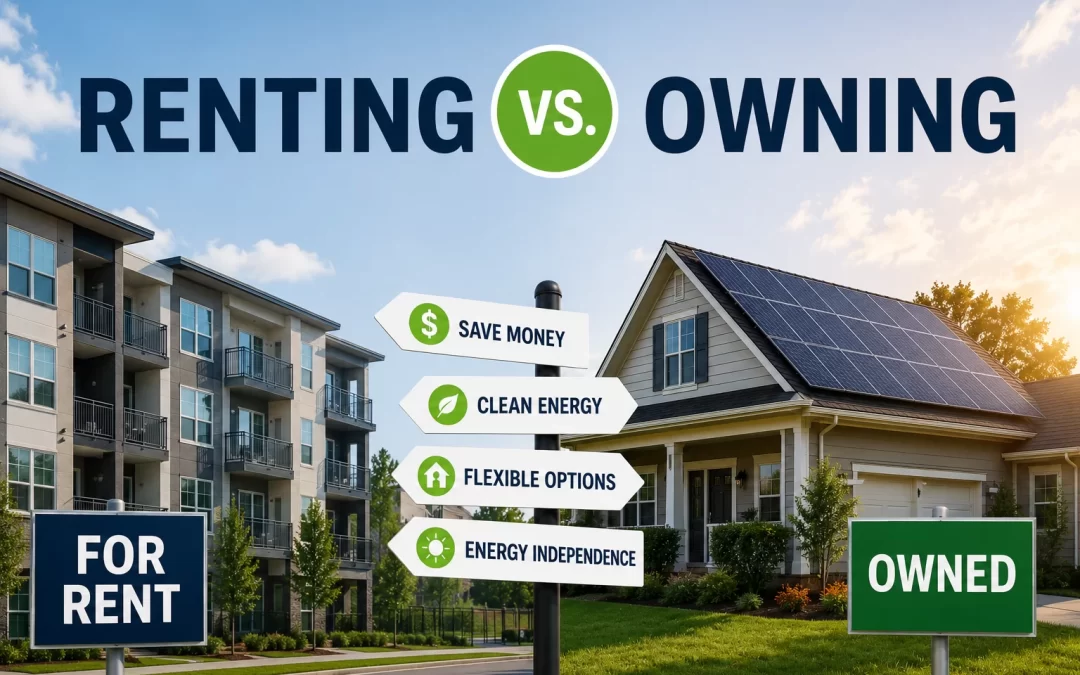
If you don’t own your home, traditional rooftop solar usually doesn’t make sense because you can’t install long‑term equipment on a property you don’t control. However, you may still be able to benefit from solar through options like community solar, green power programs, or negotiating with your landlord. The best choice depends on your lease terms, how long you plan to stay, and what solar programs are available in your state. In some cases, the smartest move is to wait until you own a home or move to a more solar‑friendly situation.
This guide is for U.S. residents comparing renting vs. owning and wondering if solar is still worth it. We’ll walk through what’s realistically possible if you rent, what changes once you own, and how to decide your next step. The goal is to help you avoid dead ends and focus on the options that actually save you money.
Table of Contents
- Renting vs. Owning: What It Means for Solar
- Can You Go Solar If You Rent?
- Key Numbers: Costs, Savings, and Payback
- When Solar Makes Sense for Renters
- When Solar Doesn’t Make Sense If You Don’t Own
- How the Math Changes Once You Own Your Home
- State and Utility Considerations
- Decision Guide: What to Do Next
- Frequently Asked Questions
- Summary
Renting vs. Owning: What It Means for Solar
Why home ownership matters for rooftop solar
Traditional rooftop solar is a long‑term home improvement. Panels are designed to stay on a roof for 25–30 years, and the financial payback usually takes 7–9 years nationally. That only works if you control the property and expect to stay long enough to benefit.
When you rent, you typically:
- Can’t make major structural changes without the landlord’s approval
- Have a lease that’s much shorter than solar’s payback period
- Can’t claim property‑based tax incentives on a home you don’t own
That’s why most standard solar loans, leases, and power purchase agreements (PPAs) are set up for homeowners, not renters.
Key concept: who owns the roof owns the decision
In almost every case, the person or entity that owns the roof decides whether solar panels go on it. If that’s not you, your role shifts from “solar buyer” to “solar influencer” or “solar participant” through other programs.
So the real question isn’t just “Can I get solar if I rent?” but “What solar options fit my situation if I don’t own the roof?” We’ll break those down next.
Can You Go Solar If You Rent?
Realistic solar options for renters
If you rent, you usually have three main ways to benefit from solar:
- Community solar subscriptions
- Green power or solar add‑on programs from your utility
- Convincing your landlord to install solar
1. Community solar (most powerful option for renters)
Community solar lets you subscribe to a share of a larger solar farm in your area. You don’t put panels on your roof; instead, your share of the solar farm’s production shows up as bill credits on your electric bill.
Typical features:
- No roof access required – works for apartments, condos, and rentals
- Low or no upfront cost – often no installation fee
- Modest savings – many programs target 5–15% off your electricity costs
- Shorter commitments – some allow cancellation with 60–90 days’ notice
Community solar is not available everywhere, but it’s growing quickly in states like New York, Massachusetts, Minnesota, Colorado, New Jersey, and others. Our detailed guide on community solar and whether it’s right for you explains how these programs work and what to watch for in the fine print.
2. Utility “green power” or solar programs
Many utilities offer optional programs where you pay a small premium to support renewable energy, or you can opt into a solar block or solar share program.
Key points:
- These programs are easy to join and leave
- They may or may not save you money; some cost a bit more but support clean energy
- You don’t own any panels or equipment
This is the simplest way for renters to support solar, but it’s usually not a big money saver.
3. Getting your landlord to install solar
In some cases, especially with single‑family rentals or small multi‑unit buildings, you can talk to your landlord about adding solar to the property.
Why a landlord might consider it:
- Solar can increase property value and make the rental more attractive
- They may be able to claim the 30% federal solar tax credit and depreciation (for commercial property)
- They can potentially charge slightly higher rent while keeping total tenant costs stable or lower
Challenges:
- Landlord must qualify for financing or pay cash
- They take on long‑term maintenance responsibility
- Benefits must be shared fairly between landlord and tenants
This path can work, but it requires a cooperative landlord and clear agreements about who benefits from the solar savings.
What usually doesn’t work for renters
These options are usually off the table if you don’t own your home:
- Standard rooftop solar loans – lenders typically require you to own the property
- Solar leases/PPAs directly with tenants – contracts are long‑term and tied to the property owner
- DIY rooftop solar – you can’t legally alter a roof you don’t own without permission
Key Numbers: Costs, Savings, and Payback
Typical homeowner solar numbers (for comparison)
To understand why renting vs. owning matters, it helps to know the basic numbers for a typical U.S. homeowner going solar:
- Average system size: 6–10 kW (about 15–25 panels)
- Cost per watt: $2.50–$3.50
- Total system cost: about $28,000–$32,000 before incentives
- After 30% federal tax credit: roughly $19,600–$22,400 (if the homeowner qualifies)
- Average annual bill savings: $1,300–$1,500
- Payback period: 7–9 years on average, shorter in high‑cost electricity states
- Panel performance warranty: 25–30 years; real‑world life often 30–35 years
These are national averages; actual numbers vary by state, roof, utility rates, and system design. For a deeper dive into how these costs and savings work, see our solar cost and savings guide.
How these numbers change if you rent
If you’re a renter, you usually aren’t paying $28,000–$32,000 for a system. Instead, you’re looking at:
- Community solar: often 5–15% savings on the electricity portion of your bill, with no upfront cost
- Utility green power: sometimes a small premium (e.g., a few extra dollars per month) to support renewables
- Landlord‑owned solar: potential for lower total monthly costs if your landlord passes some savings to you
You also typically cannot claim the 30% federal solar tax credit as a renter unless you are the one who owns the solar system. Always consult a tax professional for advice on your specific situation.
What affects your savings most as a renter
- Your state and utility rates: higher electricity prices mean more potential savings
- Availability of community solar: some states have robust programs; others have none
- Your lease terms: who pays the electric bill (you or the landlord) and how long you’ll stay
- Program details: subscription discounts, fees, and cancellation terms
When Solar Makes Sense for Renters
Good scenarios for renters to pursue solar options
Solar (or solar‑like programs) can make sense for renters in these situations:
- You live in a state with strong community solar programs. If you can subscribe with no upfront cost and get a 5–15% discount on bill credits, that’s often a clear win.
- You expect to stay in the same utility area for a few years. Even if you move apartments, you may be able to keep your community solar subscription if you stay within the same utility territory.
- Your landlord is open to improvements. Some landlords are actively looking for ways to make their properties more competitive; solar can be part of that.
- You care about clean energy but can’t install panels. Utility green power or solar share programs let you support renewables with minimal hassle.
How to approach your landlord about solar
If you rent a single‑family home or small building and pay your own electric bill, you can make a business‑minded pitch to your landlord:
- Explain that solar can increase property value and make the rental more attractive
- Offer to share your electric bills so they can see the potential savings
- Suggest they talk to a local installer about landlord‑focused options
- Be clear about what you’re asking for (e.g., “I’d love to see if solar could lower my bills and improve your property value”)
Ultimately, the decision is theirs, but a well‑prepared conversation can help.
When community solar is especially attractive
Community solar is often a strong fit if:
- You have average or higher electric bills (e.g., $80–$150+ per month)
- You live in a state where community solar is regulated and consumer‑friendly
- You want savings without a long‑term equipment commitment
In these cases, community solar can give you a portion of the financial benefits of rooftop solar without owning a home or a roof.
When Solar Doesn’t Make Sense If You Don’t Own
Situations where you should probably skip solar (for now)
There are times when trying to “force” solar as a renter just doesn’t pay off. It may be better to wait until you own a home or move to a more favorable situation.
Solar usually doesn’t make sense for renters when:
- You move frequently. If you expect to move out of the area within 1–2 years, even community solar may not be worth the paperwork.
- Your state has no community solar and limited green power options. In that case, there may simply be no meaningful way to benefit financially from solar as a renter.
- Your landlord is firmly against modifications. Pushing hard for rooftop solar can strain the relationship without a realistic chance of success.
- Your electric bills are very low. If you’re already paying $30–$50 per month, the absolute dollar savings from any solar program will be small.
Risks of trying to “DIY” solar as a renter
Some renters consider portable or balcony solar setups. While small plug‑in systems exist, they come with important caveats:
- They may violate your lease or building codes if not approved
- They usually provide limited savings compared to your total bill
- They can create safety and liability issues if not installed correctly
Before attempting any DIY solar as a renter, check your lease, talk to your landlord, and understand local electrical codes. In many cases, it’s safer and more effective to focus on energy efficiency (LED bulbs, smart thermostats, efficient appliances) until you own a home.
When “waiting” is the smartest solar decision
If you know you want to buy a home in the next few years, it can be wise to:
- Skip complex solar arrangements as a renter
- Focus on saving for a down payment and improving your credit score
- Plan to evaluate rooftop solar once you own and control the property
When you’re ready, our main guide on whether solar is worth it walks through the full homeowner decision process.
How the Math Changes Once You Own Your Home
Why owning your home unlocks full solar benefits
Once you own your home, you can:
- Decide to install a rooftop solar system sized to your usage
- Access the 30% federal solar tax credit (if you qualify; consult a tax professional)
- Benefit from 25–30 years of reduced electric bills
- Potentially increase your home’s resale value
This is where the full cost and savings numbers we listed earlier become relevant.
Typical homeowner solar economics
For a typical U.S. homeowner:
- Upfront cost: $28,000–$32,000 before incentives for a 6–10 kW system
- After 30% federal tax credit: $19,600–$22,400 effective net cost (if you can use the credit)
- Annual savings: $1,300–$1,500 on average, more in high‑rate states
- Payback period: 7–9 years nationally, sometimes 5–7 years in places with high electricity prices and good incentives
- System life: 25–30 years of warranted performance; many systems keep producing for 30–35 years
Over 25 years, many homeowners see tens of thousands of dollars in net savings compared to staying fully on grid power. Our 25‑year solar vs. grid cost comparison breaks down how these long‑term numbers play out.
What affects homeowner solar payback most
- Your state and utility rates – higher rates and strong net metering policies improve payback
- Roof suitability – good sun exposure and minimal shading increase production
- System size and cost per watt – larger, well‑priced systems often have better economics
- Incentives – state, local, and utility rebates can shorten payback
When you’re ready to run your own numbers, our solar payback period calculator can help estimate how long panels might take to pay for themselves on a home you own.
State and Utility Considerations
Why your state matters even more if you rent
For renters, your state and utility determine:
- Whether community solar is available
- What kind of green power or solar share programs exist
- How easy it is to transfer subscriptions if you move
Some states have strong policies that encourage community solar and protect consumers; others have few or no options.
States where renters have more solar options
As of 2026, states with more developed community solar markets include (but are not limited to):
- New York
- Massachusetts
- Minnesota
- Colorado
- New Jersey
- Maryland
- Illinois
- California (various community and shared solar programs)
Program details change frequently, so it’s important to check current offerings with your utility or state energy office.
Checking if solar is worth it where you live
Even if you’re renting now, it’s useful to know how solar performs in your state for when you eventually own a home. Our state‑by‑state guide, Is Solar Worth It in Your State?, breaks down incentives, electricity rates, and typical payback times across all 50 states.
Decision Guide: What to Do Next
Step 1: Identify your current situation
Start by answering a few key questions:
- Are you renting an apartment, condo, or single‑family home?
- Do you pay the electric bill directly, or does your landlord?
- How long do you realistically expect to stay in this area?
- What’s your average monthly electric bill?
Step 2: Check what’s available to you as a renter
Based on your answers:
- If you pay your own electric bill and expect to stay in the area: Research community solar and utility green power programs in your state.
- If your landlord pays the electric bill: Consider whether it’s worth discussing solar with them, especially for single‑family rentals.
- If you plan to move soon: Focus on energy efficiency now and revisit solar when you’re more settled.
Step 3: Decide whether to act now or wait until you own
Consider acting now if:
- Community solar is available with clear savings and flexible terms
- You’re likely to stay in the same utility territory for a few years
- Your landlord is open to exploring solar and you’re in a good solar state
Consider waiting until you own if:
- Your state has limited renter‑friendly solar options
- You expect to buy a home in the next few years
- You want the full long‑term financial benefits of rooftop solar
Step 4: Preparing for solar as a future homeowner
If you’re planning to buy a home and eventually install solar:
- Track your current electricity usage so you know your typical kWh needs
- Work on your credit score, since it can affect solar financing options (see our guide on credit scores for solar financing)
- Learn the basics of solar equipment and warranties so you can compare quotes effectively
When you’re closer to owning, getting multiple quotes from reputable installers is one of the best ways to understand your real costs and savings potential.
Frequently Asked Questions
Can I put solar panels on a house I rent?
In most cases, you cannot install rooftop solar on a rental property without your landlord’s explicit permission, because they own the roof. Even with permission, the landlord would usually need to be the one signing the installation contract and taking responsibility for the system. As a renter, it’s generally better to look at community solar or utility programs instead.
Do renters qualify for the 30% federal solar tax credit?
You can only claim the 30% federal solar tax credit if you are the owner of the solar system and meet IRS requirements. Most renters do not own the system on their building, so they typically cannot claim the credit. Always consult a tax professional about your specific eligibility.
Is community solar worth it for renters?
Community solar can be worth it for renters if it offers clear bill savings (often 5–15%) with little or no upfront cost and reasonable cancellation terms. It’s especially attractive if you expect to stay in the same utility area for a few years. The key is to read the contract carefully and confirm how the bill credits and discounts work.
What if I get solar and then move?
If you own a home with rooftop solar and move, you can usually sell the home with the system included, and buyers often value the lower electric bills. If you’re a renter using community solar, you may be able to transfer your subscription within the same utility territory, but you may have to cancel if you move out of the area. Always ask about transfer and cancellation rules before signing up.
Should I wait to go solar until I buy a house?
If your state has limited renter‑friendly solar options and you plan to buy a home soon, waiting can make sense so you can capture the full long‑term benefits of rooftop solar. However, if community solar in your area offers easy enrollment and real savings, there’s little downside to participating while you rent. The right answer depends on your timeline, local programs, and how stable your housing situation is.
Can solar lower my rent?
Solar doesn’t usually lower your rent directly, because rent is set by your landlord and the local market. However, if your landlord installs solar and passes some of the savings on to you through lower utility costs or an “all‑utilities‑included” arrangement, your total monthly housing cost could go down. Any such arrangement should be clearly discussed and agreed upon in advance.
Summary
- If you don’t own your home, traditional rooftop solar usually isn’t practical, but options like community solar and utility green power programs can still help you benefit from solar.
- Typical homeowner systems cost $28,000–$32,000 before incentives and pay back in about 7–9 years, which is why long‑term control of the property matters.
- Your state, utility rates, and how long you’ll stay in one place have the biggest impact on whether solar‑related options make sense as a renter.
- In many cases, the smartest move is to use renter‑friendly programs now and plan for full rooftop solar once you own a home.
- When you’re ready to explore rooftop solar as a homeowner, getting multiple personalized quotes is the best way to understand your real costs and savings.
If you’re starting to think about solar for a home you own or plan to buy, personalized quotes will give you far more clarity than averages and estimates. Take a few minutes to share basic details about your home and energy use, and compare offers from vetted installers at /get-my-quote/. There’s no obligation, and it’s the most reliable way to see whether solar truly makes sense for your situation.