
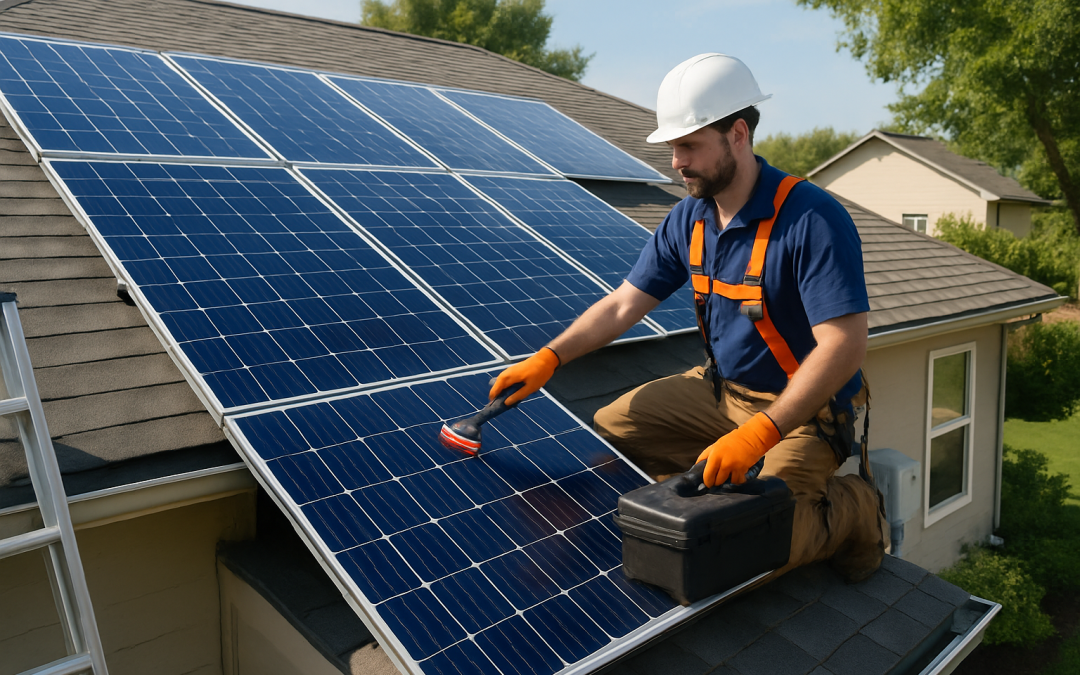
Is regular solar panel maintenance worth the investment? For most U.S. homeowners, basic solar panel maintenance is worth it because it helps your system produce more energy, protects your 25–30 year equipment investment, and can prevent small issues from becoming expensive repairs. The good news is that modern solar systems are low-maintenance: you mainly need occasional cleaning, simple monitoring, and periodic professional checkups. In very rainy or low-dust areas, you may not need paid maintenance every year, but ignoring your system completely can shorten its life and reduce your savings.
Regular solar panel maintenance matters because your system is a long-term asset designed to run for decades on your roof. This guide is for homeowners who either already have solar or are considering it and want to understand the real-world upkeep and costs. We’ll walk through what “maintenance” actually means, what it costs, when it pays off, and when you can safely keep things simple.
Table of Contents
- What Does Regular Solar Panel Maintenance Actually Mean?
- Is Regular Solar Panel Maintenance Worth the Investment?
- Key Numbers: Costs, Savings, and How Maintenance Fits In
- What Affects Whether Maintenance Is Worth It?
- When Regular Maintenance Works in Your Favor
- When Maintenance May Not Be Worth Paying For
- DIY vs Professional Solar Maintenance
- How to Build a Simple Solar Maintenance Plan
- How to Decide What to Do Next
- Frequently Asked Questions
- Summary: Is Solar Panel Maintenance Worth It?
What Does Regular Solar Panel Maintenance Actually Mean?
Maintenance in plain language
For a typical home solar system, “maintenance” is much lighter than for a car or HVAC system. It usually includes:
- Visual checks of panels, wiring, and mounting hardware
- Monitoring system performance through an app or web portal
- Cleaning panels when dirt, pollen, or bird droppings build up
- Checking the inverter (the box that converts solar power to home power) for error messages
- Occasional professional inspections, especially after storms or if production drops
Most modern solar systems are designed to be “set it and forget it” with some light oversight, not constant hands-on work.
Key components that may need attention
- Solar panels: Very few moving parts; main issues are dirt, shading, or physical damage.
- Inverter: Typically replaced once in a system’s life (around 10–15 years for string inverters; 20–25 years for many microinverters).
- Racking and wiring: Usually stable, but should be checked for corrosion, loose clamps, or animal damage.
- Monitoring system: Lets you see if your system is underperforming so you can act early.
How often is “regular” maintenance?
For most homeowners, a reasonable schedule is:
- Every month: Glance at your monitoring app to confirm normal production.
- Every 6–12 months: Visual check from the ground and basic cleaning if needed.
- Every 2–3 years: Professional inspection and performance check.
- After major events: Extra check after hail, hurricanes, heavy snow, or roof work.
Is Regular Solar Panel Maintenance Worth the Investment?
Short answer: usually yes, if you keep it reasonable
Regular solar panel maintenance is worth it when it:
- Prevents energy loss from dirty or shaded panels
- Catches problems early before they turn into major repairs
- Supports your warranties by showing you’ve taken reasonable care of the system
- Protects a large investment (often $20,000+ after incentives)
Where it can be less worth it is paying for frequent, expensive services in areas where rain already keeps panels clean and your system is performing normally.
How maintenance affects your solar return on investment
A typical residential solar system in the U.S. costs about $28,000–$32,000 before incentives and $19,600–$22,400 after the 30% federal tax credit, with a national average payback period of 7–9 years. If dirt, shading, or undetected issues reduce your output by even 5–10% over time, that can:
- Delay your payback by 1–2 years
- Reduce your average annual savings (often $1,300–$1,500) by a few hundred dollars
- Cut into your long-term lifetime savings, which can be tens of thousands of dollars
Spending a few hundred dollars every couple of years on inspections or targeted cleaning is usually a small price compared to the value of the energy your system produces over 25–30 years.
One important caveat
Not every homeowner needs a paid maintenance contract. In clean, rainy climates with easy monitoring and no trees nearby, you may do fine with:
- Free app-based monitoring
- Occasional DIY cleaning (or none at all if rain does the job)
- Calling a pro only when you notice a problem
Key Numbers: Costs, Savings, and How Maintenance Fits In
Core solar system numbers to keep in mind
For a typical U.S. home solar system (15–25 panels):
- System size: 6–10 kW (kilowatts)
- Cost per watt: About $2.50–$3.50 installed
- Total system cost: Roughly $28,000–$32,000 before incentives
- After 30% federal tax credit: About $19,600–$22,400 (consult a tax professional for your situation)
- Average annual savings: Around $1,300–$1,500 on electricity bills
- Payback period: 7–9 years on average, depending on your utility rates and sun exposure
- Panel performance warranty: Typically 25–30 years
- Real-world panel lifespan: Often 30–35 years or more
These are national averages; your actual numbers depend on your location, roof, utility rates, and incentives.
Typical maintenance and repair cost ranges
As of 2026, common maintenance-related costs are:
- Professional cleaning: About $150–$400 per visit for a typical home system
- Annual maintenance plan: Often $200–$500 per year (may include inspection, cleaning, and priority service)
- Inverter replacement: Roughly $1,500–$3,000 for a string inverter; microinverters can be more but often have longer warranties
- Minor repairs (wiring, connectors, small parts): Usually $150–$500
- Panel replacement (single panel): Often $300–$700 including labor, depending on your equipment
Compared to the overall system cost and lifetime savings, these maintenance costs are relatively small, especially if they prevent bigger issues.
How much energy can dirt and neglect really cost?
Studies and field data suggest:
- Light dust and pollen: Often 2–5% loss in output
- Heavy soiling (near highways, farms, or construction): 10–20% loss or more
- Bird droppings or shaded sections: Can significantly reduce output from affected panels or strings
On a system saving you $1,400 per year, a 10% loss from dirt alone could mean about $140 per year in missed savings. In that case, a $200–$300 cleaning every 1–2 years can easily pay for itself.
What Affects Whether Maintenance Is Worth It?
1. Your local climate and environment
Maintenance needs vary a lot by location:
- Rainy, mild climates: Rain often keeps panels reasonably clean; you may only need occasional checks.
- Dry, dusty, or agricultural areas: Dust, pollen, and debris build up faster, making cleaning more valuable.
- Coastal regions: Salt spray can corrode metal parts over time; inspections are more important.
- Snowy climates: Snow usually slides off, but heavy snow loads and ice can stress mounting hardware.
If you live somewhere with frequent dust storms, wildfires, or heavy pollen, regular maintenance tends to have a higher return.
2. Roof type and accessibility
Your roof affects both the need and cost of maintenance:
- Low-slope, single-story roofs: Easier and cheaper for pros to access; DIY visual checks are simpler.
- Steep or multi-story roofs: Higher safety risk and cost; professional maintenance is more important.
- Flat roofs: More prone to dirt accumulation and standing water; may need more frequent cleaning.
3. Nearby trees and shading
Trees add both shade and debris:
- Shade: Reduces output and can cause uneven production across panels.
- Leaves and sap: Can stick to panels and block sunlight.
- Branches: Risk of physical damage in storms.
If your roof is surrounded by trees, regular inspections and occasional trimming are often worth the cost.
4. System size and value
The larger and more expensive your system, the more sense it makes to protect it:
- A small 3–4 kW system on a low-usage home may justify a lighter-touch approach.
- A large 10–15 kW system with batteries and high electric bills benefits more from proactive maintenance.
5. Your comfort level with DIY tasks
If you’re comfortable with basic home maintenance and using a ladder safely, you may be able to handle some tasks yourself. If not, paying a professional for periodic maintenance is usually safer and still cost-effective.
When Regular Maintenance Works in Your Favor
Situations where maintenance clearly pays off
Regular solar panel maintenance is especially worth it when:
- You notice a drop in production compared to past months or years.
- You live in a dusty, smoky, or high-pollen area where panels get visibly dirty.
- Your system is older than 8–10 years and you want to extend its life and catch aging issues.
- You rely heavily on solar to offset high electricity rates or to power an EV.
- You have a complex system (multiple roof faces, batteries, EV chargers, or multiple inverters).
Realistic benefits you can expect
With reasonable maintenance, most homeowners can expect:
- More consistent production and fewer unexplained dips in output
- Better long-term performance closer to the panel warranty guarantees
- Lower risk of surprise repair bills because issues are caught early
- Peace of mind that your 25–30 year asset is being looked after
If you’re already wondering why your system seems to be underperforming, it may help to review a dedicated guide on why solar systems produce less than expected and how maintenance fits in.
When Maintenance May Not Be Worth Paying For
Cases where you can keep it simple
There are situations where paying for frequent professional maintenance may not be necessary:
- Clean, rainy climate with little dust or pollen and no nearby trees.
- Newer system (under 5 years) that’s performing at or above expectations.
- Easy ground-level visibility so you can spot obvious issues without climbing on the roof.
- Good monitoring app that alerts you to problems automatically.
In these cases, a “monitor first, act when needed” approach is often enough: watch your production, do occasional visual checks, and call a pro only when something changes.
When a maintenance contract might be overkill
Long-term maintenance contracts are not always a good fit if:
- The contract cost is high relative to your system size and annual savings.
- The provider offers generic services you don’t really need in your climate.
- You’re comfortable scheduling one-off inspections or cleanings as needed.
Before signing a contract, compare the annual fee to what you’d likely spend on occasional cleaning and inspections over the same period.
DIY vs Professional Solar Maintenance
What you can safely do yourself
Most homeowners can handle:
- Monitoring performance: Check your app monthly for unusual drops.
- Ground-level inspections: Look for broken glass, heavy dirt, or obvious shading.
- Basic cleaning on accessible roofs: Using a soft brush, squeegee, and hose (never pressure washing).
- Checking your inverter display: For warning lights or error codes.
If you’re unsure how to interpret your system’s data, a step-by-step guide on how to monitor your solar system’s performance can help you know what’s normal and what’s not.
When to call a professional
Professional help is strongly recommended when:
- You need to go on a steep or high roof (safety risk).
- You see cracked panels, exposed wiring, or loose hardware.
- Your inverter shows error codes or shuts down unexpectedly.
- You suspect electrical issues or rodent damage.
- You’ve had severe weather (hail, hurricanes, heavy snow) or roof work done.
Pros have the tools and training to work safely at height and around electrical equipment. They can also document issues for warranty claims.
Cost comparison: DIY vs pro
- DIY approach: Mostly your time, plus inexpensive tools for cleaning if needed.
- Professional cleaning: Typically $150–$400 per visit.
- Professional inspection: Often $150–$300, sometimes combined with cleaning.
For many homeowners, a hybrid approach works best: DIY monitoring and visual checks, with professional inspections every few years or when something seems off.
How to Build a Simple Solar Maintenance Plan
Step 1: Know your system and warranties
Start by gathering:
- Your installation paperwork and equipment list
- Panel and inverter warranties (length and what’s covered)
- Your installer’s contact information
- Access to your monitoring app or portal
This helps you understand what’s already covered and who to call if something goes wrong.
Step 2: Set a basic monitoring routine
Put simple reminders on your calendar:
- Monthly: Check your app for production trends and any alerts.
- Seasonally: Do a quick visual check from the ground for dirt, damage, or shading changes.
- After storms: Look for obvious damage or debris on the roof.
Step 3: Decide on cleaning frequency
Base your cleaning plan on what you actually see:
- If panels look clean and production is normal, you may not need cleaning every year.
- If you see visible dirt, bird droppings, or ash, consider cleaning.
- If you live in a high-dust or high-pollen area, plan on professional cleaning every 1–2 years.
For detailed how-to guidance, see a dedicated resource on how to clean solar panels and how often you actually need to.
Step 4: Schedule periodic professional checkups
Even in low-maintenance climates, it’s wise to:
- Have a full professional inspection every 2–3 years.
- Ask the technician to check panel condition, wiring, mounting hardware, and inverter performance.
- Keep records of inspections and any repairs for warranty purposes.
Step 5: Plan for long-term components like the inverter
Most systems will need an inverter replacement at some point:
- String inverters: Often 10–15 year lifespan.
- Microinverters: Often 20–25 year warranties, sometimes matching panel life.
Knowing when to budget for this helps avoid surprises; a deeper dive on when to replace your solar inverter can help you plan ahead.
How to Decide What to Do Next
Is this the right time to act?
Consider taking action now if:
- Your system is more than 3–5 years old and has never been inspected.
- You’ve noticed lower production or higher electric bills than expected.
- Your panels look visibly dirty or you’ve had recent storms or roof work.
- You’re about to buy a home with solar and want to understand its condition.
If your system is new, performing well, and looks clean, you can likely focus on monitoring and plan your first professional checkup in a couple of years.
Information to gather before getting a maintenance quote
Before calling an installer or maintenance company, have this ready:
- System size (in kW) and number of panels
- Roof type and pitch (shingle, tile, flat, steep, etc.)
- Age of the system and installation date
- Any error messages from your inverter or monitoring app
- Photos of the panels and any visible issues (if safe to take)
Questions to ask a maintenance provider
When you talk to an installer or solar service company, ask:
- What does your inspection include (panels, wiring, inverter, roof attachments)?
- Do you provide a written report with photos and recommendations?
- How much do you charge for cleaning vs inspection, and can they be combined?
- Are you familiar with my equipment brands and warranties?
- Do you offer one-time service or only contracts?
Should you get multiple quotes?
For most homeowners, getting 2–3 quotes for maintenance or repairs is smart, especially if:
- You’re considering a long-term maintenance contract.
- You’ve been quoted a high price for cleaning or repairs.
- You’re unsure whether a recommended repair is truly necessary.
Comparing quotes helps you understand what’s reasonable in your area and choose a provider you trust.
Frequently Asked Questions
How often do solar panels really need maintenance?
Most home solar systems only need light maintenance: monthly monitoring, a quick visual check a few times a year, and a professional inspection every 2–3 years. In dusty or high-pollen areas, you may also want professional cleaning every 1–2 years to keep output high.
Do dirty solar panels make a big difference in production?
Light dirt usually causes only a small 2–5% drop in production, but heavy dust, pollen, or bird droppings can cut output by 10–20% or more. If your panels look visibly dirty or your monitoring shows a noticeable drop, cleaning can quickly pay for itself in recovered energy.
Can I clean my solar panels myself?
You can clean panels yourself if they’re safely accessible, using a soft brush or squeegee and a hose with gentle water pressure. Avoid pressure washers, harsh chemicals, and walking on panels; if your roof is steep or high, it’s safer to hire a professional.
Will skipping maintenance void my solar warranty?
Most panel and inverter warranties don’t require a specific maintenance schedule, but they do expect reasonable care and proper installation. Neglect that leads to damage (like ignoring obvious wiring issues) may not be covered, so periodic inspections are a good way to protect your warranty rights.
How much should I budget for solar maintenance over 25 years?
A typical homeowner might spend a few hundred dollars every few years on inspections and cleaning, plus one inverter replacement in the $1,500–$3,000 range. Over 25 years, that’s usually a small fraction of your total savings, especially compared to the $1,300–$1,500 many systems save per year on electricity.
Is a solar maintenance contract worth it?
A maintenance contract can be worth it if you have a large or complex system, a challenging roof, or live in a harsh environment for solar. If your system is simple, easy to monitor, and in a mild climate, occasional one-off inspections and cleanings may be more cost-effective.
Summary: Is Solar Panel Maintenance Worth It?
- Regular solar panel maintenance is usually worth the investment because it protects a system that often costs $19,600–$22,400 after incentives and is designed to last 25–30+ years.
- Most homeowners only need light, periodic maintenance: monitoring, occasional cleaning, and professional inspections every few years.
- Climate, roof type, nearby trees, and system size are the biggest factors that determine how much maintenance you need and how often.
- Ignoring maintenance can lead to 5–20% lower production, delayed payback (typically 7–9 years), and higher repair costs later.
- The best next step is to review your system’s performance, check its condition, and get a quote if you see issues or haven’t had an inspection in several years.
If you want to understand how maintenance fits into the bigger financial picture of going solar, our solar cost and savings guide walks through the key numbers in more detail. When you’re ready, getting personalized quotes from qualified installers and service providers is the most reliable way to see what maintenance and long-term care will look like for your specific home and system.
To compare options with no pressure and see realistic costs for your roof, you can request tailored estimates at /get-my-quote/. A few quotes from reputable providers will help you decide how much maintenance you really need and what it should cost in your area.