
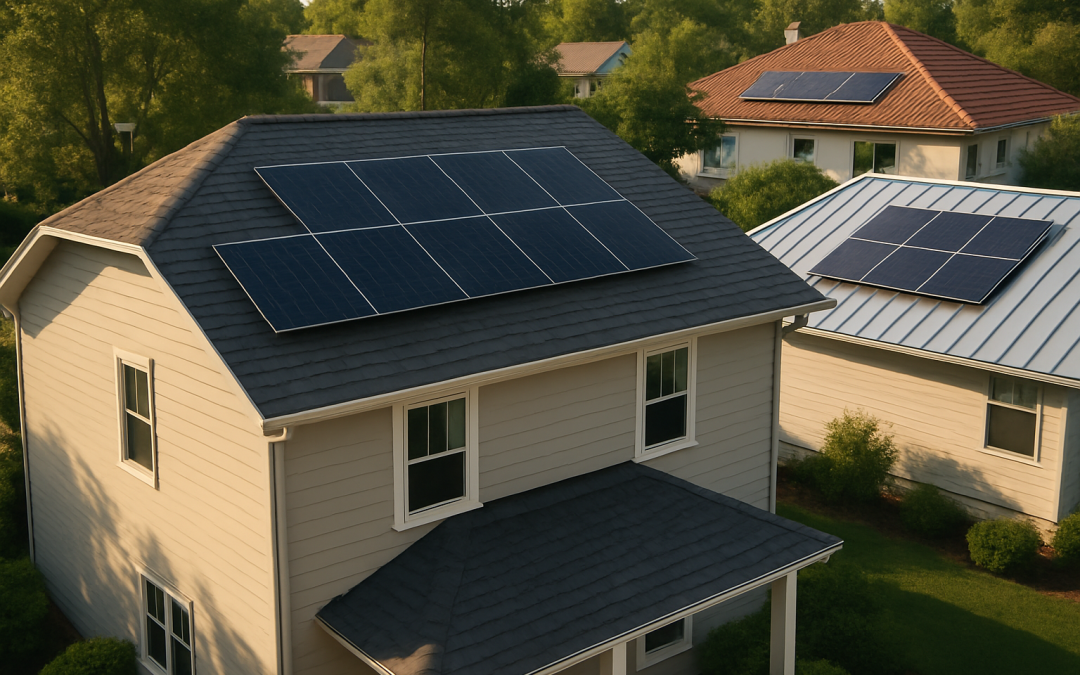
Best Roof Types for Solar Panels: Material, Pitch, and Installation Suitability
The best roof types for solar panels in the U.S. are usually composite/asphalt shingle, standing seam metal, and concrete tile roofs with a pitch between about 15° and 40° (roughly 3:12 to 10:12). These roofs are strong, relatively easy to work on, and compatible with standard solar mounting hardware, which keeps installation costs reasonable. Flat roofs, wood shake, and very old or damaged roofs can still work, but they often need extra hardware or roof work first. No matter your roof type, a qualified solar installer and roofer should confirm structural safety and long-term watertightness before you move forward.
Choosing the right roof for solar is less about having a “perfect” roof and more about understanding what’s easy, what’s possible with extra work, and what’s not a good idea. This guide is for U.S. homeowners who are wondering, “Will solar even work on my roof?” and “Is my roof going to make this more expensive or complicated?” We’ll walk through roof materials, pitch, age, and layout so you can decide whether to move ahead now or plan for solar after a future re-roof.
Table of Contents
- How Roof Type Affects Solar Panels: The Basics
- Best Roof Types for Solar Panels (By Material)
- Best Roof Pitch and Orientation for Solar
- Roof Age, Condition, and Structural Considerations
- How Roof Type Affects Solar Costs and Savings (Real Numbers)
- Climate and Location Factors: Snow, Wind, and Hurricanes
- When Your Roof Is Great for Solar vs. When It’s Not
- What to Do Next: Evaluating Your Roof and Getting Quotes
- Frequently Asked Questions
- Key Takeaways
How Roof Type Affects Solar Panels: The Basics
What “roof type” means for solar
When installers talk about roof type, they’re usually referring to three things:
- Roof material – asphalt shingles, metal, tile, wood shake, etc.
- Roof pitch – how steep the roof is, usually described as a ratio (like 6:12).
- Roof structure and layout – how the roof is framed, how many planes it has, and where vents, chimneys, and skylights are located.
All three affect how easy it is to mount solar panels, how much they cost to install, and how much energy they can produce over time.
Key facts homeowners should know
- Most U.S. homes with asphalt shingle roofs are good candidates for solar with standard mounting hardware.
- Standing seam metal roofs are often the easiest and most durable for solar because panels can clamp to the seams with no roof penetrations.
- Tile roofs can work well but usually cost more to install solar on due to extra labor and specialized hardware.
- Flat roofs can be excellent for solar, but they require tilt racks and careful ballast or anchoring, which adds cost and design work.
- Very old, damaged, or structurally weak roofs may need repair or replacement before solar is installed.
What affects whether your roof is “good enough” for solar
- Remaining roof life – Ideally, your roof should have at least 15–20 years of life left so you don’t have to remove and reinstall panels soon.
- Shading – Trees, nearby buildings, or chimneys that shade the roof can significantly reduce solar output.
- Available area – Most homes need space for 15–25 panels, depending on your energy use and panel efficiency.
- Local building codes and wind/snow requirements – These can affect mounting hardware and structural needs.
When roof type works in your favor
Your roof is working in your favor for solar if:
- It’s asphalt shingle or standing seam metal in good condition.
- It has a simple shape (few dormers, valleys, or hips) with a large, unshaded south, southwest, or southeast-facing plane.
- The roof is less than 10–12 years old or was recently replaced.
When roof type can be a problem
Your roof may make solar more complicated or less cost-effective if:
- It’s near the end of its life and will need replacement soon.
- It’s a complex tile or wood shake roof with many ridges and obstacles.
- You have heavy shading that can’t be easily addressed by trimming trees.
- Local codes require large setbacks that limit usable roof area.
Best Roof Types for Solar Panels (By Material)
1. Asphalt shingle roofs (composite shingles)
Why they’re usually best
- Most common residential roof type in the U.S.
- Compatible with standard solar mounting systems that lag-bolt into rafters and use flashing to keep things watertight.
- Installers are very familiar with working on them, which keeps labor costs down.
Typical experience for homeowners
- Solar installation on asphalt shingles is usually straightforward and fast (often 1–3 days on the roof).
- Roof penetrations are sealed with metal flashing and high-quality sealants designed to last the life of the system.
- As long as the roof is in good condition, solar should not shorten its lifespan.
When asphalt shingle roofs are ideal
- Roof is less than 10–15 years old with no major leaks or soft spots.
- Roof pitch is between about 3:12 and 9:12.
- There is a large, mostly unshaded south, southeast, or southwest-facing section.
When asphalt shingle roofs are not ideal
- Shingles are curling, cracked, or missing in many areas.
- Roof has multiple layers of shingles (common on older homes), which may need to be removed before solar.
- There are structural issues like sagging or water damage.
2. Standing seam metal roofs
Why they’re excellent for solar
- Solar panels can be attached with clamps that grip the seams, often requiring no roof penetrations.
- Metal roofs typically last 40–70 years, longer than most solar panels, so you’re unlikely to need a re-roof during the system’s life.
- Very strong and resistant to wind, snow, and hail when properly installed.
Benefits for homeowners
- Lower risk of leaks because there are fewer or no penetrations.
- Solar and roof lifespans are well aligned, reducing long-term maintenance.
- Often slightly lower labor cost than tile or complex shingle roofs.
Limitations and caveats
- Works best with standing seam metal; corrugated or exposed-fastener metal roofs may need penetrations and more complex mounting.
- Metal roofs can be noisy in heavy rain or hail (not a solar issue, but worth knowing).
- If the metal roof is very old or rusted, it may need repair or replacement before adding solar.
3. Metal roofs with exposed fasteners or corrugated panels
What to know
- Solar can still be installed, but usually requires specialized brackets that penetrate the roof and seal around the fasteners.
- Installers must be careful to maintain the roof’s waterproofing, especially in heavy rain or snow areas.
Pros
- Metal is durable and can support solar well.
- Good option in rural areas, barns, and outbuildings where these roofs are common.
Cons
- More penetrations than standing seam, so more potential leak points if not done correctly.
- Labor can be higher due to additional hardware and sealing steps.
4. Concrete and clay tile roofs
Why tile roofs are more complex
- Tiles are brittle and can crack if walked on incorrectly.
- Solar mounting often requires either:
- Removing tiles in the panel area and installing flashed mounts on the underlying roof deck, then replacing or “bridging” tiles, or
- Using special tile hooks and standoffs designed for the specific tile profile.
What this means for cost
- Tile roof solar installs often cost $0.20–$0.50 more per watt than similar systems on asphalt shingles due to extra labor and hardware.
- For a 7 kW system, that can mean roughly $1,400–$3,500 more in installation cost.
When tile roofs work well for solar
- Roof is in good condition with no widespread cracking or slipping tiles.
- Installer has specific experience with tile roofs and uses manufacturer-approved mounting systems.
- There is a large, relatively simple roof plane to work with.
When tile roofs are not ideal
- Tiles are very old, brittle, or mismatched, making breakage more likely.
- Roof has many hips, valleys, and small sections, limiting panel layout.
- Homeowner is extremely concerned about any risk of tile damage or visible changes.
5. Flat roofs (TPO, EPDM, modified bitumen, built-up)
How solar works on flat roofs
- Panels are mounted on tilt racks that angle them toward the sun, usually between 5° and 20°.
- Racks can be:
- Ballasted – held in place with weight (concrete blocks), minimizing roof penetrations, or
- Mechanically attached – anchored into the structure with penetrations and flashing.
Advantages of flat roofs
- Very flexible panel layout; you can often fit more panels and optimize tilt and orientation.
- Panels are less visible from the street.
- Easy access for maintenance.
Challenges and caveats
- Ballasted systems add weight; a structural engineer may need to confirm the roof can handle it.
- Penetrations must be carefully flashed to avoid leaks, especially on older membranes.
- Snow and debris can accumulate more easily, so occasional cleaning may be needed.
6. Wood shake and slate roofs
Why these are usually poor candidates
- Wood shake and slate are fragile and difficult to walk on, increasing the risk of damage during installation.
- Mounting hardware options are more limited and labor-intensive.
- Many installers either avoid these roofs or strongly recommend re-roofing with a more solar-friendly material first.
When it might still be possible
- If you are planning a full re-roof soon, you can switch to asphalt shingles or metal and then add solar.
- In some cases, panels can be installed on a ground mount or on a detached garage or outbuilding instead.
7. Solar shingles and integrated solar roofs
If you are building a new home or doing a full roof replacement, you might consider solar shingles or integrated solar roofing systems. These replace traditional roofing material with solar-generating tiles or shingles.
They can be a good fit if you care strongly about aesthetics and are already paying for a new roof, but they typically cost more and are less efficient per square foot than conventional panels. For a deeper comparison, see the guide on solar roof shingles vs. traditional solar panels.
Best Roof Pitch and Orientation for Solar
Ideal roof pitch for solar panels
In most of the U.S., the ideal tilt angle for fixed solar panels is roughly equal to your latitude (often between 25° and 40°). Roofs don’t have to be perfect, though.
- Good pitch range for solar: about 15°–40°, which corresponds roughly to 3:12 to 10:12 roof slopes.
- Within this range, energy production differences are usually modest, especially if you have net metering or time-of-use billing.
Orientation: south, east, west, and north
- South-facing roofs (in the Northern Hemisphere) generally produce the most energy over the year.
- Southwest and southeast are also very good and often only 5–10% less productive than due south.
- West-facing roofs can be valuable in areas with high late-afternoon electricity rates, even if total annual output is slightly lower.
- North-facing roofs are usually the last choice and may not be worth it in many climates unless tilt racks are used.
When pitch and orientation work in your favor
- Your main roof plane faces south, southeast, or southwest with a moderate pitch.
- You have minimal shading from trees or nearby buildings.
- Your utility offers net metering or favorable export rates, so maximizing annual output is valuable.
When pitch and orientation are a challenge
- Your only usable roof faces north and you can’t use tilt racks (due to aesthetics or HOA rules).
- Your roof is very steep (over 45°), which can increase installation difficulty and cost.
- Complex roof geometry limits where panels can be placed, forcing suboptimal orientations.
Roof Age, Condition, and Structural Considerations
How old can your roof be and still be good for solar?
Solar panels typically come with a 25–30 year performance warranty and often last 30–35 years in practice. You want your roof to last most of that time so you don’t have to remove and reinstall the system.
- If your roof is 0–10 years old: usually ideal for solar.
- If your roof is 10–20 years old: have a roofer inspect it; you may still be fine, but consider whether a re-roof in the next decade is likely.
- If your roof is 20+ years old (for asphalt shingles): strongly consider replacing the roof before or during solar installation.
Signs your roof may need work before solar
- Missing, curled, or cracked shingles.
- Soft spots, sagging, or visible dips in the roof line.
- Active leaks or water stains on ceilings or in the attic.
- Significant moss, algae, or granule loss on shingles.
Structural considerations
Solar panels add weight to your roof, typically around 2–4 pounds per square foot including racking. Most modern roofs can handle this without issue, but older homes or those with known structural problems should be checked.
- In areas with heavy snow or high winds, building codes may require a structural engineer’s review.
- Flat roofs with ballasted systems may need extra attention to weight limits.
- Any known issues with rafters, trusses, or decking should be addressed before installation.
When roof age and structure work in your favor
- You’ve recently replaced your roof or know its age and condition are good.
- Your home was built or renovated to modern building codes with solid framing.
- You’re open to having a roofer and/or structural engineer provide a written assessment.
When they don’t
- You’re unsure of your roof’s age and see visible wear or sagging.
- You’ve had repeated leak or structural issues.
- Your installer recommends roof work or engineering upgrades and you’re not prepared for that cost yet.
How Roof Type Affects Solar Costs and Savings (Real Numbers)
Baseline solar costs for a typical U.S. home
As of 2026, typical residential rooftop solar costs in the U.S. are:
- System size: Most homes need 15–25 panels, often in the 6–8 kW range.
- Cost per watt: About $2.50–$3.50 per watt before incentives, depending on location, equipment, and roof complexity.
- Total system cost: Roughly $28,000–$32,000 before incentives for a typical system.
- Federal tax credit (ITC): 30% through 2032, which can bring net cost down to about $19,600–$22,400 if you qualify. (Always confirm details with a tax professional.)
- Average annual savings: Around $1,300–$1,500, depending on your utility rates and usage.
- Payback period: Often around 7–9 years nationally, with 25–30 years of panel performance warranty.
How roof type changes these numbers
Asphalt shingle or standing seam metal (simple roofs)
- Usually at the lower end of the cost range: closer to $2.50–$3.00 per watt.
- Installation is faster, so labor costs are lower.
- Payback period is often closer to the 7-year end of the range in good solar states.
Tile, complex metal, or very steep roofs
- Often at the higher end of the cost range: $3.00–$3.50+ per watt.
- Extra labor and specialized hardware can add $1,000–$4,000 to a typical project.
- Payback period may stretch toward the 8–10 year range, depending on your utility rates.
Flat roofs with tilt racks
- Costs can be similar to or slightly higher than asphalt shingle roofs, depending on ballast vs. penetrations and structural needs.
- Optimized tilt and orientation can improve production, which helps offset any extra cost.
Other factors that affect cost and savings
- Local labor rates and permitting fees.
- Equipment choices (premium vs. standard panels, microinverters vs. string inverters, battery storage).
- Shading and system design – more complex designs can cost more per watt.
- State and local incentives – rebates, performance payments, and property tax rules vary widely.
For a deeper dive into how these pieces fit together, see the solar cost and savings guide and the overview of solar power systems and components.
Climate and Location Factors: Snow, Wind, and Hurricanes
Snow loads and cold climates
- In snowy regions, roofs and solar mounts must meet snow load requirements in local building codes.
- Steeper roofs (e.g., 6:12 and above) shed snow more easily, which can help keep panels clear.
- Flat roofs may need stronger racking and careful structural review due to combined snow and ballast weight.
High-wind and hurricane-prone areas
- Roofs and solar systems must be designed for high wind speeds (often 130–180 mph in coastal zones).
- Standing seam metal and well-installed asphalt shingle roofs with proper underlayment perform well when built to code.
- Mounting hardware, attachment spacing, and edge setbacks are critical; your installer should follow manufacturer and code requirements.
Hot, sunny climates
- Metal roofs can get hot, but solar panels actually provide some shade and cooling to the roof surface.
- Roof ventilation and attic insulation matter more for comfort and energy use than roof material alone.
- In very hot climates, slightly elevated racking that allows airflow under panels can improve performance.
When climate works in your favor
- You live in a region with good sun exposure and moderate snow/wind requirements.
- Your roof was built or replaced under modern building codes that account for local conditions.
- Your installer has clear experience in your specific climate (e.g., snow country, hurricane zones).
When climate adds complexity
- You’re in a coastal or hurricane-prone area with strict wind requirements.
- You’re in a heavy snow region with older construction that may need structural upgrades.
- Your roof is already marginal for loads, and adding solar plus snow or ballast pushes limits.
When Your Roof Is Great for Solar vs. When It’s Not
Signs your roof is a great candidate for solar
- Roof material is asphalt shingle or standing seam metal in good condition.
- Roof is less than 15 years old with no known leaks or structural issues.
- You have a large, mostly unshaded south, southeast, or southwest-facing roof plane.
- Your local utility rates are relatively high, and you have access to net metering or similar programs.
Signs your roof is a “maybe” for solar
- Roof is tile, corrugated metal, or flat but in good condition.
- There is some shading that might be reduced by trimming trees.
- Roof is older but not failing; you’re open to a roofer’s opinion on remaining life.
- You might consider a ground-mounted system or solar on a garage or outbuilding if the main roof is not ideal.
Signs your roof is not a good fit for solar right now
- Roof is near the end of its life or has active leaks and visible damage.
- Roof material is wood shake or slate and you’re not planning a re-roof soon.
- Heavy, unavoidable shading covers most of the day (tall buildings, protected trees you can’t remove).
- Structural issues or code requirements make adding solar prohibitively expensive.
What to Do Next: Evaluating Your Roof and Getting Quotes
Step 1: Do a quick self-check of your roof
Before talking to installers, take a few minutes to assess your roof from the ground (or from photos):
- Note your roof material (asphalt shingle, metal, tile, etc.).
- Estimate age – when was it last replaced?
- Look for obvious issues: missing shingles, sagging, heavy moss, or visible damage.
- Observe shading at different times of day – are there big trees or buildings casting shadows?
Step 2: Gather basic information for installers
Having a few details ready will make your quotes more accurate:
- Recent electric bills (12 months if possible) to show your usage.
- Any roofing reports or documentation if you’ve had work done recently.
- Photos of your roof from the street and, if safe, from upper windows or the attic.
Step 3: Ask the right questions when getting quotes
When you speak with solar companies, ask:
- How many systems have you installed on my roof type? (Asphalt, tile, metal, flat, etc.)
- Will you inspect my roof and attic, or coordinate with a roofer?
- How will you protect against leaks? (Ask about flashing, sealants, and warranties.)
- What happens if I need a roof replacement in 10–15 years? (Removal and reinstallation policies and costs.)
- Will a structural engineer review my roof if needed?
Step 4: Decide whether to re-roof before solar
If your roof is older or borderline, it may be smarter to replace it before adding solar. In many cases, homeowners:
- Replace the roof with a solar-friendly material like asphalt shingles or standing seam metal.
- Install solar immediately afterward, so both warranties start fresh.
- Coordinate between the roofer and solar installer to ensure proper flashing and layout.
Step 5: Get multiple quotes
Because roof type affects both cost and design, it’s wise to get at least two to three quotes from reputable installers. Compare:
- System size (kW) and expected annual production (kWh).
- How they plan to mount panels on your specific roof.
- Roof and leak warranties related to the solar installation.
- Total cost, incentives, and estimated payback period.
Before you commit, it can also help to review an honest overview of whether solar is worth it for your home, especially if your roof adds complexity.
Frequently Asked Questions
What is the best roof type for solar panels?
For most U.S. homes, the best roof types for solar panels are asphalt shingle and standing seam metal roofs with a moderate pitch and minimal shading. They are easy to work on, compatible with standard mounting hardware, and usually keep installation costs lower than tile, wood shake, or complex roofs.
Can I put solar panels on an old roof?
You can technically install solar on an older roof, but it’s usually not recommended if the roof is near the end of its life or has existing problems. If your roof is 20+ years old (for asphalt shingles) or shows signs of damage, it’s often smarter to replace the roof first so you don’t pay to remove and reinstall panels later.
Do solar panels damage your roof or cause leaks?
When installed correctly with proper flashing and sealants, solar panels should not damage your roof or cause leaks, and they can even protect the roof surface underneath from weather. Most issues arise from poor installation, which is why choosing an experienced installer and asking about roof and leak warranties is important.
Are tile roofs bad for solar panels?
Tile roofs are not bad for solar, but they are more complex and expensive to work on than asphalt shingles or standing seam metal. Installers need specialized hardware and extra labor to avoid breaking tiles and to keep the roof watertight, which can add $1,000–$4,000 or more to a typical project.
Can I install solar panels on a flat roof?
Yes, flat roofs can be excellent for solar when panels are mounted on tilt racks and the roof structure can handle the weight. Design and engineering are especially important on flat roofs to manage ballast, drainage, and wind loads, so you should work with an installer experienced in flat-roof systems.
Is it better to replace my roof before installing solar panels?
If your roof is in good condition with at least 15–20 years of life left, you can usually install solar without re-roofing first. If the roof is older or has known issues, replacing it before solar often saves money and hassle in the long run, and you can choose a solar-friendly material like asphalt shingles or standing seam metal.
Key Takeaways
- The best roof types for solar panels are usually asphalt shingle and standing seam metal roofs with a moderate pitch and minimal shading.
- Typical residential solar systems cost about $28,000–$32,000 before incentives and $19,600–$22,400 after the 30% federal tax credit, with a 7–9 year average payback period, but complex roofs can push costs higher.
- Roof age, condition, and structure matter as much as material; you generally want at least 15–20 years of roof life left before installing solar.
- Tile, flat, and complex roofs can still work for solar but often require extra hardware, labor, and engineering, which affects cost and design.
- The smartest next step is to evaluate your roof, gather your electric bills, and get multiple quotes from experienced installers who understand your specific roof type.
If your roof looks like a good candidate, the next move is to get personalized quotes that factor in your roof type, local incentives, and energy use. You can start comparing options and designs tailored to your home by requesting estimates at /get-my-quote/. Getting a few no-obligation quotes is the best way to see how your specific roof impacts cost, savings, and payback.