
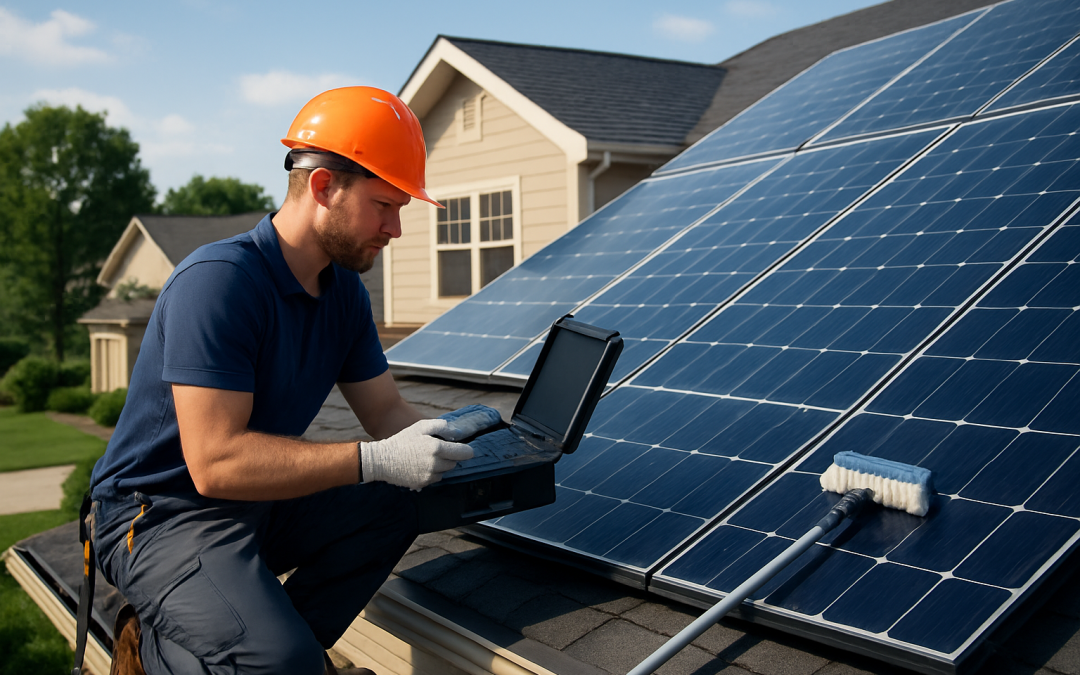
Solar panel maintenance costs in 2026 are relatively low for most U.S. homeowners. Expect to spend about $150–$400 every 1–2 years for professional cleaning (often optional), and $0–$300 per year on average for occasional inspections and minor repairs over the life of the system. Most modern systems come with 10–25 year equipment and workmanship warranties that cover major failures, so out-of-pocket costs are usually limited to cleaning, small fixes, and inverter replacement once or twice in 25–30 years. Actual costs can be higher if your roof is hard to access, you live in a harsh climate, or you skip regular checkups and small issues turn into bigger repairs.
Solar panel maintenance is one of the most common concerns for homeowners considering solar, and it’s a fair question: “What will this really cost me after the system is installed?” This guide breaks down typical cleaning, repair, and long-term maintenance expenses in plain language. If you’re a U.S. homeowner comparing quotes or deciding whether solar is worth it, this article will help you understand realistic ongoing costs and how to keep them low.
Table of Contents
- What “Solar Panel Maintenance” Actually Includes
- Typical Annual Solar Panel Maintenance Costs in 2026
- Solar Panel Cleaning Costs
- Solar Repair and Replacement Costs
- Long-Term Solar Panel Expenses Over 25–30 Years
- What Affects Your Solar Maintenance Costs Most
- Regional and State Factors That Change Maintenance Needs
- When Solar Maintenance Costs Work in Your Favor (and When They Don’t)
- Key Numbers: System Cost, Savings, and Payback vs. Maintenance
- How to Decide What to Do Next
- Frequently Asked Questions
- Summary: What Homeowners Should Remember
What “Solar Panel Maintenance” Actually Includes
Solar panel maintenance is mostly about keeping your system producing power efficiently and safely, not constant hands-on work. For most homeowners, it looks like:
- Periodic visual inspections (by you or a pro)
- Occasional cleaning to remove heavy dirt, pollen, or bird droppings
- Monitoring system performance through an app or web portal
- Addressing minor issues like loose wiring, broken clamps, or critter damage
- Replacing the inverter once or twice over 25–30 years
Modern solar panels have no moving parts and are designed to sit on your roof for decades with minimal attention. The main “wear items” are the inverter (which converts DC to AC power) and, in some cases, roof-related components like flashing and mounts.
What’s usually covered by warranties
Most quality residential systems installed in 2026 include:
- Panel performance warranty: 25–30 years, guaranteeing a certain power output (often 80–92% at year 25).
- Product warranty on panels: 12–25 years against defects.
- Inverter warranty: 10–25 years, depending on brand and type (string vs. microinverter).
- Workmanship or labor warranty: 10–25 years from the installer on installation-related issues like leaks or loose wiring.
These warranties can significantly reduce your out-of-pocket maintenance costs, especially for major component failures. However, they usually do not cover routine cleaning, damage from extreme weather, or issues caused by animals or homeowner modifications.
Typical Annual Solar Panel Maintenance Costs in 2026
For a typical U.S. home with a professionally installed solar system, realistic maintenance costs look like this:
- Average annual maintenance cost (over 25 years): about $0–$300 per year, depending on climate, roof type, and whether you hire pros or do simple tasks yourself.
- Most common pattern: $0 in many years, with occasional $150–$400 cleaning or a few hundred dollars for minor repairs.
- Inverter replacement: $1,500–$4,000 once or twice over 25–30 years if not fully covered by warranty.
Spread over the life of the system, many homeowners find that maintenance adds only a small fraction to their overall solar costs. In many cases, the annual savings on electricity (often $1,300–$1,500 per year nationally) far outweigh these occasional expenses.
When you might spend almost nothing
Your maintenance costs can be very low if:
- You live in an area with regular rain that naturally rinses panels.
- Your installer provides a long workmanship warranty and responsive service.
- You monitor your system and catch small issues early.
- You don’t have heavy tree cover, dust, or snow load issues.
When maintenance costs can be higher
Expect higher ongoing costs if:
- You live in a dusty, industrial, or high-pollen area where panels get dirty quickly.
- Your roof is steep, high, or difficult to access, requiring professional cleaning.
- You have frequent snow, hail, or hurricane-level storms.
- You have squirrels, birds, or other critters nesting under panels.
Solar Panel Cleaning Costs
Solar panel cleaning is the most visible part of maintenance, but it’s often needed less than homeowners expect. In many climates, rain does most of the work.
How much does professional cleaning cost in 2026?
Typical professional cleaning prices for a residential system are:
- Per visit: $150–$400 for a typical 5–10 kW system (about 15–25 panels).
- Per panel pricing: $8–$20 per panel, depending on access and region.
- Frequency: Once every 1–2 years in dusty or high-pollen areas; rarely or never in rainy, mild climates.
Some solar companies offer maintenance packages or service plans that bundle cleaning with inspections for a flat annual fee, often in the $200–$500 per year range.
Do you really need to clean your panels?
Whether cleaning is worth it depends on how dirty your panels get and how much production you’re losing. In many areas:
- Light dust and pollen may reduce output by only 2–5%, which often doesn’t justify frequent paid cleanings.
- Heavy buildup (bird droppings, ash, industrial dust, or thick pollen) can cut production by 10–20% or more, making cleaning more worthwhile.
You can usually see the impact in your monitoring app: if production drops noticeably and doesn’t match expected seasonal patterns, dirt may be part of the problem.
DIY cleaning vs. hiring a pro
Many homeowners can safely clean ground-mounted or low, gently sloped roof systems themselves using:
- A soft brush or sponge on a telescoping pole
- Plain water (ideally demineralized) and mild, non-abrasive soap if needed
- Cleaning early morning or late afternoon to avoid hot glass and streaking
However, do not attempt DIY cleaning if:
- Your roof is steep, high, or slippery.
- You’re not comfortable working at heights.
- You’re unsure how to avoid damaging wiring or connectors.
In those cases, paying $150–$400 for a professional cleaning is safer and often cheaper than a medical bill or roof repair. Always ask your installer or a qualified solar service company for guidance before climbing on your roof.
Solar Repair and Replacement Costs
Most solar systems run for years without issues, but occasional repairs are normal over a 25–30 year lifespan. The good news: many serious problems are covered by equipment or workmanship warranties, especially in the first 10–25 years.
Common solar repair costs in 2026
Here are typical out-of-pocket price ranges if an issue is not covered by warranty:
- Service call / diagnostic visit: $150–$300 per visit.
- Minor electrical repairs (loose connections, junction box issues): $150–$500.
- Replacing a single panel (out of warranty): $250–$500 for the panel plus $150–$300 labor.
- String inverter replacement (5–10 kW system): $1,500–$3,000 installed.
- Microinverter replacement (per unit): $150–$350 per microinverter installed, though many are under 20–25 year warranty.
- Critter guard installation (to prevent squirrel/bird damage): $300–$800.
Inverter replacement: the biggest long-term item
The inverter is usually the most expensive component to replace over time:
- String inverters: Often last 10–15 years; many come with 10–12 year standard warranties, extendable to 20–25 years for an extra cost.
- Microinverters and DC optimizers: Typically have 20–25 year warranties and may last the life of the system.
If your inverter fails outside warranty, expect a one-time cost of roughly $1,500–$4,000 depending on system size and equipment. Many homeowners choose extended inverter warranties upfront to reduce this risk.
Roof-related issues and leaks
Properly installed solar should not cause roof leaks, but it can happen if flashing or mounting hardware is poorly installed or your roof ages significantly after installation. Typical costs:
- Minor leak repair around mounts: $300–$1,000, often covered by installer workmanship warranty if within term.
- Panel removal and reinstallation for roof replacement: $1,000–$3,000+ depending on system size and roof complexity.
If your roof is older, many installers recommend replacing it before or during solar installation to avoid paying for panel removal and reinstallation later.
Long-Term Solar Panel Expenses Over 25–30 Years
To understand the real cost of solar panel maintenance, it helps to look at the full 25–30 year picture, which is the typical performance warranty period for panels.
Typical lifetime maintenance cost ranges
For a standard 6–10 kW residential system, a realistic lifetime maintenance budget might look like:
- Low-maintenance scenario (favorable climate, strong warranties): $1,000–$3,000 total over 25–30 years.
- Moderate-maintenance scenario (occasional cleaning and minor repairs): $3,000–$6,000 total.
- High-maintenance scenario (harsh climate, difficult roof, limited warranties): $6,000–$10,000+ total, especially if you pay for inverter replacement and frequent service.
Spread over 25–30 years, even the higher end often works out to a few hundred dollars per year, which is usually far less than the annual electricity savings for most systems.
How this compares to system cost and savings
As of 2026, typical residential solar numbers look like this:
- Average system cost: $28,000–$32,000 before incentives for a typical home.
- After 30% federal tax credit (ITC): about $19,600–$22,400, assuming you’re eligible and claim it (always confirm with a tax professional).
- Cost per watt: roughly $2.50–$3.50 installed.
- Average annual savings on electricity: $1,300–$1,500 nationally, higher in high-rate states.
- Payback period: about 7–9 years on average.
- Panel lifespan: 25–30 year performance warranty, with many panels still producing well at 30–35 years.
- Average number of panels: 15–25 for a typical U.S. home.
In this context, a few thousand dollars in maintenance over decades is usually a small slice of the total financial picture. The bigger drivers of your return on investment are system cost, local electricity rates, incentives, and how much of your usage you offset with solar.
What Affects Your Solar Maintenance Costs Most
Not every homeowner will see the same solar panel maintenance costs. Several key factors can push your expenses up or down.
1. Climate and environment
- Dusty or agricultural areas: More frequent cleaning due to dust, soil, or crop debris.
- Coastal regions: Salt spray can accelerate corrosion if equipment isn’t rated for coastal use.
- High-pollen or industrial zones: More buildup on panels, potentially more cleaning.
- Snowy climates: Occasional snow removal (if needed) and more stress from freeze-thaw cycles.
2. Roof type and system design
- Steep or high roofs: Harder and more expensive to access for cleaning and repairs.
- Complex roofs (multiple levels, dormers): More labor for installation and any future work.
- Ground mounts: Easier to access and maintain, often cheaper to service.
- Microinverters vs. string inverters: Microinverters may reduce the risk of a single-point failure but can be more complex to service panel-by-panel.
3. Equipment quality and warranties
- Tier 1 panels and reputable brands: Lower risk of early failures.
- Longer inverter and workmanship warranties: Fewer out-of-pocket repair costs.
- Cheap or no-name equipment: Higher risk of failures and limited support.
4. Installer quality and support
- Experienced, established installers: Better workmanship, fewer issues, and responsive service.
- Fly-by-night or low-bid contractors: Higher risk of leaks, wiring problems, and difficulty getting service later.
When comparing quotes, ask specifically about workmanship warranties, service call fees, and how long the company has been in business. Resources like how to get the best solar quote and spot a bad one can help you evaluate installers beyond just price.
5. How actively you monitor your system
Most modern systems include monitoring apps that show daily and historical production. Homeowners who:
- Check their system monthly or quarterly
- Compare production to past months and seasons
- Contact their installer when they see unexplained drops
tend to catch small issues early, when they’re cheaper to fix. Ignoring the system for years can lead to longer outages and larger repair bills.
Regional and State Factors That Change Maintenance Needs
Where you live in the U.S. has a real impact on solar panel maintenance costs and needs.
High-sun, dry states (AZ, NV, parts of CA, NM, TX)
- Excellent solar production but more dust and dirt buildup.
- Panels may need cleaning once or twice a year for optimal performance.
- High heat can stress equipment, making quality components and proper ventilation more important.
Coastal and humid regions (FL, Gulf Coast, coastal CA, Southeast)
- Salt air and humidity can accelerate corrosion if equipment isn’t rated for it.
- Frequent storms may mean more debris and occasional inspections after major weather events.
- Hurricane-prone areas should ensure mounting systems are rated for local wind speeds.
Northern and snowy states (MN, WI, NY, MA, CO, etc.)
- Snow can temporarily cover panels, but they usually shed snow as they warm.
- Some homeowners choose to clear snow manually, but safety is a concern; many simply wait for melt.
- Freeze-thaw cycles and ice dams can stress roof components; good flashing and workmanship are critical.
Heavily wooded or suburban areas
- More leaves, pollen, and shade can reduce production and increase cleaning needs.
- Squirrels and birds are more likely to nest under panels, potentially damaging wiring.
- Critter guards and occasional inspections are often worthwhile.
When Solar Maintenance Costs Work in Your Favor (and When They Don’t)
Solar panel maintenance is usually a small line item compared to your savings, but there are situations where it’s more or less favorable.
When maintenance costs work in your favor
Solar maintenance is usually a good trade-off when:
- Your electric rates are high, so even slightly reduced production still saves you a lot.
- You have strong warranties that cover major components for 20–25 years.
- Your roof is in good condition and won’t need replacement soon.
- You live in a moderate climate where panels stay relatively clean.
In these cases, you might spend a few hundred dollars every few years on cleaning or minor service, while saving thousands on electricity over the same period.
When maintenance can be a drawback
Solar maintenance can be less favorable if:
- Your roof is very difficult or dangerous to access, making every service visit expensive.
- You live in a harsh environment that requires frequent cleaning or repairs.
- You choose low-quality equipment or an unreliable installer, leading to repeated issues.
- Your electricity rates are very low, so your savings margin is thin to begin with.
In these situations, it’s especially important to choose high-quality equipment, a reputable installer, and to understand your local conditions before committing.
Key Numbers: System Cost, Savings, and Payback vs. Maintenance
To put solar panel maintenance costs in context, it helps to compare them to the bigger financial picture of going solar.
Typical system and savings numbers (2026)
- System size: 5–10 kW for most U.S. homes (about 15–25 panels).
- Installed cost: $28,000–$32,000 before incentives, or $2.50–$3.50 per watt.
- After 30% federal ITC: $19,600–$22,400, assuming you qualify and claim it (confirm with a tax professional).
- Average annual bill savings: $1,300–$1,500, often more in high-rate states like CA, HI, MA, NY.
- Payback period: 7–9 years on average.
- System life: 25–30 years performance warranty, 30–35+ years typical usable life.
How maintenance fits into the ROI
Let’s say you spend $4,000 total on maintenance over 25 years (cleaning, one inverter replacement, and a few service calls). That’s:
- About $160 per year on average.
- Small compared to $1,300–$1,500+ in annual bill savings.
- Roughly 10–15% of one year’s electricity savings in many cases.
While every home is different, for most homeowners maintenance is not what makes or breaks the economics of solar. The bigger levers are system price, financing terms, local incentives, and your electricity rates. If you want to see how these numbers play out for your home, tools like the DIY solar savings calculator can help you estimate payback and long-term savings.
How to Decide What to Do Next
If you’re weighing solar panel maintenance costs as part of your decision, here’s how to move forward in a practical way.
1. Decide if solar is likely worth it for your home
Before worrying too much about maintenance, make sure solar itself makes sense for you. Consider:
- Your average monthly electric bill and local rates.
- How much unshaded roof space you have and its orientation (south, east, west).
- Whether you plan to stay in your home at least 7–10 years.
- Your roof’s age and condition.
If you’re unsure, an honest resource like our solar “is it worth it?” guide can help you think through the key variables.
2. Gather the right information before getting quotes
To get accurate quotes and clear answers about maintenance, have this information ready:
- Recent electric bills (12 months if possible).
- Roof age, material, and any known issues.
- Whether you might add an EV, heat pump, or other major electrical loads soon.
- Your preference for ownership vs. leasing or power purchase agreements.
Financing choices can affect your long-term costs and responsibilities, including who handles maintenance. For a deeper dive, see solar loan vs. lease vs. PPA: which is right for you?
3. Questions to ask installers specifically about maintenance
When you talk to installers, ask clear, specific questions such as:
- “What maintenance do you recommend for this system in my area, and how often?”
- “What does your workmanship warranty cover, and for how long?”
- “If I have a problem, what are your typical service call fees after the first year?”
- “How long are the panel and inverter warranties, and who handles warranty claims?”
- “Do you offer maintenance plans or cleaning services? What do they cost?”
- “What happens if I need to replace my roof in 10–15 years?”
4. Get multiple quotes and compare the full picture
Because maintenance and service policies vary widely, getting at least 2–3 quotes is important. Don’t just compare the upfront price:
- Look at equipment brands and warranty lengths.
- Compare workmanship warranties and service policies.
- Ask how each installer handles future roof work and system removal/reinstallation.
Guides like how to get the best solar quote (and spot a bad one) can help you evaluate offers and avoid common pitfalls.
Frequently Asked Questions
How much does it cost to maintain solar panels per year?
Most homeowners spend between $0 and $300 per year on average for solar panel maintenance when averaged over 25–30 years. Many years may have no cost at all, with occasional expenses for cleaning, inspections, or inverter replacement spread out over time.
Do solar panels need to be cleaned every year?
Not always. In many climates, rain keeps panels clean enough that annual professional cleaning isn’t necessary, and you may only need cleaning every 1–2 years or after unusual dust or pollen events. If you see a noticeable, unexplained drop in production in your monitoring app, that’s a good time to consider cleaning.
What is the most expensive part of solar panel maintenance?
The most expensive maintenance item is usually inverter replacement, which can cost $1,500–$4,000 if it fails outside its warranty period. Many inverters now come with 10–25 year warranties, so choosing a strong warranty can significantly reduce this risk.
Who pays for solar repairs if I have a lease or PPA?
With most solar leases and power purchase agreements (PPAs), the solar company owns the system and is responsible for maintenance and repairs, not you. However, you should always read the contract carefully to see exactly what is covered and for how long, and ask the provider to explain any exclusions.
Can I do solar panel maintenance myself?
You can handle basic tasks like visually inspecting panels from the ground and monitoring system performance through an app. Simple cleaning of ground-mounted or low, gently sloped roof systems may also be safe for some homeowners, but anything involving roof work, wiring, or troubleshooting should be left to a qualified solar professional for safety and warranty reasons.
How long do solar panels last before they need to be replaced?
Most modern solar panels come with 25–30 year performance warranties and often continue producing power well beyond that, typically 30–35 years or more. They don’t usually “fail” all at once; instead, they slowly lose efficiency over time, so replacement is often a financial decision rather than a strict maintenance requirement.
Summary: What Homeowners Should Remember
- Solar panel maintenance costs in 2026 are generally low, often averaging $0–$300 per year over the life of the system.
- The biggest potential expense is inverter replacement, which may cost $1,500–$4,000 if not covered by a long warranty.
- Climate, roof type, equipment quality, and installer workmanship are the main factors that affect your long-term maintenance costs.
- Compared to typical annual bill savings of $1,300–$1,500, maintenance is usually a small part of the overall solar financial picture.
- The smartest next step is to get a few detailed quotes that clearly explain warranties, service policies, and expected maintenance in your area.
If you’re ready to see real numbers for your home, getting personalized quotes is the best way to understand both upfront and long-term costs. You can compare equipment, warranties, and service policies side by side by starting with multiple estimates through our secure quote request page. There’s no obligation, and having real offers in hand makes it much easier to decide whether solar — and its maintenance costs — make sense for you.