
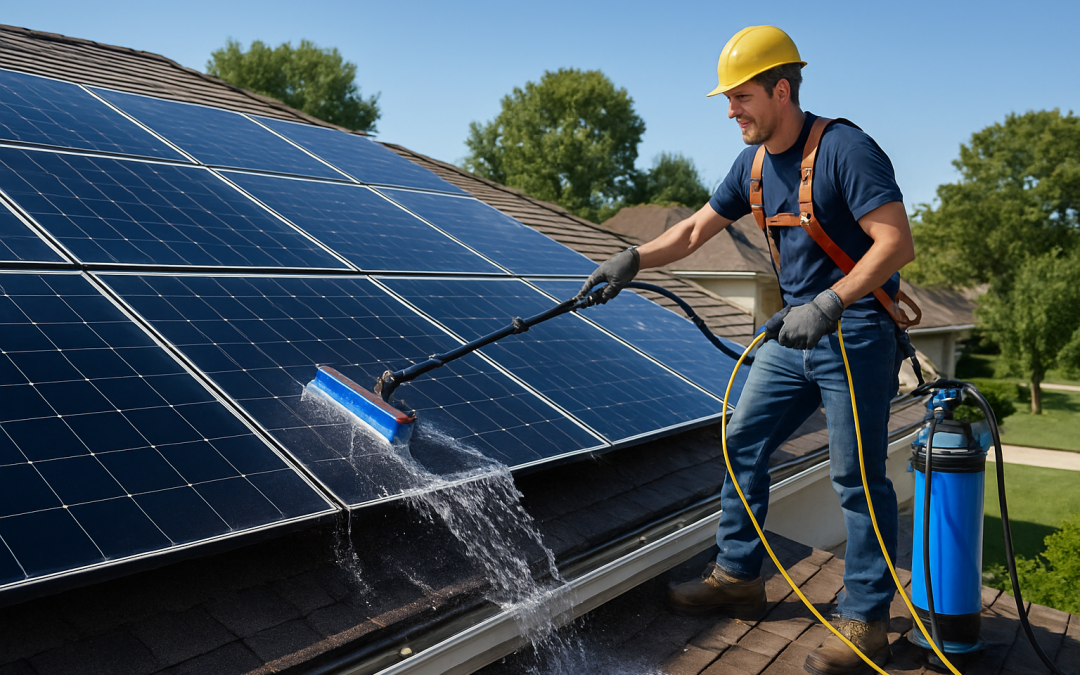
Professional Solar Panel Cleaning: Costs, Benefits, Methods, and How Maintenance Impacts Energy Efficiency
Professional solar panel cleaning typically costs $15–$35 per panel or $150–$400 per visit for a typical U.S. home, and it can recover 5–15% of lost energy output in dusty or polluted areas. Clean panels allow more sunlight to reach the cells, which helps your system stay closer to its rated efficiency and protects your long-term savings. Most homeowners only need professional cleaning once or twice a year, but location and roof conditions matter a lot. If your panels are hard to reach or under heavy tree cover, you may need more frequent cleanings and should avoid DIY methods that risk damage or voiding your warranty.
Professional solar panel cleaning is about keeping your system performing as close as possible to its original output, not about making panels “like new” forever. This guide explains what cleaning really does for energy efficiency, how much it costs, when it’s worth paying a pro, and when simple rain or light DIY maintenance is enough. It’s written for U.S. homeowners with rooftop solar (or those considering it) who want realistic expectations and clear next steps.
Table of Contents
- What Is Professional Solar Panel Cleaning?
- How Cleaning Affects Solar Panel Energy Efficiency
- Professional Solar Panel Cleaning Costs
- Solar Panel Cleaning Methods: Professional vs DIY
- How Often Should You Clean Solar Panels?
- Key Numbers: System Costs, Savings, and How Cleaning Fits In
- When Professional Cleaning Makes Sense (and When It Doesn’t)
- How to Choose a Professional Solar Panel Cleaning Service
- What to Do Next: Deciding on Cleaning and Maintenance
- Frequently Asked Questions
- Summary: Key Takeaways
What Is Professional Solar Panel Cleaning?
Simple definition
Professional solar panel cleaning is the process of safely removing dust, pollen, bird droppings, leaves, and other debris from your solar panels using tools and methods designed not to scratch the glass or damage your roof. The goal is to restore as much sunlight exposure as possible so your system can produce closer to its rated output.
Unlike basic window washing, solar cleaning companies are trained to work around electrical equipment, roof penetrations, and racking systems. They also understand manufacturer guidelines so they don’t void your panel or roof warranties.
What’s typically included in a professional cleaning visit
- Visual inspection of panels, wiring, and mounting hardware
- Rinsing panels with deionized or softened water to avoid mineral spots
- Gentle brushing with non-abrasive tools to remove stuck-on debris
- Rinse and final check for streaks or residue
- Basic performance check (some companies compare before/after production data if you provide access)
What it is NOT
- It is not a repair service (though cleaners may flag issues they see).
- It is not a substitute for a full system inspection by a licensed solar installer or electrician.
- It does not “reset” panel aging or degradation; it only removes surface dirt.
How Cleaning Affects Solar Panel Energy Efficiency
How dirt reduces solar output
Solar panels work by converting sunlight into electricity. Anything that blocks light—dust, soot, pollen, bird droppings, leaves, or even thick layers of ash—reduces the amount of energy your system can produce.
Studies and field data show:
- Light soiling in average suburban areas can reduce output by about 2–5% over time.
- In dusty, agricultural, or high-pollution areas, losses of 10–20% are common if panels are never cleaned.
- After major events like wildfires or dust storms, short-term losses can exceed 20% until panels are cleaned or heavy rain arrives.
Typical efficiency gains from cleaning
Real-world results vary, but homeowners often see:
- 5–10% production improvement after cleaning in moderately dusty or pollen-heavy areas.
- 10–15% or more in very dusty regions, near highways, industrial zones, or after wildfires.
- Minimal change (0–3%) in rainy climates where panels are already kept relatively clean by frequent rain and steep roof angles.
These gains are relative to your current, dirty condition—not to brand-new panels. If your panels are only lightly soiled, the improvement may be small.
Long-term impact on your solar investment
Most residential solar systems in the U.S. cost around $28,000–$32,000 before incentives and are expected to last 25–30 years. Over that time, even a few percentage points of extra production can add up.
- If your system normally saves you $1,300–$1,500 per year on electricity, a 5% production boost is roughly $65–$75 per year in extra value.
<liIn dustier areas where cleaning recovers 10–15%, that could mean $130–$225 per year in additional savings.
However, these are averages. Your actual benefit depends on your local utility rates, system size, and how dirty your panels get between cleanings.
Limitations and caveats
- Cleaning cannot fix shading from trees, nearby buildings, or poor system design.
- It does not reverse normal panel degradation (about 0.5–0.8% per year for modern panels).
- If your system is already oversized for your needs, the financial impact of extra production may be smaller.
Professional Solar Panel Cleaning Costs
Typical price ranges
Across the U.S., professional solar panel cleaning usually costs:
- $15–$35 per panel for one-time cleanings, or
- $150–$400 per visit for a typical 15–25 panel residential system.
Some companies offer discounted rates if you sign up for a maintenance plan (for example, two cleanings per year) or if you combine cleaning with a broader inspection.
What affects the cost
- Number of panels: More panels = higher total cost, though the per-panel rate may drop for larger systems.
- Roof pitch and height: Steep, multi-story roofs cost more due to safety equipment and time.
- Accessibility: Easy, walkable roofs are cheaper than complex layouts with multiple roof faces or obstructions.
- Location: Labor costs are higher in major metro areas and coastal regions.
- Condition of panels: Heavy buildup (bird droppings, sap, ash) may require more time and specialized cleaning.
- Service bundle: Adding a full system inspection or gutter cleaning will increase the price.
One-time vs. maintenance plans
- One-time cleaning: Good if you’ve had a specific event (wildfire, dust storm, construction nearby) or you’re testing whether cleaning helps.
- Annual or semi-annual plans: Often $200–$600 per year depending on visit frequency and system size; can be worthwhile in dusty or high-pollen areas.
When the cost may not be justified
Professional cleaning may not make financial sense if:
- You live in a rainy climate with a relatively clean environment (for example, much of the Pacific Northwest).
- Your panels are installed at a steep angle and stay fairly clean naturally.
- Your system is small (under 4–5 kW) and your annual savings are modest, so a 5% gain is only a small dollar amount.
Solar Panel Cleaning Methods: Professional vs DIY
Common professional cleaning methods
Reputable solar cleaning companies typically use:
- Deionized or purified water: Reduces mineral spots and streaks that can occur with hard tap water.
- Soft-bristle brushes or water-fed poles: Designed to avoid scratching the tempered glass surface.
- No or very mild detergents: Many manufacturers recommend water-only cleaning; if soap is used, it’s usually a panel-safe, biodegradable product.
- Safety equipment: Harnesses, roof anchors, and non-slip footwear to reduce fall risk.
DIY cleaning: what’s generally safe
If your panels are easily accessible from the ground or a low, walkable roof, some homeowners choose to do light cleaning themselves. Safer DIY approaches include:
- Rinsing panels with a garden hose from the ground on a cool, overcast day.
- Using a soft, non-abrasive brush on an extension pole with clean water.
- Spot-cleaning bird droppings or sticky debris with a soft cloth and water.
Always check your panel manufacturer’s cleaning guidelines before doing anything yourself.
DIY methods to avoid
- Pressure washers or high-pressure nozzles (can damage seals and coatings).
- Abrasive pads, steel wool, or stiff brushes (can scratch the glass and reduce output).
- Harsh chemicals, solvents, or ammonia-based cleaners (can damage anti-reflective coatings).
- Walking on panels or climbing on steep or wet roofs without proper safety gear.
When to choose professional cleaning over DIY
- Your roof is steep, high, or difficult to access safely.
- You’re not comfortable working at heights or around electrical equipment.
- You have a large system and want it cleaned quickly and uniformly.
- Your installer or manufacturer recommends professional cleaning to keep warranties intact.
How Often Should You Clean Solar Panels?
General guidelines
There is no one-size-fits-all schedule, but these are common recommendations:
- Once per year: Reasonable for many suburban homes with moderate dust and regular rainfall.
- Twice per year: Good for dry, dusty, or high-pollen areas, or homes near busy roads or industrial zones.
- After major events: Wildfires, dust storms, heavy construction nearby, or long periods without rain may justify an extra cleaning.
Climate and location considerations
- Dry, dusty regions (Southwest, agricultural areas): Dirt accumulates quickly; cleaning once or twice a year can significantly improve performance.
- Coastal areas: Salt spray can build up on panels; periodic rinsing or professional cleaning helps prevent corrosion and haze.
- Rainy climates: Frequent rain can naturally rinse panels, especially if they’re installed at a decent tilt; you may only need occasional professional cleaning.
- Heavily treed lots: More leaves, pollen, and bird droppings; you may need more frequent cleanings or at least regular visual checks.
How to tell if your panels need cleaning
- You can see visible dirt, bird droppings, or a hazy film on the glass.
- Your energy production (kWh) is noticeably lower than the same month in previous years, after accounting for weather.
- Your monitoring app shows one or two panels consistently underperforming compared to others (could be dirt or a technical issue).
If you see a big performance drop, it’s wise to contact your installer or a qualified technician to rule out equipment problems before assuming cleaning is the only issue.
Key Numbers: System Costs, Savings, and How Cleaning Fits In
Typical residential solar system numbers (U.S. averages)
- Average system cost: $28,000–$32,000 before incentives.
- Federal tax credit (ITC): 30% through 2032, which can reduce net cost to about $19,600–$22,400 if you qualify. Always confirm details with a tax professional.
- Cost per watt: About $2.50–$3.50 installed, depending on equipment and location.
- Average annual savings: Roughly $1,300–$1,500 on electricity bills for a typical home.
- Payback period: Around 7–9 years on average, though this varies widely by state and utility rates.
- Panel lifespan: 25–30 years performance warranty; 30–35 years typical useful life.
- Average number of panels: 15–25 panels for a typical U.S. home, depending on panel wattage and energy use.
Where cleaning fits into the financial picture
Cleaning is a relatively small ongoing cost compared to the overall system investment. For example:
- Two professional cleanings per year at $250 each = $500 annually.
- If your system saves $1,400 per year and cleaning recovers 10% extra output, that’s about $140 in added value.
- In this scenario, the cleaning doesn’t “pay for itself” purely in extra production—but it may still be worth it for system health, warranty compliance, and peace of mind.
On the other hand, if you live in a very dusty area where cleaning recovers 15–20% output, the extra production value can be much closer to or even exceed the cleaning cost.
Key variables that change the math
- Your local electricity rates and how fast they’re rising.
- How dirty your panels get between cleanings.
- System size and design (larger systems and higher-efficiency panels produce more value per percentage point of gain).
- Whether you can safely do some light cleaning yourself to reduce professional visits.
If you’re still evaluating whether solar itself makes sense for your home, it’s helpful to look at the bigger picture first; our honest solar worth-it guide walks through the main financial and practical factors.
When Professional Cleaning Makes Sense (and When It Doesn’t)
Situations where professional cleaning works in your favor
- You live in a dry, dusty, or high-pollen area where panels visibly dirty quickly.
- Your home is near highways, industrial zones, farms, or construction sites.
- Your roof is steep or high, making DIY cleaning unsafe.
- You rely heavily on your solar production (for example, you sized your system to offset most of your usage).
- Your monitoring shows consistent underperformance that improves after rain, suggesting dirt is a factor.
Situations where it may not be worth the cost
- You live in a region with frequent, gentle rain and relatively clean air.
- Your panels are installed at a steep angle and stay mostly clean naturally.
- Your system is small and your annual savings are modest, so a few percent gain doesn’t move the needle much.
- You can safely rinse panels yourself from the ground and only need occasional professional help.
Non-financial reasons to consider professional cleaning
- Reducing the risk of roof or panel damage from improper DIY methods.
- Having a trained eye on your system periodically to spot visible issues.
- Maintaining a clean appearance, especially for front-facing or highly visible arrays.
How to Choose a Professional Solar Panel Cleaning Service
What to look for in a cleaner
- Experience with solar: Ask how long they’ve been cleaning solar panels specifically, not just windows or roofs.
- Insurance and licensing: They should carry liability insurance and any required state or local licenses.
- Methods and materials: Confirm they use soft brushes, purified or softened water, and panel-safe practices.
- Safety practices: Ask how they handle steep roofs, multi-story homes, and electrical equipment.
- References or reviews: Look for consistent positive feedback from other solar homeowners.
Questions to ask before hiring
- “How do you clean the panels, and do you follow manufacturer guidelines?”
- “Do you walk on the panels or roof? How do you manage safety?”
- “Are you insured, and can you provide proof?”
- “Do you offer before-and-after photos or production comparisons?”
- “Is there a discount for regular maintenance plans?”
Red flags
- They suggest using pressure washers or harsh chemicals.
- They cannot explain how they protect your roof and panels.
- They have no experience with solar-specific work.
- They pressure you into long-term contracts without clear terms.
What to Do Next: Deciding on Cleaning and Maintenance
Is this the right time to act?
Consider scheduling a professional cleaning or at least an inspection if:
- Your panels look visibly dirty or hazy.
- Your energy production has dropped compared to previous years, beyond what weather explains.
- You’ve never had your system inspected or cleaned and it’s been a few years since installation.
Information to gather before getting quotes
- Number of panels and approximate system size (in kW, if you know it).
- Roof type (asphalt shingle, tile, metal) and number of stories.
- How long it’s been since the last cleaning or inspection.
- Any access issues (gates, dogs, locked areas, very steep sections).
Questions to ask your solar installer or maintenance provider
- “Do you recommend a specific cleaning schedule for my location?”
- “Will professional cleaning affect my panel or roof warranty in any way?”
- “Can you check my system’s performance data to see if dirt is a likely issue?”
- “Do you offer combined maintenance packages that include inspection and cleaning?”
If you’re still in the planning phase and haven’t installed solar yet, it’s helpful to understand the full lifecycle costs, including maintenance; our solar cost and savings guide explains how installation, incentives, and ongoing care fit together.
Frequently Asked Questions
How much does professional solar panel cleaning cost for a typical home?
Most U.S. homeowners pay around $150–$400 per visit for professional solar panel cleaning, depending on system size, roof height, and how easy the panels are to access. Some companies charge per panel, usually $15–$35 each, and may offer discounts for regular maintenance plans.
How often should I have my solar panels professionally cleaned?
Many homeowners do well with professional cleaning once a year, especially in areas with moderate dust and regular rain. In dusty, coastal, or high-pollen regions, twice a year or after major events like wildfires or dust storms can help maintain better energy output.
Does cleaning solar panels really improve energy production?
Yes, cleaning can improve production, but the amount varies by location and how dirty your panels are. In many cases, homeowners see 5–10% more output after cleaning, and in very dusty or polluted areas, gains of 10–15% or more are possible.
Can I clean my solar panels myself, or do I need a professional?
You can safely do light cleaning yourself if your panels are easy to reach and you follow manufacturer guidelines, using only clean water and soft tools. If your roof is steep, high, or difficult to access, or if you’re unsure about safe methods, hiring a professional is usually the better choice.
Will dirty solar panels damage my system or just reduce output?
In most cases, dirt mainly reduces energy output rather than causing direct damage, especially over the short term. However, long-term buildup of debris, bird droppings, or standing organic material can contribute to hot spots or moisture issues, so periodic cleaning and inspection are still important.
Does rain clean solar panels well enough?
Light to moderate rain can help rinse off loose dust and pollen, especially on steeper roofs, but it often doesn’t remove sticky debris like bird droppings or sap. In many climates, rain reduces how often you need professional cleaning but doesn’t eliminate the need entirely.
Summary: Key Takeaways
- Professional solar panel cleaning typically costs $150–$400 per visit and can recover 5–15% of lost energy output in many areas.
- The benefit of cleaning depends heavily on your local climate, pollution, roof design, and how quickly dirt builds up on your panels.
- Most homeowners only need professional cleaning once or twice a year, with extra visits after major dust, ash, or pollution events.
- DIY cleaning is possible in some situations, but steep or high roofs and improper methods can create safety risks and potential damage.
- The best next step is to review your system’s performance, visually inspect your panels, and get a quote from a qualified cleaner or installer if you suspect dirt is affecting your energy production.
Every home and solar system is different, so the smartest way to decide on cleaning and maintenance is to get personalized advice and pricing for your situation. If you’re considering new solar or want to understand your options for ongoing care, you can compare offers and talk with vetted installers by requesting personalized quotes at /get-my-quote/. Getting multiple quotes helps you understand realistic costs, cleaning recommendations, and long-term savings without any pressure.