
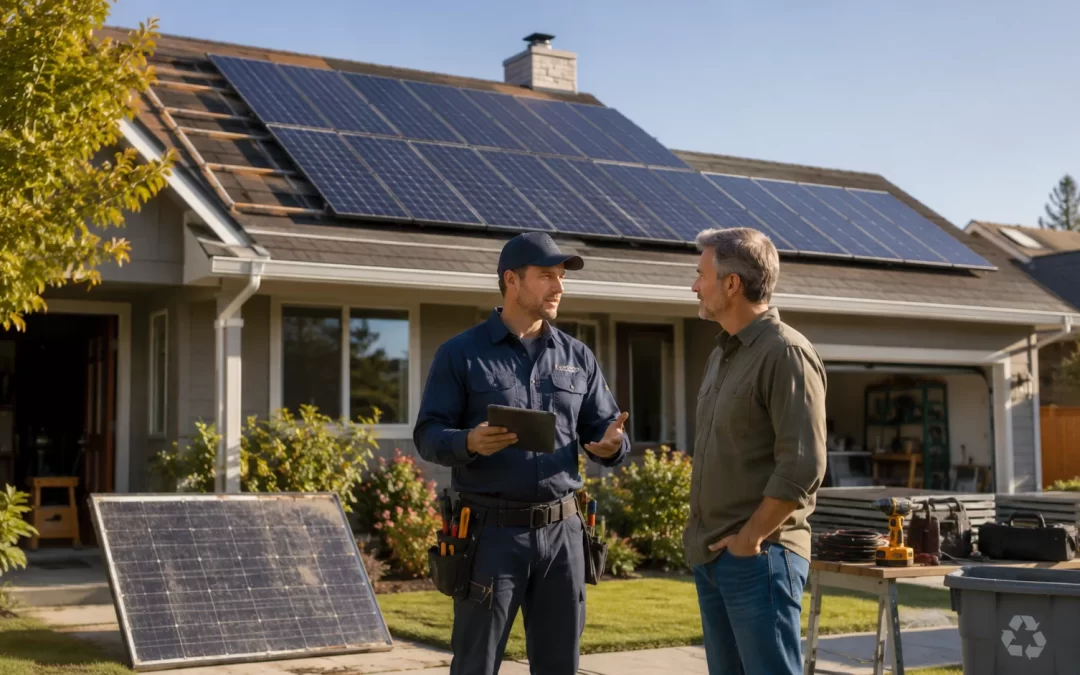
Most modern residential solar panels are designed to last 30–35 years, with performance warranties that typically guarantee at least 80–85% of their original output at year 25. They don’t suddenly “die” at that point — they just produce less electricity each year. After their useful life on your roof, panels can be removed, recycled, or sometimes reused in lower-demand applications. The exact lifespan and what happens after depend on panel quality, your climate, installation quality, and how well the system is maintained.
Solar panel lifespan is one of the biggest questions homeowners have when deciding if solar is worth it. This guide is for U.S. homeowners who want a clear, honest look at how long solar panels actually last, how their performance changes over time, and what happens when they reach the end of their life on your roof. We’ll also connect panel lifespan to real numbers: costs, savings, and when solar does — and doesn’t — make financial sense.
Table of Contents
- How Long Do Solar Panels Actually Last?
- How Solar Panels Age Over Time
- Key Numbers: Cost, Savings, and Lifespan
- What Affects How Long Your Solar Panels Last?
- State and Climate Considerations
- When Solar Panel Lifespan Works in Your Favor
- When Solar Panel Lifespan Can Be a Problem
- What Happens After Solar Panels Reach the End of Their Life?
- How to Decide What to Do Next
- Frequently Asked Questions
- Summary: What Homeowners Should Remember
How Long Do Solar Panels Actually Last?
Typical lifespan in plain language
For a typical U.S. home, you can expect:
- Performance warranty: 25–30 years (most commonly 25 years)
- Real-world lifespan: 30–35 years of useful production on your roof
- Output at year 25: usually guaranteed at 80–85% of original power
“Lifespan” doesn’t mean your panels stop working at year 25. It means they slowly produce less electricity each year. Many systems installed in the 1990s are still operating today, just at lower output.
What the warranties actually cover
Most residential solar panels come with two main warranties:
- Product (equipment) warranty: 10–25 years against defects or failures
- Performance warranty: guarantees a certain percentage of original output (often 90–92% at year 10 and 80–85% at year 25)
The performance warranty is why you’ll often hear “25-year panels,” but in practice, many panels keep producing for 30+ years if they’re installed and maintained properly.
How this compares to other parts of your system
- Solar panels: 30–35 years typical life
- Inverters (the device that converts DC to AC): usually 10–15 years for string inverters, 20–25 years for many microinverters and optimizers
- Racking and mounting hardware: often 25+ years, designed to match panel life
- Batteries (if you add storage): typically 10–15 years depending on use
So while your panels may last 30+ years, you should plan for at least one inverter replacement during that time.
How Solar Panels Age Over Time
Degradation rate explained simply
Solar panels lose a small amount of output each year — this is called the degradation rate. For modern panels, a typical range is:
- 0.3–0.8% per year for most quality panels
- Some premium panels advertise 0.25–0.35% per year
That means a panel that starts at 100% output might be around 88–92% of its original power after 15 years, and 80–85% after 25 years.
What that looks like in real life
Imagine a 7 kW system (about 20–22 panels) that produces 10,000 kWh in year 1. With a 0.5% annual degradation rate:
- Year 10: around 9,550 kWh
- Year 20: around 9,050 kWh
- Year 25: around 8,800 kWh
You’re still getting most of the value decades later, just not quite as much as in the early years.
Why panels degrade
Common reasons panels slowly lose output include:
- UV exposure and weathering of materials
- Thermal cycling (expansion and contraction from hot days and cool nights)
- Moisture intrusion over time
- Micro-cracks in cells from wind, snow, or installation stress
High-quality panels are engineered and tested to minimize these effects, which is why choosing reputable brands and installers matters for long-term performance.
Key Numbers: Cost, Savings, and Lifespan
Typical system cost and lifespan together
As of 2026, a typical residential solar system in the U.S. looks like this:
- System size: 6–10 kW (about 15–25 panels for most homes)
- Cost per watt: $2.50–$3.50
- Average system cost: $28,000–$32,000 before incentives
- After 30% federal tax credit (ITC): roughly $19,600–$22,400 (if you qualify and can use the credit — always confirm with a tax professional)
- Panel performance warranty: 25–30 years
- Typical useful life: 30–35 years
Spread over 30+ years, many homeowners are effectively locking in a large portion of their electricity at a predictable long-term cost.
Average savings and payback period
National averages (your numbers may be higher or lower):
- Average annual bill savings: about $1,300–$1,500
- Typical payback period: 7–9 years
- Years of “free” power after payback (while panels still produce): often 20+ years
Because panels usually last longer than their 25-year warranty, many homeowners enjoy a decade or more of post-payback savings, even with some degradation.
If you want to see how lifespan and degradation affect your personal payback, our solar payback period calculator can help you plug in your own numbers.
What affects these numbers the most
- Your local electricity rates (higher rates usually mean faster payback)
- How much sun your roof gets (orientation, shading, and climate)
- State and local incentives or rebates
- Whether you pay cash, finance, or lease
- The quality and efficiency of the panels and inverter you choose
Because these variables can swing the math significantly, it’s important to get personalized quotes rather than relying only on national averages.
What Affects How Long Your Solar Panels Last?
Panel quality and brand
Not all panels are created equal. Factors that influence lifespan include:
- Tier 1 manufacturers: established brands with strong track records and bankability
- Premium vs. standard panels: premium panels often have lower degradation rates and longer warranties
- Testing and certifications: panels tested for hail, wind, snow loads, and extreme temperatures tend to last longer in harsh climates
Cheaper, off-brand panels may save money upfront but can degrade faster or have more failures over time.
Installation quality
Even great panels can underperform or fail early if installed poorly. Key installation factors include:
- Proper mounting and spacing to allow airflow and reduce heat stress
- Secure racking and roof attachments to handle wind and snow
- Correct wiring and grounding to prevent electrical issues
- Thoughtful layout to avoid shading from chimneys, trees, or other roof features
Choosing an experienced, reputable installer is one of the most important decisions you’ll make for long-term system life.
Climate and weather
Your local environment plays a big role in how long solar panels last:
- Hot climates: high temperatures can slightly increase degradation over decades
- Cold/snowy areas: snow itself isn’t usually a problem, but heavy loads and ice can stress mounting hardware
- Coastal areas: salt air can be corrosive; look for equipment rated for coastal environments
- Hail and storms: quality panels are tested for hail impact, but extreme events can still cause damage
Most reputable panels are designed and certified to withstand typical weather in their intended markets, but extreme conditions can shorten lifespan.
Maintenance and care
Solar is low-maintenance, but not zero-maintenance. To help your panels reach 30+ years:
- Keep an eye on your monitoring app for sudden drops in production
- Have a professional inspect the system every few years, or after major storms
- Clean panels only if dirt or debris is clearly reducing output, and follow manufacturer or installer guidance
- Trim trees that start shading the array or dropping heavy debris
Most homeowners don’t need to climb on the roof — visual checks from the ground and monitoring software are usually enough to spot issues.
State and Climate Considerations
Why your state matters for lifespan value
The physical lifespan of panels doesn’t change much from state to state, but the value of that lifespan does. In states with:
- High electricity rates (e.g., California, New York, New England) — longer panel life means more long-term savings
- Strong net metering or solar buyback programs — extra years of production can be especially valuable
- Lower power prices (some Midwest and Southern states) — solar can still make sense, but the payback period may be longer
To see how panel lifespan and savings look where you live, our state-by-state guide, Is Solar Worth It in Your State?, breaks down the key numbers.
Climate-specific lifespan considerations
- Sunny Southwest: high production and strong long-term value, but heat can slightly increase degradation
- Northern states: fewer sun hours, but cooler temperatures are actually good for panel efficiency
- Hurricane-prone regions: mounting and roof attachment quality are critical for long-term survival
- Dusty or agricultural areas: more frequent cleaning may be needed to maintain output
In most U.S. climates, well-installed panels still comfortably reach 25–30+ years of useful life.
When Solar Panel Lifespan Works in Your Favor
Long lifespan = more years of “free” power
Because the average payback period is 7–9 years and panels often last 30+ years, many homeowners get:
- 7–9 years to recoup their investment
- Then 20+ years of reduced electric bills after payback
Even with degradation, those extra years can add up to tens of thousands of dollars in avoided utility costs, especially in high-rate areas.
Good fit scenarios
Long panel lifespan tends to work especially well if:
- You plan to stay in your home at least 7–10 years
- Your roof is in good condition and won’t need replacement soon
- Your local electricity rates are high or rising
- You can take advantage of the 30% federal tax credit (confirm with a tax professional)
In these situations, the long life of your panels amplifies the financial benefits of going solar.
When Solar Panel Lifespan Can Be a Problem
When long lifespan doesn’t equal good value
There are real situations where solar’s 30+ year lifespan doesn’t automatically mean it’s a smart move:
- Short-term home plans: if you expect to move in 3–5 years, you may not see full payback (though solar can still add resale value)
- Very low electricity rates: in some areas, savings may be modest, stretching payback close to or beyond 15 years
- Heavily shaded roofs: if trees or nearby buildings block sun, panels may never produce enough to justify the cost
- Old roofs: if your roof needs replacement soon, you may face extra costs to remove and reinstall panels
In these cases, the long lifespan of panels doesn’t fully overcome the underlying limitations.
When other system parts wear out first
Remember that inverters and batteries usually don’t last as long as panels:
- You may need to replace a string inverter once (or even twice) during the life of your panels
- Battery replacements can be a significant cost if you add storage
These replacement costs should be part of your long-term financial planning. A good installer can model this for you in your proposal.
If you suspect you’re in one of the “edge cases” where solar might not make sense, our guide on when solar doesn’t make sense walks through alternatives and what to consider.
What Happens After Solar Panels Reach the End of Their Life?
They usually keep working — just less efficiently
At 25–30 years, most panels are not “dead”; they’re just producing less power. What happens next is usually a financial and practical decision:
- Some homeowners keep using them until a major failure or roof replacement
- Others choose to upgrade to newer, more efficient panels once output drops enough that the upgrade math makes sense
Removal, recycling, and reuse
When panels are finally removed, there are three main paths:
- Recycling: specialized facilities can recover glass, aluminum, and some semiconductor materials; recycling infrastructure is growing in the U.S.
- Reuse: still-working older panels may be reused in off-grid, low-demand, or community projects
- Disposal: as a last resort, panels can go to landfill, but this is increasingly discouraged as recycling options expand
Many installers can coordinate removal and recycling when it’s time to replace your system or your roof.
Roof replacement and system upgrades
End-of-life is often tied to roof work:
- If your roof needs replacement at year 20–30, you may choose to upgrade panels at the same time
- Newer panels are often more efficient, so you can get more power from the same roof area
- Inverters and other electronics are usually upgraded as part of a full system refresh
Planning roof and solar timelines together can save money and hassle over the long term.
How to Decide What to Do Next
Is now the right time to act?
Given that solar panels typically last 30–35 years and the federal tax credit is 30% through 2032, for many homeowners, waiting doesn’t improve the math much. It often just means:
- Paying your utility more years of full-price electricity
- Shortening the number of years you benefit from your panels’ lifespan
That said, it’s not about rushing — it’s about getting enough information to make a confident decision.
Information to gather before getting quotes
Before you talk to installers, it helps to know:
- Your average monthly electric bill and annual kWh usage (from your utility statements)
- The age and condition of your roof
- Any major home changes coming (EV purchase, heat pump, pool, home addition)
- How long you realistically plan to stay in the home
This context helps installers design a system that matches your long-term plans and makes the most of the panels’ lifespan.
Questions to ask installers about lifespan
When you start getting quotes, ask:
- What is the product and performance warranty on these panels?
- What degradation rate do you assume in your savings estimates?
- Who handles warranty claims if a panel fails in year 10 or 20?
- What is the expected lifespan of the inverter, and how much might replacement cost?
- How do you design systems to handle our local climate and weather risks?
Clear answers to these questions are a good sign you’re dealing with a knowledgeable, trustworthy installer.
Why multiple quotes matter
Because panel quality, warranties, and pricing vary, getting multiple quotes is one of the best ways to:
- Compare equipment and warranty terms side by side
- See how different installers model long-term performance and degradation
- Spot outliers — both suspiciously cheap and unreasonably expensive
Our broader guide, Is Solar Worth It?, walks through how to evaluate quotes beyond just the sticker price.
Frequently Asked Questions
How long do solar panels really last on a house?
Most residential solar panels last 30–35 years on a typical U.S. home, with performance warranties that usually guarantee at least 80–85% of their original output at year 25. They rarely stop working at that point; they just produce less electricity each year.
Do solar panels need to be replaced after 25 years?
You don’t have to replace solar panels just because they hit 25 years — that’s simply when many warranties end. Replacement usually makes sense when output has dropped enough that a new system would significantly improve your savings, or when you’re already replacing the roof.
What happens to solar panels after 25 years?
After 25 years, most panels still work but at reduced output, often around 80–85% of their original power. Homeowners can keep using them, upgrade to newer panels, or have them removed and sent to recycling or reuse programs.
How often do solar panels need maintenance?
Solar panels are largely low-maintenance and don’t need regular servicing like HVAC systems. Most homeowners just monitor production, schedule a professional inspection every few years or after major storms, and address obvious issues like shading or debris if they arise.
Will I need to replace my inverter before my panels wear out?
Yes, in most cases the inverter will need replacement before the panels reach the end of their life. String inverters typically last about 10–15 years, while many microinverters and optimizers are warrantied for 20–25 years, so it’s wise to budget for at least one inverter replacement over a 30-year panel lifespan.
Is solar still worth it if panels only last 25–30 years?
For many homeowners, yes, because the average payback period is 7–9 years and panels often keep producing for 30+ years. That means you can get a decade or more of reduced electric bills after you’ve recovered your initial investment, especially in areas with higher utility rates.
Summary: What Homeowners Should Remember
- Most residential solar panels come with 25–30 year performance warranties and typically last 30–35 years on your roof.
- Panels don’t suddenly fail at year 25 — they gradually lose output, often to around 80–85% of their original power by that point.
- Key factors that affect lifespan include panel quality, installation workmanship, climate, and basic system monitoring and care.
- With average payback periods of 7–9 years and average annual savings of $1,300–$1,500, many homeowners enjoy 20+ years of post-payback savings.
- The best next step is to get a few personalized quotes that clearly show equipment, warranties, degradation assumptions, and long-term savings for your specific home.
If you’re ready to see how a 30+ year solar panel lifespan translates into real savings on your roof, getting personalized quotes is the most reliable way to decide. Compare multiple offers, ask about warranties and degradation, and make sure the numbers fit your plans. You can start that process today at /get-my-quote/ — no pressure, just clear information tailored to your home.