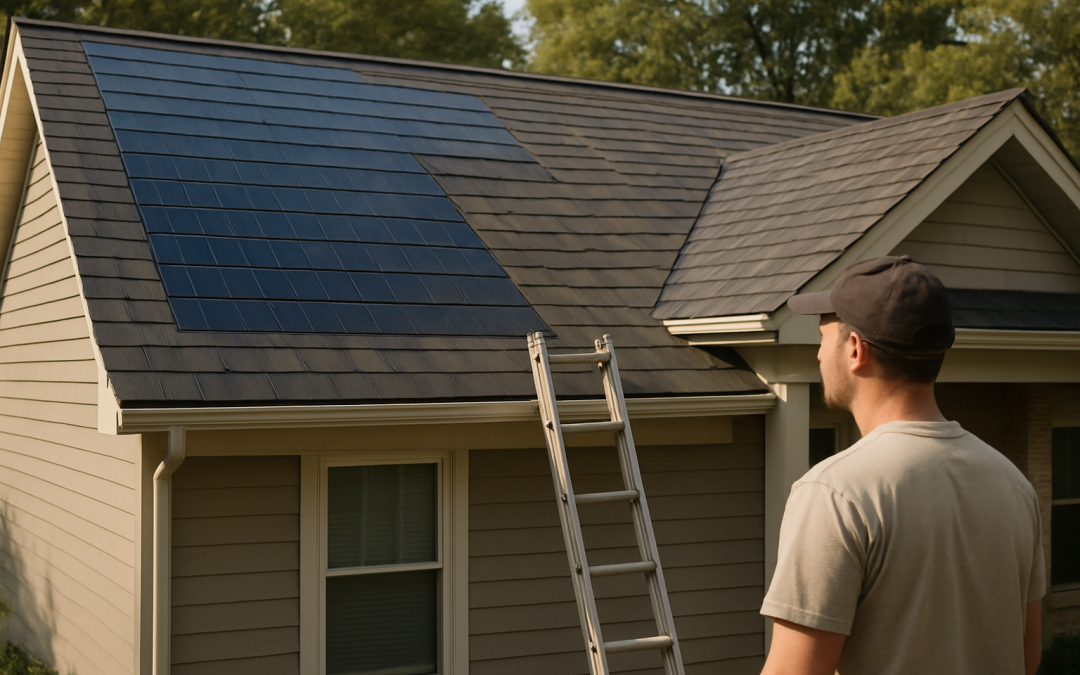
Solar Panels, Inverters & Batteries: What You Actually Need to Know
Before you get a solar quote, you’ll want to understand the three core pieces of equipment — what they do, how the types differ, and what to look for when comparing. This guide gives you that foundation without the jargon.
How a solar system works
The basics
Solar panels convert sunlight into DC electricity. An inverter converts that DC electricity into AC power your home can use. A battery (optional) stores excess energy for use at night or during outages. Everything else — wiring, mounting hardware, monitoring systems — supports these three core components.
Understanding this flow matters because each component has different quality tiers, warranty terms, and price points. An installer might quote you premium panels with a budget inverter, or vice versa. Knowing what each piece does helps you evaluate whether a quote makes sense.
Solar panels
Solar panels — what generates your power
Typical cost: $0.40–$0.80/watt for the panels themselves
Panels are rated by efficiency — the percentage of sunlight they convert to electricity. Higher efficiency means more power from less roof space. Most residential panels today range from 19–23% efficiency. The difference between a 20% and 22% panel is meaningful if your roof is small or partially shaded.
Panels also carry two warranties: a product warranty (covering defects, typically 12–25 years) and a performance warranty (guaranteeing output over time, typically 25 years at 80–90% of original output).
Monocrystalline Most common
Made from a single silicon crystal. Highest efficiency, best performance in heat and low light.
20–23% efficiency, sleek black look
Higher cost than polycrystalline
Polycrystalline
Made from multiple silicon fragments. Lower efficiency but more affordable.
Lower upfront cost
15–17% efficiency, blue speckled look
TOPCon / N-type
Newer technology with higher efficiency and better temperature performance than standard mono.
22–24% efficiency, lower degradation rate
Premium price, fewer installers currently offer it
Bifacial panels
Generate power from both sides — useful on flat or ground-mounted systems with reflective surfaces.
5–30% more output in the right conditions
Not useful on most pitched rooftops
Inverters
Inverters — what converts your power
Typical cost: $1,000–$3,000 depending on type and system size
The inverter is the brain of your solar system. It converts DC electricity from your panels into the AC electricity your home uses. The type of inverter you choose affects how your system handles shading, how easy it is to monitor, and what happens if one panel underperforms.
String inverter
One central inverter handles all panels. If one panel is shaded, the whole string drops in output.
Lowest cost, simple to maintain
Shading on one panel affects the whole system
Microinverters Best for shade
One inverter per panel. Each panel operates independently so shading on one doesn’t affect others.
Best performance, panel-level monitoring
Higher upfront cost than string inverters
Power optimizers
Paired with a string inverter, optimizers condition DC power at each panel before sending to the inverter.
Good shade tolerance, panel-level monitoring
Two components to install and maintain
Hybrid inverter
Handles both solar panels and battery storage in one unit. Simplifies wiring if you plan to add a battery.
Cleaner install if adding battery storage
More expensive than a standard inverter
Battery storage
Batteries — what stores your power
Typical cost: $8,000–$20,000 installed (qualifies for 30% ITC)
A solar battery stores excess energy your panels produce during the day so you can use it at night or during a grid outage. It’s optional — most homeowners do fine without one — but it’s becoming more popular as battery prices drop and grid reliability concerns grow.
The key specs to compare: usable capacity (kWh — how much energy it stores), power output (kW — how much it can deliver at once), and round-trip efficiency (how much stored energy you actually get back, typically 90–95%).
Lithium iron phosphate (LFP) Recommended
Safest chemistry, longest cycle life (3,000–6,000 cycles), operates well in temperature extremes.
Safest, longest lifespan, no thermal runaway risk
Slightly lower energy density than NMC
Nickel manganese cobalt (NMC)
Higher energy density than LFP, used in earlier Powerwall versions and some competitors.
Compact size for the capacity
Shorter cycle life, more temperature-sensitive
Top brands to know
You don’t need to specify a brand — your installer will recommend what they work with. But knowing the landscape helps you ask better questions and spot if something unfamiliar is being quoted.
| Brand | What to know | Tier |
|---|---|---|
|
SunPower / Maxeon |
Highest efficiency panels available. Industry-leading 40-year warranty. Premium price. |
Premium |
|
REC Group |
Norwegian brand, excellent quality and efficiency. Popular in the US residential market. |
Premium |
|
Panasonic |
High efficiency HIT panels, strong temperature performance. Solid warranty terms. |
Premium |
|
Qcells (Hanwha) |
Made in Georgia, USA. Strong mid-range efficiency and value. Very popular with installers. |
Mid-range |
|
Canadian Solar |
Reliable mid-range option. Wide availability, good warranty, competitive pricing. |
Mid-range |
|
Enphase |
Market leader in microinverters. IQ8 series is the current standard. Excellent monitoring app. |
Premium |
|
SolarEdge |
Leading power optimizer + string inverter system. Strong monitoring and wide installer support. |
Mid-range |
|
Tesla Powerwall 3 |
Most recognized home battery. LFP chemistry, 13.5 kWh usable, integrated inverter. |
Premium |
|
Enphase IQ Battery |
LFP chemistry, pairs seamlessly with Enphase microinverters. Modular — add capacity over time. |
Mid-range |
|
Franklin Electric |
Strong value LFP battery. Growing installer network, competitive pricing vs. Powerwall. |
Value |
What to ask your installer about equipment
Why this panel? Ask for the model name and efficiency rating. Look it up before you sign anything.
Why this inverter? Ask whether string, micro, or optimizer makes sense for your specific roof layout and shading situation.
What are the warranty terms? Get the product warranty and performance warranty in writing for both the panels and inverter.
Do I need a battery? Ask whether your utility has time-of-use rates or poor net metering — those are the two situations where a battery pays off fastest.
Is the equipment on the CEC approved list? The California Energy Commission list is the de facto standard for quality solar equipment in the US. Any reputable product should be on it.
Common questions
How many solar panels do I need?
Most homes need 15–25 panels for a full offset. The exact number depends on your annual electricity usage, your roof’s sun exposure, and the efficiency of the panels you choose. Your installer will calculate this from your utility bills.
How long do solar panels last?
Most panels carry a 25-year performance warranty and will continue producing power well beyond that — typically 30–35 years. They degrade slowly, losing about 0.5% of output per year, so a panel producing 400W today will produce around 380W after 10 years.
What’s the difference between microinverters and string inverters?
With a string inverter, all your panels are connected in series — if one underperforms due to shading or damage, the whole string drops in output. With microinverters, each panel operates independently so one shaded panel doesn’t affect the others. Microinverters cost more upfront but perform better on roofs with any shading.
Do I need a battery with solar panels?
No — most homeowners don’t need one. If your utility has strong net metering, the grid essentially acts as your battery for free. Batteries make the most sense if you have time-of-use rates, frequent outages, or your utility has a weak net metering policy.
What is panel efficiency and does it matter?
Efficiency measures what percentage of sunlight a panel converts to electricity. A 22% efficient panel produces more power per square foot than a 19% panel. It matters most if your roof is small or has limited south-facing space — in that case, higher efficiency panels let you fit more power into less area.
Ready to find out if solar makes sense for your home?
Answer a few quick questions about your home and energy use. We'll connect you with certified local installers who can give you an honest, no-obligation quote.
See what solar costs for my home ›
Takes 2 minutes · Free · No spam
Ground-Mounted vs. Rooftop Solar Panels: Cost, Output, Space Requirements, and Which Option Is Better
Home Solar Panel Kit Cost: What’s Included, Installation Options & Is It Worth It?
Solar Panel Lifespan: How Long Do Residential Solar Panels Really Last? Degradation, Warranty & Replacement Costs
Best Roof Types for Solar Panels: Material, Pitch, and Installation Suitability
SunPower vs. Tesla Solar Panels: Pricing, Efficiency, and Installation Compared
Rooftop Solar vs. Ground-Mounted Solar: Comparing Cost and Output
Professional Solar Panel Cleaning: Costs, Benefits, Methods, and How Maintenance Impacts Energy Efficiency
Solar Power Systems Explained: Types, Costs, Components, and How They Work for Homeowners
Solar Energy Storage Systems Explained: Costs, Battery Options, Backup Power Benefits, and How to Choose the Right System